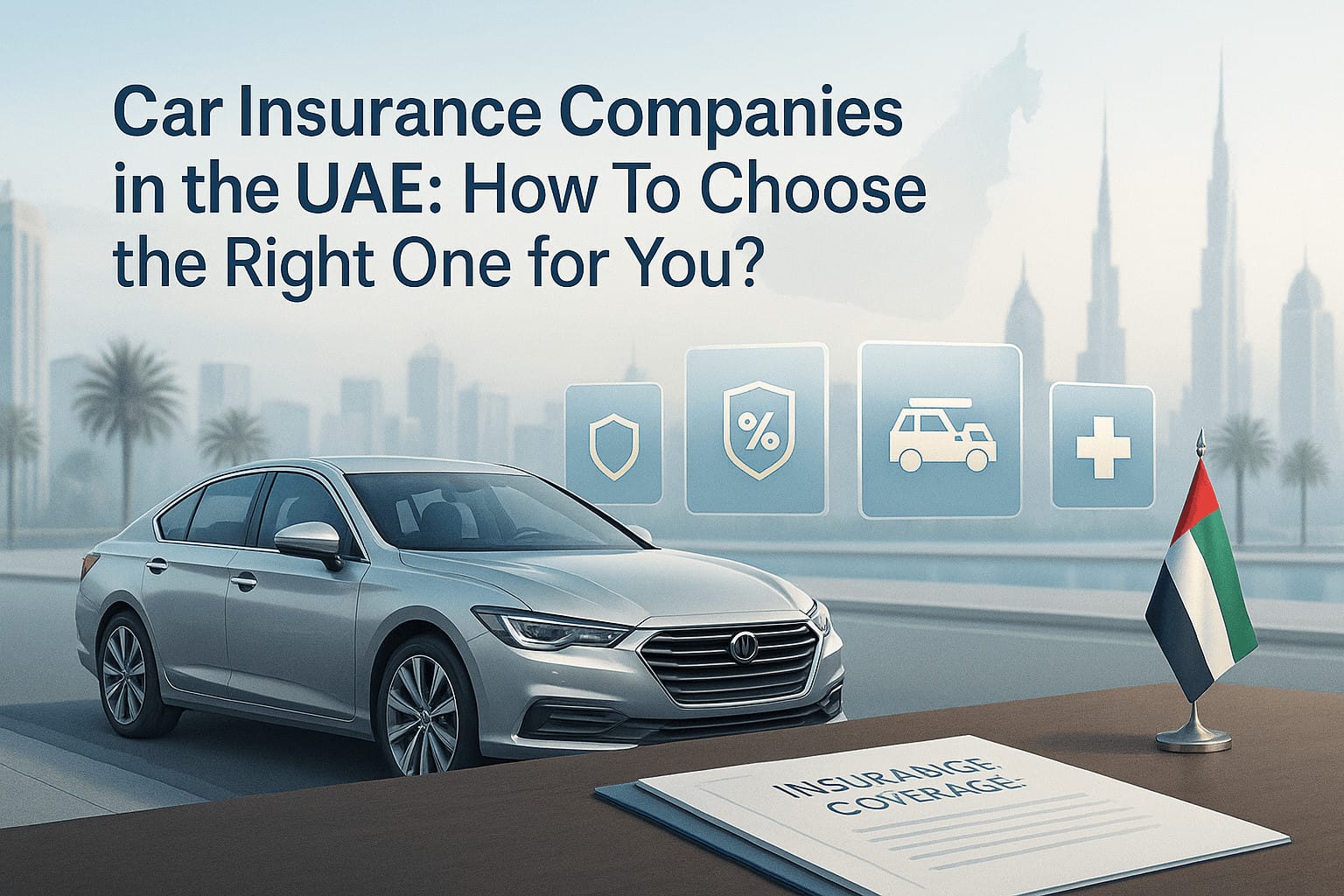
With so many car insurance companies operating across the UAE, choosing the right policy can quickly become overwhelming. Premiums, benefits, exclusions, repair options, and claims service can vary significantly between insurers and those differences become especially important when you actually need to make a claim.
In this guide, we break down the different types of car insurance providers in the UAE, explain what you should compare beyond just price, and show how InsuranceMarket.ae helps you compare policies with greater clarity and confidence.
Top UAE Car Insurance Companies – What Does “Top” Really Mean?
Instead of focusing on one “best” insurer, it is more useful to think in terms of fit:
- Some companies focus on very economical, basic third‑party policies
- Others specialise in feature‑rich, comprehensive covers with many add‑ons
- Some are strong in digital journeys; others are strong in complex claim handling
A“top” insurer for you is the one that:
- Offers the right coverage for your vehicle and driving profile
- Has fair claims practices aligned with core principles like indemnity (paying actual loss, not profit) and insurable interest (covering real financial stakes)
- Provides value for money at a premium you can sustain
We help you see multiple options side‑by‑side rather than pushing a single company.
Main categories of UAE car insurance companies
Things to Remember When Comparing Car Insurance Providers
1. Large Multi-Line Insurers
These insurers typically offer a wide range of motor insurance products and often provide:
- Broad garage and repair networks
- Standard add-ons such as roadside assistance
- Established claims and support infrastructure
2. Takaful (Islamic) Insurers
Takaful providers operate on Sharia-compliant principles of risk sharing. Compared to conventional insurance models, they may structure:
- Contributions differently
- Surplus distribution according to Takaful principles
3. Digital-First or Aggregator-Friendly Insurers
These insurers focus heavily on online convenience and may offer:
- Fast online quotation and policy issuance
- Quicker approvals and digital document delivery
This can be especially useful when vehicle registration timelines are tight, such as Dubai’s 30-day registration window after policy issuance.
4. Niche or Specialist Insurers
Some insurers focus on specific customer segments, such as:
- High-value or luxury vehicles
- Off-road and 4×4 users
- Commercial fleets
They may provide more tailored benefits, including specialist repair options or enhanced off-road cover limits.
With InsuranceMarket.ae, you can access a broad mix of UAE car insurance companies without having to visit each one separately.
What to Compare When Choosing Car Insurance Companies in Dubai (and the UAE)
When comparing car insurance companies across the UAE, it is important to look beyond just the headline premium and focus on the actual protection, conditions, and claims experience offered by the policy.
1. Type of Cover: Third-Party vs Comprehensive
Third-Party Liability (TPL) is the legal minimum required in the UAE. It covers:
- Injury or death caused to third parties, including mandatory Blood Money compensation under UAE law
- Damage caused to third-party property or vehicles
Comprehensive insurance includes all third-party benefits while also covering damage to your own vehicle from insured events such as accidents, fire, theft, and other covered risks.
If your vehicle is financed, banks usually require comprehensive cover. For older or lower-value vehicles, some drivers may choose third-party cover to reduce costs.
2. Vehicle Valuation & Indemnity
Motor insurance operates on the principle of indemnity, meaning insurers compensate based on the actual market value of the vehicle at the time of loss, not an inflated declared value.
- Overvaluing your car can lead to higher premiums without increasing the final payout
- Undervaluing may reduce claim settlements in total-loss situations
Reliable insurers and brokers will usually:
- Encourage realistic market valuation using invoices, market listings, and prior policy details
- Clearly explain how total-loss settlements are calculated
3. Optional Covers & Add-Ons
Compare which add-ons are available and whether they genuinely suit your driving needs, such as:
- Roadside assistance
- Hire car or hire car cash benefit
- Off-road cover for eligible 4×4 vehicles (while checking exclusions such as racing or dune bashing)
- Personal accident cover for drivers and passengers
- GAP cover for new vehicles
- Windscreen excess waiver
- Personal belongings cover
- Agency vs non-agency repair options
These features can significantly affect your experience during a claim.
4. Territorial & GCC Coverage
Standard UAE motor policies generally provide cover only within the UAE. For Oman or other GCC countries, insurers may differ in how they handle:
- Own-damage extension outside the UAE
- Third-party liability requirements, such as Orange Card arrangements for Oman
If you plan to travel cross-border, always review GCC coverage conditions carefully before your trip.
5. Claims Handling & Policy Conditions
Before choosing a policy, review important conditions such as:
- Excess or deductible amounts payable per claim
- Named-driver or any-driver restrictions
- Conditions relating to young or novice drivers
- Rules on off-road driving, vehicle modifications, or commercial usage
Clear policy wording and transparent communication can help reduce surprises and disputes if a claim occurs.
How to Choose the Right Car Insurance Company
Here is how you can choose the right car insurance company
- Define your needs
- Car age and value
- Finance or lease obligations
- How and where you drive (daily commute, off‑road, GCC travel)
- Who will drive (young/novice drivers, multiple family members)
- Choose coverage type
- New/financed/high‑value car → usually comprehensive
- Older low‑value car, no finance → you may consider third‑party
- Set your must‑have add‑ons
- For most UAE drivers, roadside assistance is highly practical
- For new cars, agency repair and possibly GAP can be important
- For frequent UAE‑wide trips, hire car benefit helps maintain mobility during repairs
- Compare multiple UAE car insurance companies
- Use Alfred to see premiums, benefits and conditions in one place
- Do not look only at “cheapest”; consider what you would want if a serious claim happened tomorrow
- Check details and buy
- Confirm named drivers, territory, and special conditions
- Keep your policy and emergency contacts easily accessible (for example, in your phone and car)
FAQs
Is comprehensive insurance mandatory in Dubai?
Can I switch insurance companies mid‑policy?
How do I claim insurance after an accident?
Ensure everyone’s safety and call emergency services if needed
Obtain the official accident report (e.g., from police or authorised channels)
Notify your insurer or broker promptly and share the report
Follow the insurer’s repair or total‑loss process, including sending the car to an approved or agency workshop, depending on your policy
Each insurer has its own exact workflow, but these core steps remain similar.
What affects my car insurance premium?
Vehicle value, make, model and age
Type of cover (third‑party vs comprehensive)
Driver age, UAE licence tenure, and claims history
Chosen excess and optional covers
Use of the vehicle (private vs certain commercial uses)
Insurers use these to estimate risk and set a base rate.
Do UAE insurers cover GCC countries?
How long does policy approval take?
Are electric vehicles more expensive to insure?
Conclusion
Choosing between the many car insurance companies in UAE is not about finding one perfect name; it is about finding the right match for your car, your risk profile, and your budget.
By understanding coverage types, key add‑ons, territorial rules, and how insurers assess vehicle value and risk, you can make a confident, informed choice.
Compare quotes with InsuranceMarket.ae and find the most economical car insurance solution for your needs, backed by clear explanations and support when it matters most.