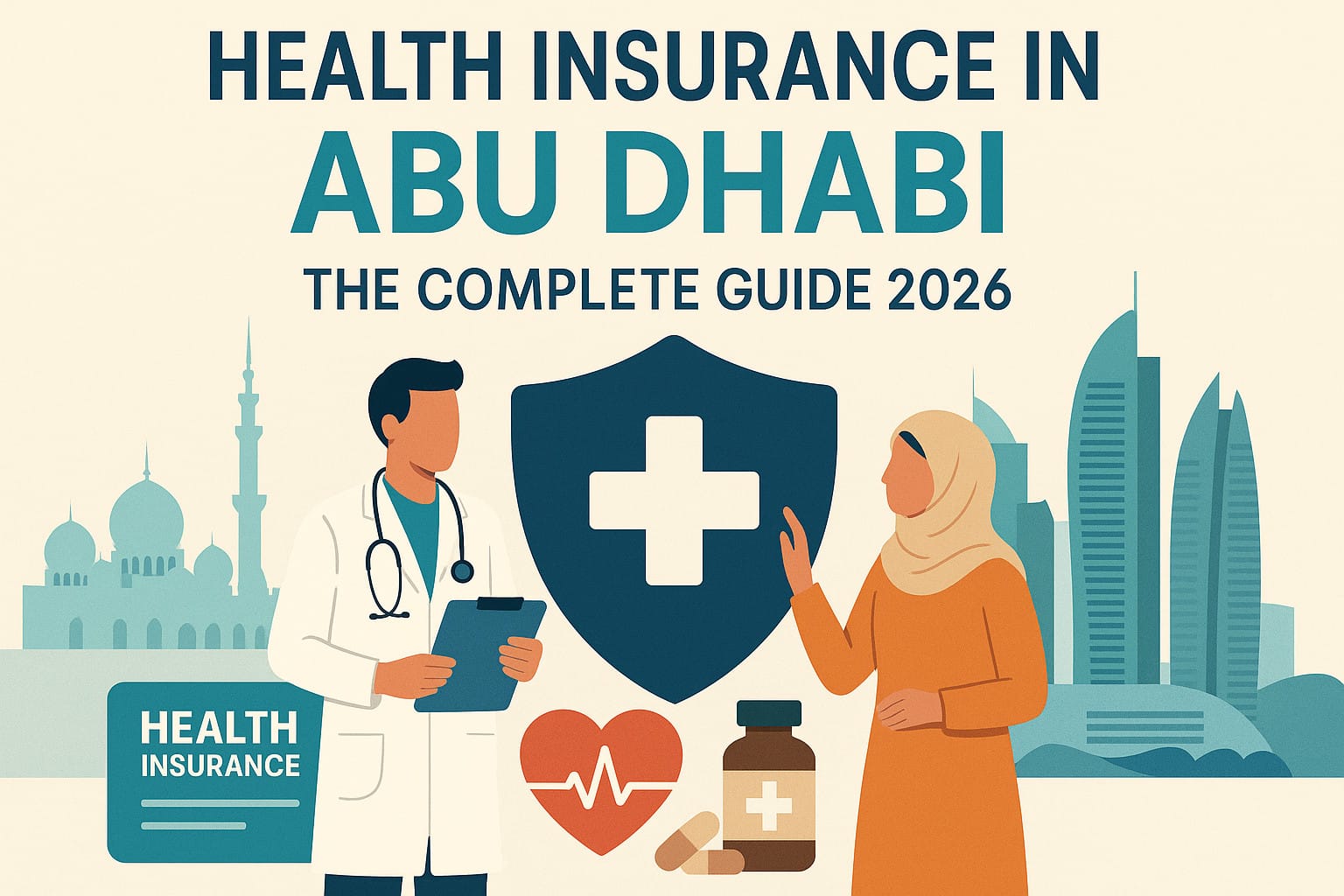
Abu Dhabi has grown into a major healthcare centre in the UAE, with a broad mix of public and private providers.At the same time, health insurance in Abu Dhabi is legally required for most residents, and choosing the right plan can significantly affect both your healthcare experience and your budget.
In this guide, you’ll learn the rules, who must be covered, how Thiqa works for eligible members, common plan types, what drives cost, how claims typically work, and the key questions to ask before you buy.
Understanding Abu Dhabi’s Health Insurance Regulations
Abu Dhabi operates under a mandatory health insurance framework regulated by the Department of Health – Abu Dhabi (DoH). Under Abu Dhabi’s health insurance law, health insurance is compulsory for non-UAE nationals (and their families) residing in the Emirate, and UAE nationals are typically covered through government programmes (such as Thiqa) based on eligibility. Failure to maintain valid coverage can lead to penalties. DoH has stated that a fine of AED 300 per month of non-insurance may apply after the relevant exemption periods. In practice, proof of valid insurance is often required as part of visa/residency processes and related government checks.
In short, Abu Dhabi health insurance is both a legal requirement and a practical necessity.
Note: rules and enforcement can change; always verify the latest requirements with DoH/TAMM and your insurer/broker.
Who Needs Health Insurance in Abu Dhabi?
Everyone residing in the emirate is expected to have coverage:
- UAE nationals and their families
- Typically covered under the government‑sponsored Thiqa programme, subject to eligibility.
- Typically covered under the government‑sponsored Thiqa programme, subject to eligibility.
- Expatriate workers and their sponsored dependents
- In Abu Dhabi, the employer is responsible for arranging health insurance for employees and (at minimum) their family members defined in the law (commonly: spouse and up to three children under 18). Coverage for additional dependents (e.g., parents, additional children, or older dependents) varies and may require separate policies.
- In Abu Dhabi, the employer is responsible for arranging health insurance for employees and (at minimum) their family members defined in the law (commonly: spouse and up to three children under 18). Coverage for additional dependents (e.g., parents, additional children, or older dependents) varies and may require separate policies.
- Domestic workers
- Sponsors are generally responsible for arranging medical insurance for domestic staff, in line with DoH requirements.
- Sponsors are generally responsible for arranging medical insurance for domestic staff, in line with DoH requirements.
- Visitors on extended stays
- Some visa categories and longer stays may require proof of health coverage; requirements depend on visa type and issuing authority.
- Some visa categories and longer stays may require proof of health coverage; requirements depend on visa type and issuing authority.
- Business owners and freelancers
- Must arrange their own coverage and that of any employees they sponsor.
Employer vs. individual responsibilities:
- Employees: the employer arranges coverage (and often the legally required dependents).
- Dependents not included by the employer + self-sponsored residents: purchase individual/family policies via insurers or licensed brokers.
The Thiqa Insurance Program (for Eligible Members): What You Should Know
The Thiqa Programme is Abu Dhabi’s government‑funded health insurance scheme for UAE nationals and those of similar status, managed by Daman since 2008.
- Network and Scale (High Level)
- Thiqa promotes a broad network of providers across Abu Dhabi, with accessto an extensive network of public and private hospitals, clinics, health centres, and pharmacies.
- Over 1 million members and 2,000+ covered hospitals, according to programme statistics.
- Coverage Levels
- Inpatient and outpatient care, emergency services, medications, and a wide range of specialist treatments.
- DoH announced that Thiqa covers 100% at governmental facilities in Abu Dhabi and 80% at private facilities in the Emirate, with specific rules for treatment outside Abu Dhabi and certain services.
Always check the latest Thiqa policy terms for co-insurance, approvals, and any service-specific exclusions/limits.
- IFHAS (Preventive Screening)
- DoH and ADPHC have stated that IFHAS screening (ages 18–75) is a key requirement to maintain eligibility for full Thiqa benefits; screening frequency is typically periodic (e.g., around every 3 years, or more often if clinically needed).
- DoH and ADPHC have stated that IFHAS screening (ages 18–75) is a key requirement to maintain eligibility for full Thiqa benefits; screening frequency is typically periodic (e.g., around every 3 years, or more often if clinically needed).
- Eligibility and enrollment
- UAE nationals and certain categories of individuals with similar status, as well as some non‑nationals sponsored by Emirati family members, may qualify.
- Enrollment typically involves registration through Thiqa/Daman channels and completion of required health screenings.
Thiqa vs. Private Insurance
- Thiqa is a public programme for eligible nationals and similar categories, funded by the government.
- Private medical insurance is primarily for expatriates, their dependents, and others outside Thiqa, with a wide range of coverage levels and premiums.
Plan Types Abu Dhabi Expats Typically Choose
Beyond Thiqa, residents, especially expatriates and their families, select from a variety of commercial plans overseen by DoH requirements. Plans usually vary by:
Network breadth: restricted vs wide/premium networks
Benefits: outpatient limits, maternity, dental/optical, chronic coverage
Cost-sharing: co-pays, deductibles, coinsurance
Geography: Abu Dhabi/UAE-only vs regional/international extensions
Common categories include:
- Basic / DoH‑compliant plans
- Mid‑tier plans
- High‑end or comprehensive plans
Plans also differ based on whether they are network‑only (restricted to certain hospitals/clinics) or include broader regional or global coverage.
Basic Plans (minimum-compliant)
Basic plans are designed to meet the minimum DoH requirements for health insurance in Abu Dhabi. They typically offer:
- Inpatient and emergency cover
- Limited outpatient benefits within defined networks
- Lower annual limits and narrower networks vs higher tiers
- Restricted maternity, dental, and optical benefits (if included at all).
- Costs vary materially by insurer, age, underwriting, network, and employer arrangements. Treat any “range” you see online as indicative only and confirm via quotes and the policy schedule.
- Best suited for: Compliance + core hospital/ER coverage with minimal extras.
- Budget‑conscious individuals with relatively low day‑to‑day healthcare needs.
- Workers whose main priority is to satisfy legal requirements and secure core hospital/ER coverage.
Comprehensive Plans (families, chronic needs, premium networks)
Comprehensive plans usually add:
- Wider outpatient cover: specialists, diagnostics, chronic disease management
- Higher hospital limits for hospitalisation and surgery + broader provider access
- Optional add-ons: maternity, dental, optical, wellness/mental health (varies)
- International coverage options:
- Some plans extend emergency or elective coverage across the GCC, MENA region, or worldwide—useful for frequent travellers.
- Add‑ons:
- Maternity coverage with higher limits.
- Dental, optical, and sometimes wellness/mental health benefits.
- Premiums can range widely (from a few thousand to significantly higher), especially with premium networks, low co-pays, maternity, and international cover. Always compare like-for-like benefits and cost-sharing.
- Best suited for: families, frequent users of outpatient care, those with chronic conditions, and those who prefer wider networks/less friction.
Group vs. Individual/Family Cover
Residents may have access to:
- Employer‑sponsored group plans
- Typically more cost‑effective per person.
- Standardised coverage & benefits for large employee groups.
- Dependents coverage depends on employer plan design (and legal minimums).
- Individual/family plans for self‑employed or uncovered dependents
- Greater flexibility to choose networks, benefit limits, and add‑ons.
- Useful for freelancers, business owners, and dependents not covered by an employer.
- Cost and flexibility considerations:
- Group plans often have lower premiums but less customisation.
- Individual plans may cost more but can offer tailored coverage and better portability if you change employers.
How Much Does Health Insurance in Abu Dhabi Cost?
The cost of health insurance in Abu Dhabi varies widely based on age, health status, coverage level, network size, and number of dependents. While exact pricing depends on the insurer and underwriting, you can think in terms of coverage-type ranges.
What actually drives the cost? Premiums are shaped by:
- Age and disclosed health status
- Older applicants and those with known health risks generally pay more.
- Coverage level and benefits selected
- Basic vs. comprehensive plans; maternity, dental, optical, and wellness benefits; and international coverage.
- Network (restricted vs. premium)
- Plans with a limited network of hospitals/clinics are usually cheaper than those with broad, premium networks.
- Deductibles and co‑payments
- Higher co‑pays and deductibles can reduce premiums; low co‑pays usually increase them.
- Geographic coverage area
- Abu Dhabi‑only, UAE‑wide, regional, or worldwide coverage.
- Add-ons
- Maternity, dental, optical, etc., add-ons
- Pre‑existing or chronic conditions coverage
- May involve underwriting terms, waiting periods, exclusions, or loadings.
- Number of dependents
- Family policies cost more overall but may be cheaper per person compared with multiple standalone policies.
Tips for managing premium costs:
- Choose a network‑focused plan if you usually go to a specific group of hospitals/clinics.
- Adjust co‑pay and deductible levels to balance upfront affordability with out‑of‑pocket risk.
- Review add‑ons (maternity, dental, optical) to ensure you’re not paying for benefits you won’t use.
- Compare multiple health insurance quotes in Abu Dhabi side‑by‑side rather than accepting the first offer.
- Compare co-pays + deductibles, not just premiums.
Top Benefits of Abu Dhabi Medical Insurance Plans
Most Abu Dhabi medical insurance plans must meet minimum DoH standards and share core features.
Choosing the Right Provider & Plan (quick checklist)
When comparing options, evaluate:
- Hospital and clinic network coverage (your preferred providers included?)
- Claim settlement process: cashless vs reimbursement, and pre-approval rules
- Customer service quality and accessibility + digital tools (apps, e-cards, approvals tracking)
- Coverage for pre‑existing conditions.
- Waiting periods for specific treatments
- Geographic coverage
- Online services and digital tools
- Renewal terms and premium stability
- Exclusions/sub-limits (maternity, dental, physio, mental health, alternative medicine)
Questions to Ask Before Purchasing Coverage
- What’s included and excluded in the policy (in writing)?
- Which hospitals and clinics are in the network?
- What are the co-pays/deductibles and any coinsurance?
- Are there sub‑limits on specific treatments (e.g., maternity, dialysis, physiotherapy)?
- What’s the claim submission and approval process (cashless vs. reimbursement)?
- Cashless network list + how to access it
- Pre-authorization list and timelines
- Is emergency coverage included outside Abu Dhabi or outside the UAE?
- Can I upgrade or downgrade my plan at renewal or after major life events (marriage, childbirth, job change)?
How to Buy Health Insurance in Abu Dhabi
Typical steps:
- Assess your needs (coverage level, network size, and whether you need family or individual coverage)
- Gather quotations (insurer direct or comparison platforms or work with licensed brokers to obtain multiple quotes for Abu Dhabi health insurance)
- Compare benefits and networks (view policy summaries, provider network lists, cost sharing arrangement, etc., carefully)
Submit application and documents ( provide required personal and medical information – see below), Underwriting (if applicable) and approval (insurers may request additional medical details or reports, especially for higher‑tier plans or known conditions)
- Payment and policy activation (receive policy/e-card (coverage active on the policy start date)
- Verification through DoH‑linked systems(your policy will usually be registered with systems that immigration and licensing authorities can verify for visa and residency purposes)
Documents Required for Health Insurance Application
Typical documentation includes:
- Emirates ID copy (front and back)
- Passport copy
- Residency visa copies
- Dependents proof (where applicable)
- Salary certificate or employment contract (if applicable)
- Previous insurance policy details (for renewals or transfers)
- Recent medical reports or test results (for certain pre‑existing conditions or high‑tier plans)
- Family book or proof of relationship (for dependents, where applicable)
- Recent photographs (if requested by specific insurers)
Using Your Health Insurance and Making Claims
Cashless vs reimbursement
- In-network: usually cashless; you pay co-pays and the provider bills the insurer.
- Out-of-network: you may pay upfront and claim reimbursement if your plan allows it.
Pre-authorization
High-cost services often require pre-approval (e.g., major imaging, surgery, certain admissions, some maternity services).
- Emergency vs. planned treatment
- In emergencies, providers typically prioritise stabilisation; coverage and claims still depend on your policy terms, timely notification, and documentation.
- For planned surgeries or elective procedures, coordinate in advance with the provider and insurer.
- Digital claim submission options
- Many insurers and programmes (including Thiqa) offer apps or portals to submit claims, track approvals, and view coverage details.
- Typical processing times
- Simple reimbursement claims may be processed within a few working days; complex cases can take longer, especially if additional documentation is required.
Common Exclusions and Limitations: All Abu Dhabi medical insurance policies include exclusions and limitations. Common examples include:
- Standard policy exclusions
- Cosmetic procedures, non‑medically necessary treatments, some fertility treatments beyond set limits, and experimental therapies.
- Waiting periods
- Maternity, dental, and some chronic or pre‑existing conditions can have waiting periods before full coverage applies.
- Sub‑limits on certain treatments
- Caps on maternity benefits, physiotherapy sessions, alternative medicine, or mental health services.
- Geographic restrictions
- Some plans limit treatment to Abu Dhabi or the UAE; overseas treatment may only be covered for emergencies or on selected high‑end plans.
- Age‑related limitations
- Special conditions or benefit limits for very young or older age groups.
Always read your policy wording carefully and clarify any unclear points with your insurer or broker before you rely on coverage.
Making the Most of Your Health Insurance in Abu Dhabi
To truly benefit from health insurance in Abu Dhabi, think beyond legal compliance and focus on long‑term health and financial protection:
- Use preventive services
- Attend regular check‑ups and screenings. If you’re a Thiqa member, make sure you participate in programmes like IFHAS to maintain full benefits.
- Understand your network and benefits
- Know which hospitals and clinics you can access easily and what co‑pays apply.
- Keep documents organised
- Save e‑cards, policy schedules, and past claims; they’re useful for renewals and disputes.
- Review your policy annually
- Life changes such as marriage, children, job changes, or new medical diagnoses are good times to reassess your health insurance Abu Dhabi plan.
- Compare plans and get updated quotes
- Don’t automatically renew without checking whether a better‑suited plan or improved network is available.
FAQs
Is health insurance mandatory for all residents in Abu Dhabi?
What’s the difference between Thiqa and Abu Dhabi private medical insurance?
Private medical insurance Abu Dhabi is:
Offered by commercial insurers to expatriates, dependents, and others not covered by Thiqa.
Available in multiple tiers (basic to premium), with varying benefits, networks, and premiums.
Can I use my health insurance at any hospital in Abu Dhabi ?
In‑network: usually eligible for cashless treatment, subject to co‑pays.
Out‑of‑network: may require reimbursement claims or may not be covered at all, depending on your plan.
Always check your network list before seeking non‑emergency care.
Does medical insurance in Abu Dhabi cover pre-existing conditions?
There may be waiting periods before full coverage applies.
Some conditions might have specific sub‑limits or exclusions, particularly on basic or low‑cost policies.
If you have known chronic conditions, discuss them clearly with your insurer or broker so your medical insurance in Abu Dhabi is set up correctly and there are no surprises at claim time.