Introduction
If you live in the UAE, you already know that health insurance UAE rules make cover essential – especially in Dubai and Abu Dhabi. But one simple question still confuses many residents:
“Exactly what diseases are covered under my health insurance?”
This guide explains, in clear language:
- What UAE health insurance is required to cover,
- How plans typically treat major and pre‑existing conditions,
- What is often excluded, and
- How to check and improve your own health insurance coverage.
UAE Health Insurance Mandatory Coverage: What the Law Requires
Health insurance in the UAE is regulated at Emirate level, but the common goal is that residents have at least a basic level of medical protection.
In practice, mandatory or minimum health insurance plans are generally required to include essential medical benefits such as:
- Outpatient care
- GP and specialist consultations
- Necessary diagnostic tests and investigations
- Inpatient treatment
- Medically necessary hospitalisation and surgical procedures
- Emergency medical treatment
- Stabilisation and urgent care in genuine emergencies
The exact level of benefits, network access, co-pays, and limits can still vary depending on the insurer and the specific plan.
These minimum rules do not list diseases one by one. Instead, they say that medically necessary treatment for covered conditions should be available within certain limits and networks. More comprehensive plans go beyond this baseline.
Diseases Covered Under UAE Health Insurance
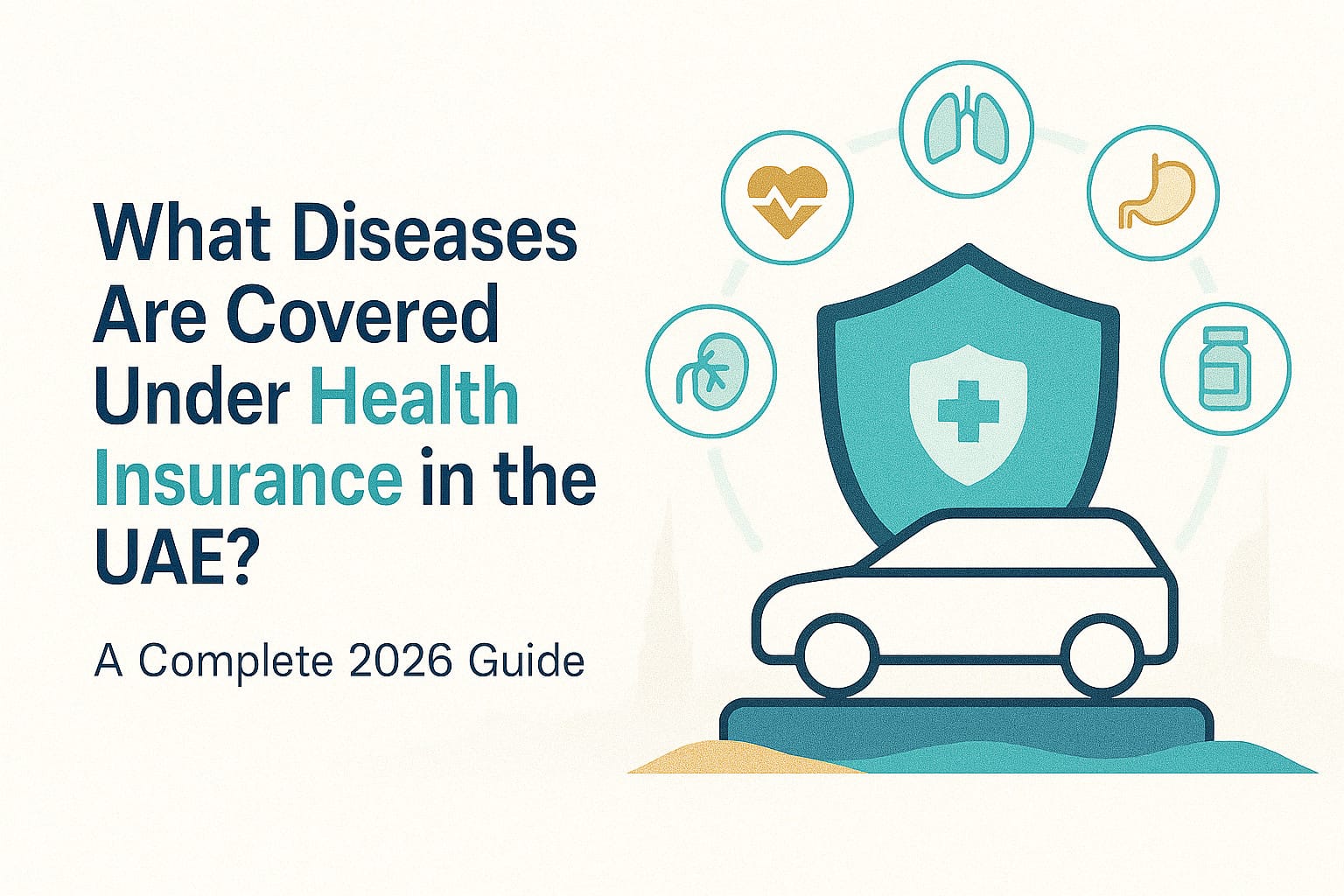
Most UAE health insurance plans do not operate based on a fixed “covered diseases” list. Instead, they generally cover treatment for a broad range of illnesses and medical conditions, provided that:
- The condition is not specifically excluded under the policy
- The treatment is medically necessary
- Approved network providers are used where required
- Costs remain within the policy’s annual limits and sub-limits
Conditions commonly covered under many plans, subject to policy terms and approvals, may include:
Acute Illnesses & Infections
This can include conditions such as flu, pneumonia, stomach infections, and COVID-type illnesses requiring outpatient or inpatient care.
Chronic Conditions
Many comprehensive plans may cover chronic illnesses such as hypertension, diabetes, and high cholesterol, subject to waiting periods, approvals, and insurer guidelines.
Serious & Complex Medical Conditions
Coverage may extend to conditions such as cancer, heart disease, and kidney failure through inpatient treatment and, in some cases, outpatient benefits, depending on the policy limits and approval process.
Injuries & Accidents
Emergency treatment for fractures, burns, trauma, and other accident-related injuries is commonly included under most health insurance plans.
The exact level of cover including approved medicines, number of therapy sessions, hospital access, and treatment scope depends entirely on the individual health insurance policy and its terms.
Pre-Existing Conditions: How UAE Health Insurance Works
A pre-existing condition is generally any illness, injury, or symptom that existed before your health insurance cover began, whether it was formally diagnosed or not.
In the UAE, insurers usually handle pre-existing conditions in one of the following ways:
Covered After a Waiting Period
Some policies may exclude the condition for an initial period and then provide cover after the waiting period ends, subject to policy limits and terms.
Covered With Special Limits
Certain plans may provide limited cover for pre-existing conditions, such as reduced annual limits, higher co-pays, or restricted treatment benefits.
Permanently Excluded
Some basic or lower-tier plans may permanently exclude specific pre-existing conditions from coverage altogether.
When applying for health insurance, it is important to answer all medical and health-related questions honestly and accurately. Failure to disclose relevant information can result in future claims being reduced or rejected, even for treatments that may otherwise have been covered under the policy.
What Is NOT Covered Under UAE Health Insurance?
Exclusions vary by insurer and plan, but many health insurance Dubai and UAE‑wide policies commonly exclude or restrict:
- Purely cosmetic or elective procedures
- Non‑medical plastic surgery, aesthetic treatments.
- Non‑prescribed medicines and supplements
- Over‑the‑counter vitamins and tonics.
- Some fertility and reproductive treatments
- Unless explicitly included.
- Many long‑term or supportive therapies
- Certain developmental, behavioural or educational therapies for children may not be covered, or covered only under specific benefits.
- Conditions linked to excluded behaviours
- For example, self‑inflicted injuries or unapproved high‑risk activities, depending on the policy.
The only way to know for sure is to check your exclusions section. If an illness or type of treatment is specifically named there, it will not be covered, even if other diseases are.
How to Check What Diseases Your UAE Health Insurance Covers
To understand your own health insurance coverage, follow these steps:
- Get your full policy pack
- Policy schedule (benefits and limits)
- General terms and conditions
- Exclusions list
- Look for these key sections
- “What is covered” / “Medically necessary treatment”
- “Pre‑existing conditions”
- “Exclusions”
- “Annual and sub‑limits”
- Check against real concerns
- If you or a family member has a condition (e.g. diabetes, asthma, cancer history), find how it is treated under your plan.
- Ask for clarification in writing
- If wording is unclear, ask your insurer, HR, or Alfred for a written explanation.
A good rule: if you care about a specific disease or therapy, never rely on assumptions always confirm how your plan handles it.
How to Get Better Disease Coverage in the UAE
If you feel your current health insurance UAE policy is weak for certain diseases or treatments, you have options:
- Upgrade at renewal
- Move from a basic plan to a mid‑ or high‑tier plan with stronger outpatient, chronic disease and hospital benefits.
- Switch to a different insurer/plan
- Especially if your current network does not include the specialists or hospitals you need.
- Add family members correctly
- Ensure spouses and children are on appropriate plans rather than the absolute minimum only.
- Use Alfred for comparison
- We can review your current coverage and highlight gaps, then show alternative plans that strengthen those areas while staying economical.
FAQs
Does UAE health insurance cover cancer treatment?
Many comprehensive UAE health insurance plans do cover cancer treatment, including surgery, chemotherapy and radiotherapy, subject to annual limits, network and approvals. However, coverage on basic plans may be more limited
Is diabetes covered by health insurance in the UAE?
Diabetes is often covered as a chronic condition on many plans, but treatment may be subject to waiting periods, specific limits and clinical guidelines. Some basic plans may offer only limited support. If you are diabetic or at high risk, make sure you understand how consultations, tests and medications are handled under your policy.
Are pre-existing conditions covered by UAE health insurance?
Sometimes yes, sometimes no. Coverage depends on the insurer and plan:
- Some cover pre‑existing conditions after a waiting period,
- Some apply special caps,
- Others exclude them entirely.
Read the pre‑existing condition section of your policy carefully, and disclose your history fully at application.
Does UAE health insurance cover mental health treatment?
Coverage for mental health varies widely. Certain plans offer inpatient and/or outpatient psychiatric benefits, often with sub‑limits; others exclude most mental health services except in emergencies. Because approaches differ so much, you should always ask specifically about mental health benefits when choosing a plan.
What is the minimum health insurance coverage required in Dubai?
Dubai defines minimum standards for resident health insurance (for example, essential outpatient, inpatient and emergency benefits). These “basic” plans satisfy legal requirements but may be too limited for families or those needing broader coverage.
Does UAE health insurance cover dental and optical?
Dental and optical are not automatically included in all UAE health insurance policies. Many basic and mid‑tier plans either exclude them or offer only partial benefits. Higher‑tier or specially designed plans may include routine dental and vision benefits, often with caps. If these are important for your family, look for explicit dental and optical lines in your benefit table.
Conclusion
There is no single, fixed “disease list” for all health insurance UAE policies. Instead, coverage depends on:
- Whether a disease or treatment is explicitly excluded,
- How your plan defines medical necessity,
- Your network, and
- Your annual and sub‑limits.
The good news is that with the right policy, most major illnesses and emergencies can be managed without destroying your finances. The key is to understand your current coverage and upgrade where it truly matters for you and your family.
If you would like a clear, jargon‑free review of what your existing plan really covers and which alternatives can strengthen your protection we are here to help.InsuranceMarket.ae helps you understand your options, compare health insurance Dubai and UAE‑wide plans in minutes and find the most economical cover that still protects you against the diseases you worry about most.