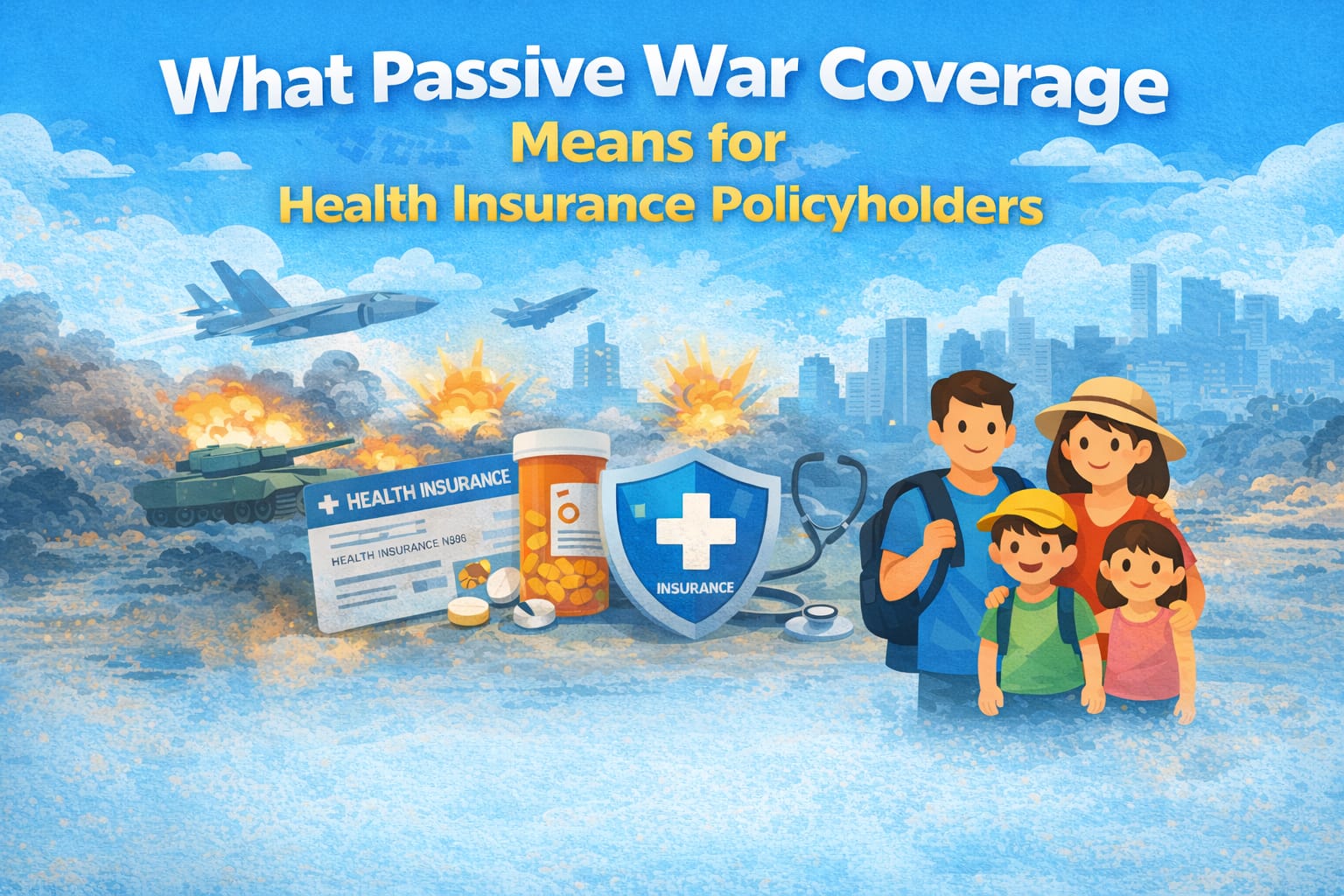
Passive war coverage generally means your health insurance may cover you for injuries from war or armed conflict when you are an uninvolved bystander, not an active participant. In the UAE, policies arranged through InsuranceMarket.ae provide at least life‑saving emergency treatment for war or terror injuries until you are stabilised, as required by local regulations.
Introduction: War Clauses in Health Insurance
In most health insurance policies, “war” and “armed conflict” are treated as special risks. Insurers often limit or exclude cover for injuries caused by war, riots, or terrorism, especially beyond immediate emergency care.
For residents in the UAE and wider region, understanding how war risk health insurance works and where passive war coverage fits in can be important, even if the risk feels remote. In this guide, we explain the basics in simple terms so you can read your policy with confidence.
What Is Passive War Coverage?
Passive war coverage is a type of war risk protection where you are covered if you are injured in a war, conflict, or terror event as a bystander for example, while going about normal daily life.
To understand this in a simple language:
- You are not fighting, working as security, or otherwise involved in the conflict.
- You are injured incidentally, such as being close to an explosion or attack.
- The policy may cover some part of your medical costs, depending on the insurer’s wording.
This is different from standard exclusions where all war‑related injuries are excluded. With passive war coverage, some limited protection is offered for innocent civilians caught in an event.
Active vs Passive War Coverage: Key Differences
Active war coverage usually refers to cover for people who are directly involved in the conflict, such a military personnel, Private security contractors and Volunteers or staff operating inside conflict zones
Passive war coverage refers to cover for ordinary civilians, people going about their normal life, and also travellers who are not there to participate in conflict
In short, active involvement in war or armed conflict is normally excluded and passive, incidental exposure as a bystander may have limited protection, depending on your policy.
Why Does Passive War Coverage Matter for Policyholders?
For most UAE residents, the main concern is not joining a war, but being caught unexpectedly in an incident especially when travelling. Passive war coverage can matter because:
- It may help with emergency medical costs if you are injured as a bystander.
- It reduces uncertainty about whether a claim will be considered at all.
- It can offer peace of mind when travelling to regions with higher instability.
However, even where passive war coverage exists, it is often limited as many policies focus on life‑threatening emergency treatment only, not long‑term or non‑urgent care.
What Does Passive War Coverage Include?
In passive war exact benefits depend on the insurer and policy wording, but in many cases passive war coverage will at least consider life‑threatening emergency treatment if you are injured by an act of war or terror as a bystander along with stabilisation in hospital care until your condition is no longer critical.
At InsuranceMarket.ae the policies we arrange will, at minimum, provide life‑threatening emergency medical treatment if you are injured due to an act of terror or war, until you are stabilised, as mandated by local UAE regulations (PD 02‑2017).
Beyond this minimum, additional cover (for example, extended hospital stays or rehabilitation) depends entirely on your individual policy.
What Is Typically Excluded Even Under Passive War Coverage?
Even when some passive war cover exists, insurers often exclude or tightly limit:
- Planned or non‑emergency treatment after you are stabilised
- Chronic conditions arising from war injuries that need long‑term care
- Mental health treatment related to war or terror events, unless explicitly included
- Injuries while actively participating in conflict, security work, or armed groups
Hence, there is great emphasis on reading the “Exclusions” and “War/Terror” sections of your policy. Always check whether cover is only for emergency stabilisation, or also for follow‑up care.
UAE Health Insurance and War Risk: What Regulators Say
In the UAE, there is a regulatory requirement (PD 02‑2017) that affects war and terror‑related claims:
- If you need life‑threatening emergency medical treatment as a result of an act of war or terror, policies issued through Alfred will provide at least coverage until you are stabilised.
- This is a minimum standard; individual insurers may offer more, but not less.
This requirement helps ensure that, in a genuine emergency, you are not denied critical treatment purely because the cause was war or terror.
How to Check If Your Policy Has Passive War Coverage
To understand your own level of health insurance armed conflict coverage, we recommend you:
- Read your policy schedule and wording – Look for sections titled “War”, “Terrorism”, “Political Risk” or “Exclusions”.
- Check the emergency treatment clause – See what is promised for life‑threatening emergencies and for how long.
- Ask your advisor – Share your policy wording with us and ask the following:
- “Does my health insurance include passive war coverage?”
- “Am I covered as a bystander in a war or terror incident?”
- Clarify travel situations – If you travel to higher‑risk regions, confirm whether your cover still applies.
Should You Look for Passive War Coverage in Your UAE Policy?
For many residents, passive war coverage is a useful safety net, not the main buying reason. You might prioritise it if:
- You travel frequently to politically sensitive areas.
- Your work involves embassies, NGOs, or infrastructure in volatile locations.
- You simply want extra reassurance in case of rare but serious events.
However, remember UAE‑mandated emergency stabilisation cover (PD 02‑2017) already ensures a baseline of emergency protection for war or terror‑related injuries. Additional passive war cover beyond this may vary and often comes with conditions and limits.
If this matters to you, let InsuranceMarket.ae help you compare quotes and highlight policies that give you the level of protection you are comfortable with.
Frequently Asked Question
What is passive war coverage in health insurance?
Does UAE health insurance cover war injuries?
Am I covered if I am injured in a conflict zone as a bystander?
How do I know if my policy has passive war coverage?
Conclusion
War and armed conflict are sensitive subjects, but from an insurance point of view they are mainly about how emergencies are handled. In the UAE, you have a regulatory safety net for life‑threatening war and terror injuries, and some policies may go further with passive war coverage for bystanders.
If you are unsure what your current health insurance covers, let InsuranceMarket.ae help you review your policy and explore alternatives that match your risk comfort and budget.
You can also call Instant Alfred to understand your options and help you compare quotes in minutes and find the most economical option for you.