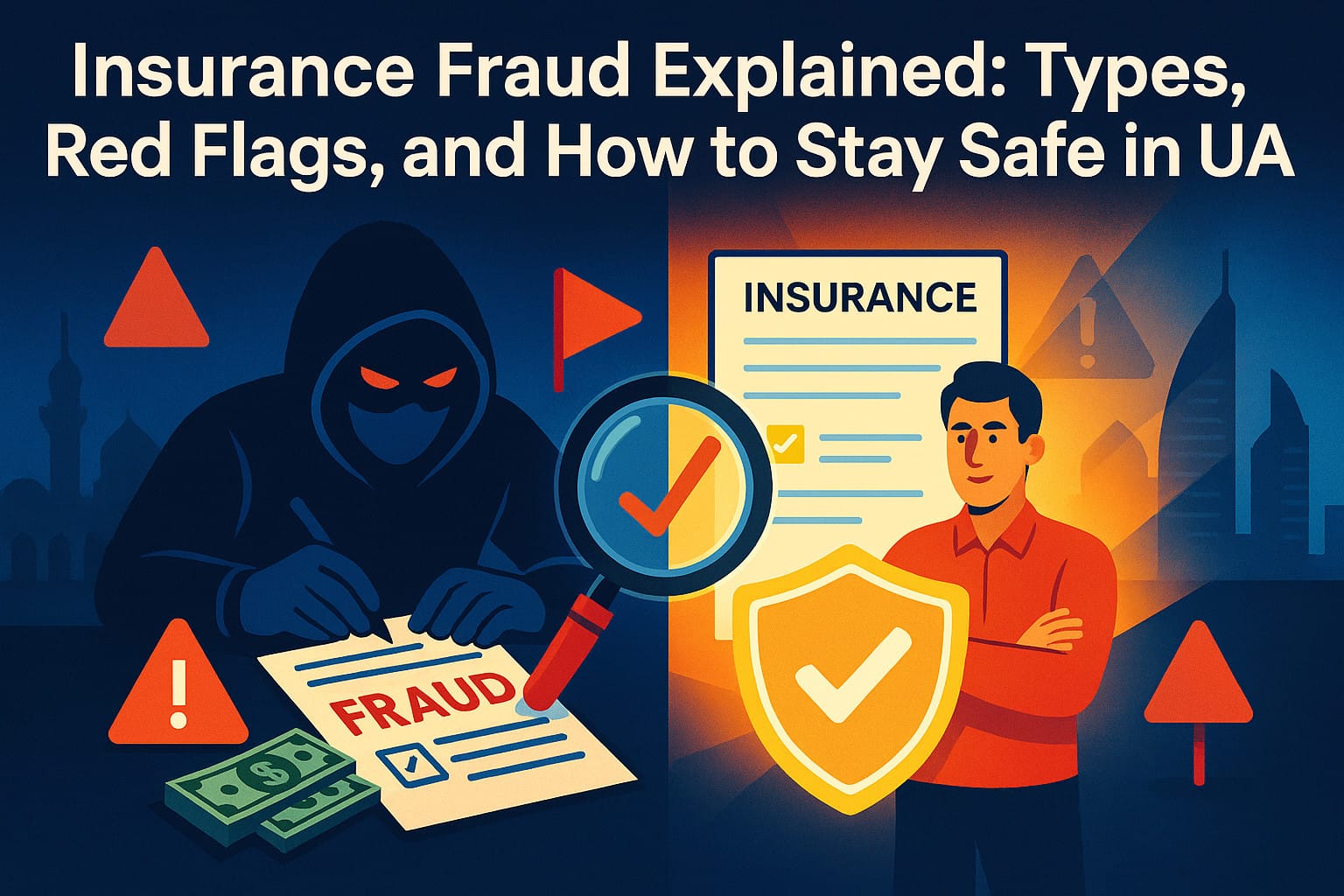
Insurance helps you manage medical and financial risk. But when people or organisations misuse the system, everyone pays more, and trust breaks down. In the UAE, regulators, insurers, TPAs and providers all work within clear rules to keep the system fair and sustainable.
This guide explains what “insurance fraud” usually means in the UAE context, common types and red flags, how insurers detect suspicious activity, and what you can do to stay safe while still getting the cover you are entitled to.
Quick Summary
Insurance fraud in the UAE is generally any intentional deception to obtain a benefit from an insurance policy to which you are not entitled, such as faking or inflating claims, hiding key information, or misusing networks. It can lead to claim rejection, policy cancellation and serious legal or regulatory consequences. Always be accurate, honest, and follow network and approval rules.
What Is Insurance Fraud?
In simple terms, insurance fraud is when someone knowingly gives false information or uses the system dishonestly to get an insurance benefit they are not entitled to.
In health and other insurance lines, the UAE system is built on clear policy terms and limits set by the insurer and regulator. Risk pooling, where many people pay, so the few with high costs are protected. Decisions based on contract and rules, not sympathy or pressure
Anything that deliberately misrepresents reality to break this structure, for example, hiding information, inflating bills, or using a cover for someone who is not eligible, is treated as fraudulent behaviour.
Common Types of Insurance Fraud
Below are typical types of insurance fraud you may encounter in the UAE. The exact legal classification is done by regulators and courts, but these patterns are widely recognised as problematic:
- Non‑disclosure and false information in the application
- Hiding pre‑existing conditions or medical history when filling a Medical Application Form (MAF), even though there is a clear duty of disclosure.
- Providing incorrect details about visa status, employment, or dependents to access benefits that are not actually allowed.
- Fraudulent insurance claims / exaggerating claims
- Claiming for treatment that never happened.
- Inflating bills or adding services that were not provided, often in collusion with a provider.
- Presenting a non‑covered service as a different, covered service. Insurers design products with specific limits, caps, and exclusions; trying to bypass those is misuse.
- Misuse of networks and access rules
- Providing incorrect, incomplete, or misleading information that makes a non-network provider appear as part of the insurer’s approved network, with the intention of receiving higher reimbursement, direct billing, or reduced cost-sharing that would not otherwise apply.
- Ignoring required referral and approval pathways (for example, going straight to a premium hospital or specialist on a low‑cost plan and later insisting it must be covered).
- Using someone else’s insurance identity
- Allowing another person to use your insurance card or details.
- Presenting yourself as an eligible dependent or employee when you are not actually covered. Eligibility is tightly linked to visa and sponsorship.
- Provider‑side fraud (behind the scenes)
Members may not always see this, but insurers and regulators watch for:- Systematic over‑treating or over‑billing.
- Billing for non‑medically‑necessary services just to increase claims, even though low‑cost plans are designed with strict limits, sub‑limits and caps.
In all of these insurance fraud examples, the common feature is intentional deception to obtain benefits outside the terms of the agreed-upon policy.
Insurance Fraud Laws in the UAE
The UAE treats deliberate fraud, including fraudulent insurance claims, as a serious matter. Regulators such as DHA, DoH, and MOHAP set mandatory healthcare requirements, approve insurance plans, and may intervene in cases of non-compliance or provider-side issues, while broader insurance misconduct and mis-selling are overseen by the Central Bank of the UAE.
From the perspective of an insured person, this means:
- Fraud can lead to claim rejection or partial payment where limits and rules are breached.
- Insurers can refuse to pay where there is clear non‑disclosure, misrepresentation, or use of non‑network providers in violation of policy rules.
- Persistent or serious fraud may trigger regulatory complaints, mis‑selling or misconduct investigations, and could have legal consequences.
Disclaimer: For exact insurance fraud penalties in the UAE (fines, imprisonment thresholds, visa consequences), you should always refer to UAE law and, if needed, obtain professional legal advice. This article focuses on practical behaviour and compliance, not legal interpretation.
Red Flags of Insurance Fraud
You should be cautious if you see any of the following “red flag” behaviours around a claim or policy:
- “We can make it look different for insurance” – A provider or middleman suggests changing codes, diagnoses, or dates so the insurer “will pay.” This conflicts with the principle that claims must reflect real treatment and policy terms.
- Pressure to sign incomplete or incorrect forms – Being asked to sign application or claim forms that do not reflect your true medical history or what actually happened. There is a clear duty to disclose accurately.
- Promises of “guaranteed approval” – Anyone (broker, employer, provider) promising that any claim, provider or treatment will be approved regardless of policy wording. The training is explicit that no one may override policy terms or guarantee outcomes.
- Sharing cards or IDs: being asked to lend your insurance card or Emirates ID to someone else “just for a visit.” Eligibility and employer obligations are strictly linked to the visa holder, dependents and domestic workers defined in law.
- Bills that do not match treatment – Invoices showing services you did not receive, or longer stays than actually occurred, especially if someone asks you “not to worry, insurance will pay.”
Whenever you see these red flags, it is safer to pause, ask questions, and, where possible, contact the insurer or InsuranceMarket.ae for clarification before proceeding.
How Insurance Companies Detect Fraud
Insurers and TPAs in the UAE do not make decisions based on emotion; they apply policy rules, medical necessity, and regulatory standards. Some of the main detection methods include:
- Structured policy checks – Every claim is checked against benefit limits, sub‑limits, exclusions, network rules and waiting periods. Unusual patterns trigger deeper review.
- Network and referral controls – Systems flag non‑network use, missing referrals, or specialist visits that skip required GP “gatekeeping” on low‑cost plans.
- Data analytics across many members – Insurers look at patterns, not only single cases: repeated high bills from one clinic, identical treatments for many patients, or unusual utilisation compared to similar risk groups.
- Clinical and audit reviews – Medical teams compare claimed treatment against standard practice and policy design. If something looks excessive or inconsistent, they can request more documentation or deny parts of the claim.
These controls are not designed to “punish” honest members; they exist to protect the risk pool so that when someone truly faces a high‑severity, unpredictable event (such as an accident or major surgery), funds are available to pay for it.
How to Stay Safe and Avoid Insurance Fraud
You do not need to fear your insurance; you just need to use it correctly. Simple habits can keep you on the right side of regulations and protect you from being pulled into fraudulent activity.
- Be fully honest on applications – Disclose medical history, existing conditions, medications, and any relevant symptoms accurately. Non‑disclosure can lead to claims being rejected later and may be treated as fraud.
- Use the network properly – Check which clinics and hospitals are in your network, especially on low‑cost plans with restricted access and referral requirements. Misuse of the network is a leading cause of rejections.
- Follow approvals and referrals – Get GP referrals and prior approvals where your plan requires them. Skipping these and then trying to “fix it later” is risky and often unsuccessful.
- Review your bills and documents – Ask for itemised bills and confirm they match the treatment you actually received. If anything looks wrong, raise it immediately with the provider or insurer.
- Never share your insurance ID – Do not allow others to use your card or Emirates ID for treatment. Eligibility is linked to your visa and sponsorship; misuse may be considered fraud by both parties.
- Be careful what others promise you – Remember: only policy documents, Tables of Benefits and written endorsements are binding. Verbal promises from anyone cannot change coverage.
If you are unsure, Call InsuranceMarket.ae to understand your options before you act. We can help you interpret your policy in plain language.
What Happens If You’re Accused of Insurance Fraud?
Being accused of fraud can be stressful. Often, disputes start as misunderstandings, not intentional crime; these include a poor understanding of limits, networks and approvals, which can lead to claims being seen as “misuse” rather than legitimate. Customers then feel something was “unfair” or “not explained,” leading to escalations, complaints and sometimes regulatory reviews.
If a claim is flagged as suspicious:
- The insurer/TPA may request more information – medical reports, invoices, referral letters, or proof of relationship/eligibility.
- The claim can be partially paid, fully rejected, or resubmitted once clarifications are given.
- Serious concerns may be escalated within the insurer, to regulators, or to formal dispute channels like Sanadak in Dubai.
If you believe the insurer has misunderstood your case, you should share complete, accurate documentation. Use the insurer’s formal complaint and appeal channels.
FAQs
Do UAE health insurance plans cover emergency visits?
However, you must still follow network rules after stabilisation; you may be transferred to an in‑network facility or different cost‑sharing may apply. Coverage is always subject to your policy’s limits, exclusions and approvals.
What is considered insurance fraud in the UAE?
What are the penalties for insurance fraud in the UAE?
Immediate claim denial or partial payment
Possible policy cancellation without refund of premiums, or non-renewal of the policy or refusal to renew
Regulatory or legal action in serious cases, especially where there is clear evidence of deception or collusion
The precise criminal and civil penalties depend on UAE law and the facts of each case; for exact details, you should seek legal advice.
Can exaggerating a claim be considered fraud?
How do insurers detect fraud?
They also investigate complaints, mis‑selling allegations and disclosure disputes, especially where misunderstandings at inception led to later conflicts.
How InsuranceMarket.ae Can Help
At InsuranceMarket, we focus on clear explanations and accurate expectations so that genuine claims are processed smoothly and you avoid accidental misuse of your cover. We help you:
- Understand your visa‑linked obligations and who must be covered
- Choose plans that match your risk, budget and network needs
- Navigate approvals, referrals and claims in line with policy rules
Compare quotes with us and find the most economical option for you, while staying fully compliant and protected