Travel is exciting whether you are flying out of Dubai for a quick city break, visiting family back home, or heading to a long‑planned bucket‑list destination. But unexpected events like medical emergencies, flight cancellations, or lost baggage can quickly turn a dream trip into a financial and emotional headache.
With so many travel insurance UAE options available, it is not enough to just pick the cheapest plan or the first one you see. You need a policy that actually fits your trip, health, and budget.
This step‑by‑step guide will show you how to compare travel insurance plans in the UAE, what coverage to look for, how to weigh cost vs value, and how to buy your policy online with confidence.
Why Comparing Travel Insurance Plans Matters
In the UAE, multiple insurers (and aggregator platforms) offer very different combinations of benefits, limits, and exclusions. A low‑premium policy might leave you under‑protected for medical emergencies, while a premium plan could include features you will never use.
Comparing travel insurance Dubai and UAE‑wide plans properly helps you:
- Avoid policies with serious gaps in travel insurance coverage
- Match cover to your destination, trip length, and activities
- Get better value for money instead of just the lowest price
- Choose insurers with smoother claims and 24/7 assistance
What Does Travel Insurance Cover in the UAE?
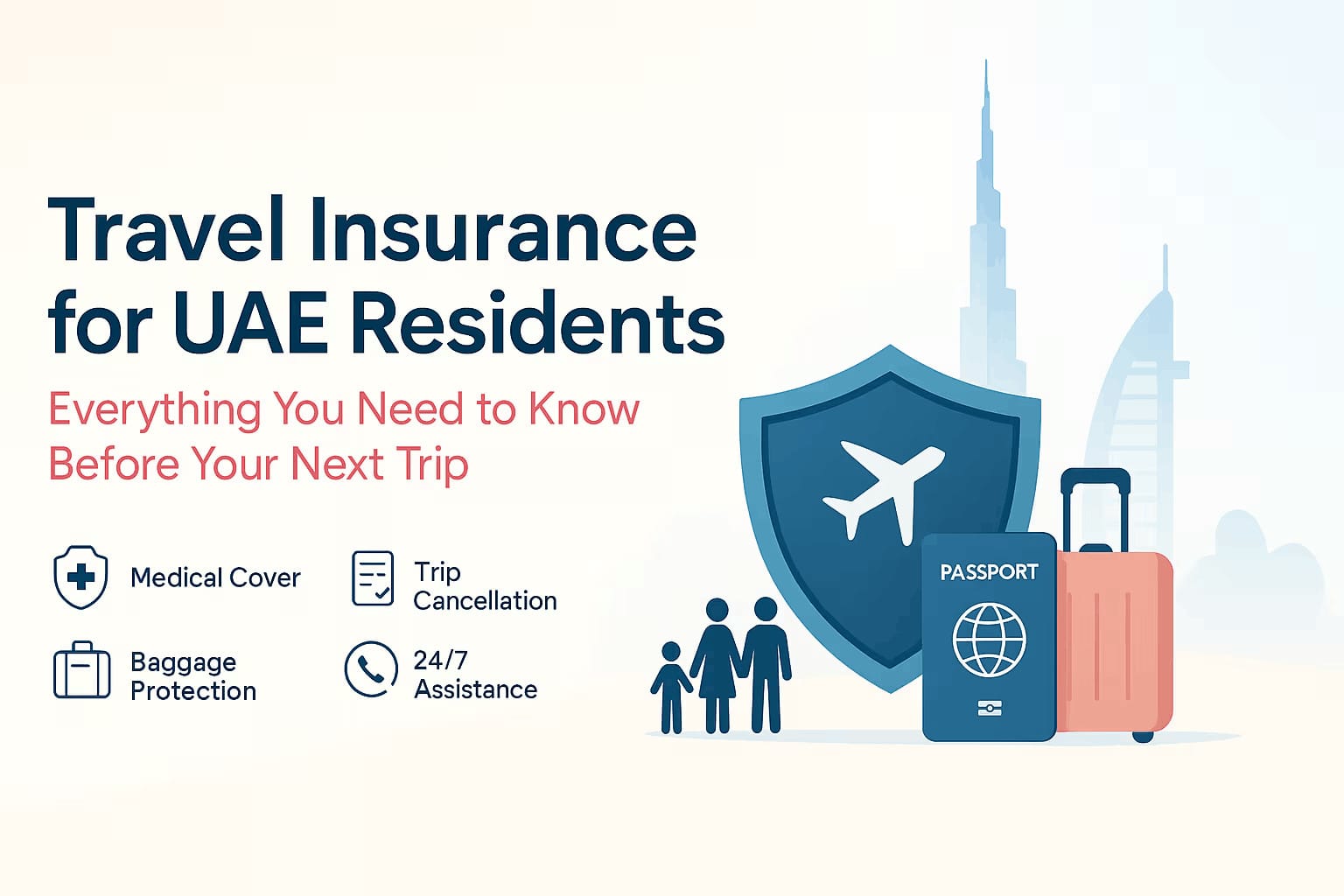
Though each insurer has its own wording, typical travel insurance coverage for UAE residents includes:
- Medical emergencies and evacuations
- Emergency treatment for sudden illness or injury
- Hospitalisation and medically necessary surgery
- Emergency medical evacuation or repatriation
- Trip cancellations, curtailments, and delays
- Non‑refundable flights, hotels, or tours if you cancel/interrupt due to covered reasons
- Extra accommodation/meal costs during covered delays
- Baggage and personal belongings
- Compensation for lost, stolen, or damaged baggage and personal items
- Sometimes cover for delayed baggage
- Loss or theft of passport
- Replacement costs and related expenses so you can continue your journey
- Accidental death or dismemberment
- Financial support to you or your family in severe injury or death cases
Optional add‑ons may include:
- Adventure/winter sports coverage
- War/terrorism extensions (for specific high‑risk destinations)
Step 1: Identify Your Travel Needs
Before you start comparing plans, get clear on the basics of your trip.
- Destination
Are you travelling within the GCC or Asia, or heading to higher-cost regions such as the USA or Europe? Healthcare expenses vary significantly by country, so some destinations may require higher medical coverage limits.
- Trip Duration
Is it a short getaway of a few days or a longer multi-week trip? Longer journeys generally involve higher premiums and greater overall risk exposure.
- Planned Activities
If you plan to ski, scuba dive, or participate in adventure sports, you may need specialised add-ons such as winter sports or adventure activity cover.
- Who Is Travelling?
Are you travelling alone, as a couple, or with children? In many cases, a family travel insurance plan can be more economical than purchasing multiple individual policies.
Being precise about your travel profile makes later comparisons much easier and more meaningful.
Step 2: Compare Coverage and Benefits
Once you know what you need, look beyond headline marketing and dig into the policy benefits. A low‑cost plan with weak coverage can be a false saving.
Key coverage areas to compare:
- Medical emergencies and evacuations
- What is the maximum medical limit per person?
- Are hospitalisation, surgery, and emergency evacuation all covered?
- Trip cancellations, curtailments, and delays
- Which reasons for cancellation or interruption are covered?
- What are the maximum reimbursement limits?
- From how many hours’ delay does compensation start?
- Baggage and personal belongings
- Overall baggage limit and per‑item limits for electronics or valuables
- Conditions for delayed baggage claims (e.g., minimum delay hours)
- Loss or theft of a passport
- Limit for replacement costs and related expenses
- Accidental death or dismemberment
- Lump‑sum benefits and what events trigger payment
- Adventure sports / high‑risk activities (if relevant)
- Are your planned activities automatically covered or do you need an add‑on?
- Terrorism/war cover (if relevant)
- Is travel to, from or through high‑risk or sanctioned regions excluded, or is an extension available?
Choose the plan whose core coverage aligns with your risks, rather than the one with the longest marketing list.
Step 3: Compare Costs and Value
Cost matters, but value matters more. Two plans with similar premiums can offer very different levels of protection.
When comparing prices:
- Look at premiums vs benefits side by side
- Is the cheaper plan missing essential benefits (e.g., low medical limit, no cancellation cover)?
- Does the more expensive plan include add‑ons you do not need?
- Check deductibles/excesses
- How much do you pay out‑of‑pocket before the insurer pays?
- A lower excess means fewer shocks during a claim, but may increase the premium.
- Review add‑ons carefully
- Only pay for optional covers that match your actual plans (e.g., winter sports, war cover, gadget cover).fileciteturn0file2turn0file4
Your goal is to find the best balance between premium and protection, not just the cheapest sticker price.
Step 4: Single‑Trip vs Annual Multi‑Trip Insurance – Which Is Right for You?
Choose the Right Type of Travel Insurance
- Your travel frequency plays an important role in selecting the right travel insurance plan in the UAE.
Single-Trip Travel Insurance
- Single-trip travel insurance is usually best suited for one-off or occasional travel, including longer individual journeys such as extended holidays or sabbaticals.
- It covers one specific trip from departure until your return and can provide protection for medical emergencies, trip cancellations, baggage issues, and other covered travel risks during that journey.
Annual / Multi-Trip Travel Insurance
- Annual or multi-trip travel insurance is generally more suitable for frequent travellers who take several trips each year for business or leisure.
- With one policy covering multiple journeys over a 12-month period, each trip is insured up to a specified maximum duration, such as 30, 45, or 60 days depending on the policy.
- This option can reduce the hassle of purchasing insurance for every trip and may offer better overall value for regular travellers.
General Rule of Thumb
- If you travel three or more times a year, it is worth comparing the cost and benefits of an annual multi-trip policy against buying multiple single-trip plans separately.
Step 5: Choose a Reliable Insurer
Not all insurers (or plans) are equal, especially when it comes to claims and support.
When assessing reliability:
- Customer reviews & ratings
- Look at user feedback on service quality and claims experience.
- Claims process efficiency
- Is there an easy online claims portal?
- Are documentation requirements clear and reasonable?
- 24/7 emergency assistance
- Essential if you need immediate medical help or evacuation coordination abroad.
- Support channels
- Can you reach them via phone, email, or WhatsApp from overseas?
Platforms like InsuranceMarket.ae can simplify this by pre‑selecting reputable insurers and giving you side‑by‑side comparisons.
Step 6: Read the Exclusions Carefully
Even the “best” travel insurance Dubai plan has limitations. Many complaints arise because people never read the exclusions.
Typical exclusions include:
- Pre‑existing medical conditions
- Usually excluded unless you buy a specific add‑on and the insurer accepts them.
- Extreme sports & high‑risk activities
- Injuries from activities like bungee jumping, deep‑sea diving, or off‑piste skiing may be excluded unless explicitly covered.
- Travel to sanctioned / high‑risk / war‑affected regions
- Trips to, from or through certain sanctioned or war‑zone countries may be excluded from any claims.
- Some plans offer war/terror extensions; always verify if your destination is covered.
- Alcohol or drug‑related incidents
- Claims arising from intoxication or illegal drug use are commonly rejected.
- Known events/travel advisories
- Many policies do not cover travel to destinations under official “do not travel” advisories.
If your trip involves any higher‑risk elements or complex routes, discuss them with your advisor before you buy.
Step 7: Buy Your Travel Insurance Online
Once you have compared coverage, exclusions, and price, you are ready to purchase.
Best‑practice steps:
- Compare quotes online
- Use platforms like InsuranceMarket.ae to compare multiple travel insurance options in the UAE in one place.
- Read the full policy document
- Confirm limits, areas of cover, exclusions, and the claims process before paying.
- Customise your cover
- Add any necessary extensions (sports, gadgets, war cover, etc.).
- Adjust limits to match your destination’s cost level.
- Keep your documents handy
- Save digital and printed copies of your policy certificate and emergency contact numbers.
Buying online is typically quick, with many insurers issuing policies instantly and emailing documents within minutes.
FAQs
1. When should I buy travel insurance in the UAE?
2. Is travel insurance mandatory for a UAE tourist visa?
3. Does travel insurance cover flight cancellations?
If the airline cancels due to operational issues, your first recourse is usually the airline (refund or rebooking).
If you must cancel due to a covered reason (e.g., illness, injury, certain emergencies), your trip‑cancellation cover may refund non‑refundable prepaid costs, subject to policy terms.
Cancellations for general fear of travel, change of mind, or known events are usually not covered.
Always check the policy’s trip‑cancellation section and list of valid reasons.
5. What is the best travel insurance for UAE residents travelling to Europe?
Sufficient medical limits that meet or exceed visa requirements
An area of cover that includes all countries you plan to visit
Strong cancellation and baggage cover for your specific trip cost
Any needed add‑ons (e.g., winter sports if you are skiing)
Comparing multiple quotes and matching cover to visa expectations and your travel style is the safest approach.
6. Does travel insurance cover COVID‑19?
Cover emergency medical treatment and hospitalisation if you catch COVID‑19 abroad
Provide trip‑cancellation benefits if you test positive before travel (in policies where this is explicitly listed)
Others may apply restrictions or exclusions. Always check the policy wording or ask your advisor to confirm exactly what COVID‑19 benefits are included.
Conclusion
Comparing travel insurance UAE plans is not just an administrative step, it is a key part of protecting your health, finances, and peace of mind whenever you leave the country.
To choose the best plan for your needs:
- Clarify your travel pattern, destination, and activities
- Compare coverage limits, benefits, and exclusions—not just price
- Decide between single‑trip and annual multi‑trip based on how often you fly
- Select a reputable insurer with strong support and a clear claims process
- Buy your travel insurance Dubai or UAE‑wide policy online before you go, and keep your documents handy
If you are unsure where to start, Check InsuranceMarket.ae to compare quotes in minutes and find a travel insurance plan that fits your budget, your itinerary, and your risk comfort level.