Even the most carefully planned trip can take an unexpected turn. A delayed flight can disrupt your itinerary, a lost suitcase can leave you without essentials, and a medical emergency abroad can quickly become a major financial burden.
While you cannot prevent every travel disruption, you can prepare for them. That’s where travel insurance plays an important role. It helps reduce the financial impact of unexpected events and provides access to assistance when you need it most.
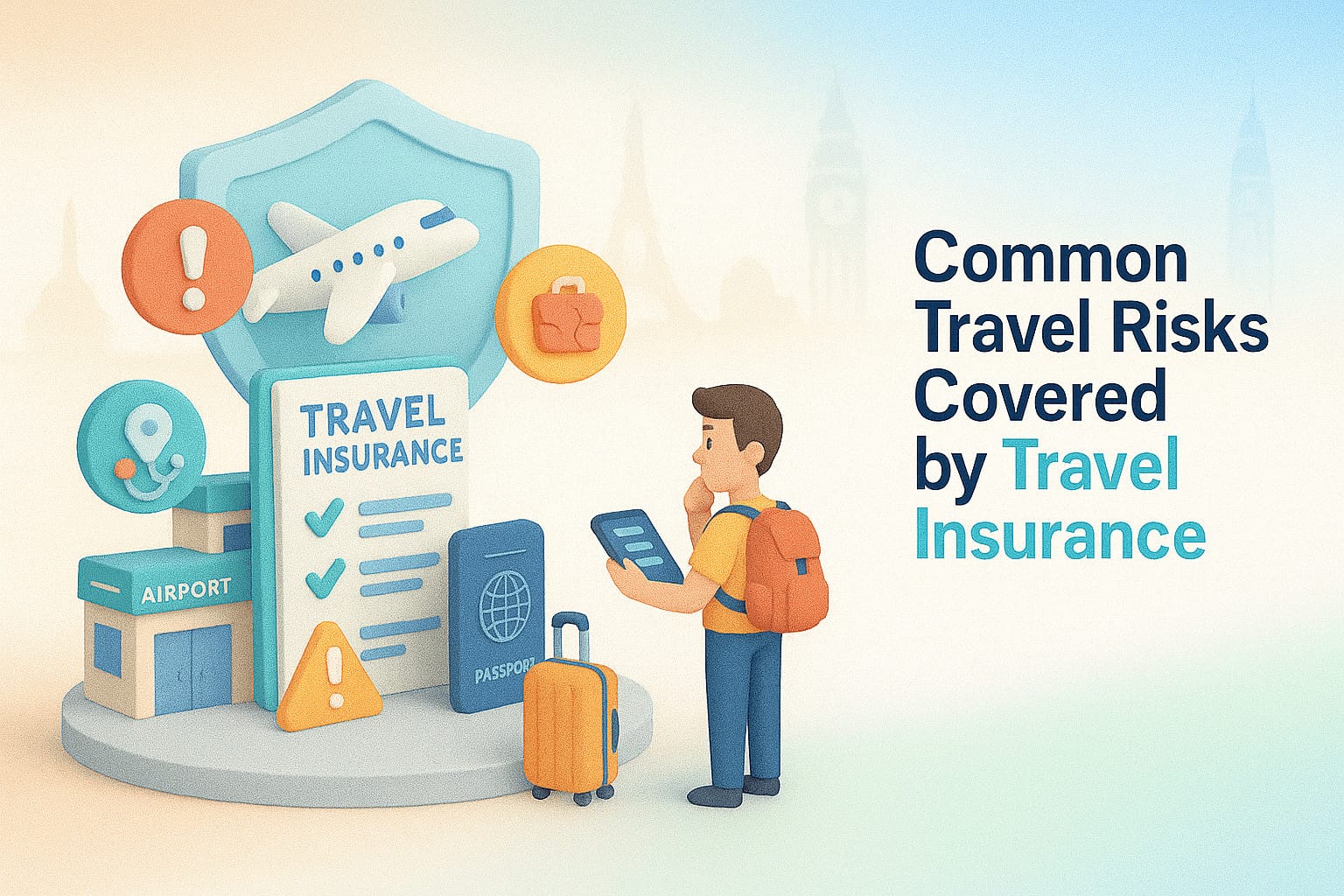
In this guide, we’ll look at the most common travel risks travellers face, how travel insurance can help, and what to watch for when comparing policies before your next trip.
Why Travel Insurance Matters
When we plan a trip, we focus on the best-case scenarios: beautiful destinations, relaxing itineraries, and seamless flights. However, travel rarely goes exactly according to script.
Travel insurance is a contractual agreement designed to protect your financial interests when specific travel-related problems disrupt your journey. While it cannot prevent unforeseen problems, it provides a vital safety net to manage the fallout when things go wrong. Without an active policy, you are left entirely on your own to absorb the costs of every single travel mishap.
The Four Pillars of Travel Protection
A comprehensive travel policy serves four critical functions to keep you and your finances safe while abroad:
- Covers Emergency Medical Care: Healthcare costs for tourists can be staggeringly high abroad. Travel insurance helps pay for emergency medical treatment and hospitalisation if you fall ill or sustain an injury abroad.
- Recovers Non-Refundable Trip Costs: If a sudden illness, family emergency, or severe weather disruption forces you to cancel or cut your trip short, insurance helps you recover your prepaid, non-refundable expenses like flights and hotel bookings.
- Replaces Essential Belongings: Luggage can get permanently lost, stolen, or delayed in transit. Your policy steps in to reimburse you so you can replace essential items and clothing without paying entirely out of your own savings.
- Provides 24/7 Crisis Support: Navigating a crisis in an unfamiliar country is stressful. Travel insurance grants you immediate access to professional help and global assistance lines 24 hours a day, 7 days a week.
Value-First Reality: Think of travel insurance not as an extra vacation expense, but as a tool to protect the total financial value of your trip. It turns potentially massive, unpredictable losses into a small, defined, and manageable cost, giving you true peace of mind on every journey
Medical Emergencies and Unexpected Illness
This is widely considered the most critical risk to manage when leaving the UAE. Medical care abroad can be exceptionally expensive for international visitors, as tourists are typically billed at private rates. A single night in a hospital or an unexpected surgery can easily cost far more than your entire vacation.
A standard travel insurance policy is specifically designed to shield you from this type of sudden financial shock by covering:
- Emergency Care: Coverage for urgent doctor visits and required hospitalisation.
- Treatments: Expenses related to emergency surgery and vital prescribed medications.
- Evacuation: Medical transportation and, if clinically necessary, repatriation back to the UAE.
Trip Cancellation Before Departure
Sometimes, a holiday is completely derailed before you even have a chance to pack your bags. Life is unpredictable, and you may find yourself forced to cancel your travel plans due to:
- A sudden, serious illness or severe injury affecting you or a travel companion.
- The unexpected death or critical illness of a close family member.
- Other specific, covered emergencies are explicitly outlined in your policy handbook.
If you have to cancel your trip for a covered reason, Cancellation Cover steps in to reimburse your prepaid, non-refundable expenses such as flights, hotel reservations, and tour bookings up to your policy’s specified limit. Without this protection, these payments are usually lost entirely.
Flight Delays, Travel Disruptions, and Missed Connections
Modern air travel is inherently vulnerable to structural disruptions, including prolonged flight delays, sudden last-minute cancellations, and unpredictable airport closures or labor strikes. To protect your wallet from these operational hurdles, many travel insurance policies bundle specific benefits designed to cover necessary out-of-pocket expenses during a significant delay, such as:
- Emergency overnight accommodation and essential meals.
- Reasonable local transportation costs to get you to and from your temporary lodging.
Note: To successfully file a delay claim, you must meet the minimum delay duration explicitly stated in your policy terms and secure official written proof of the disruption directly from your airline.
Furthermore, if a delayed incoming flight causes you to miss a subsequent confirmed connection, the financial ripple effects can require you to purchase an entirely new ticket or pay for an unplanned hotel night. Missed Connection Cover steps in to reimburse these secondary expenses, provided the root cause of the initial delay was a covered, insured event and not personal negligence such as booking an unrealistically tight transit window between flights.
Managing Luggage and Personal Belongings Mishaps
Baggage and asset management issues rank among the most common complaints voiced by global travelers. A comprehensive policy breaks down these risks into three distinct areas of protection:
- Checked Baggage Disruptions
Whether your checked bags are completely lost by the carrier, delayed by several hours or days, or returned to you severely broken and tampered with, travel insurance offers a structural fallback. Policies typically provide baseline financial compensation for permanently lost or badly damaged luggage up to a specified cap, alongside immediate funds to purchase essential daily clothing and toiletries if your bags suffer a prolonged delay.
- Loss or Theft of Personal Hand Belongings
Beyond the luggage you check at the counter, your mobile phone, camera, wallet, and day bag face everyday exposure to theft or loss while you are out exploring. Travel policies include dedicated, separate benefits to protect the items you carry. However, these payouts are strictly subject to policy limits and specific behavioural conditions; for example, your claim will be instantly declined if items were left completely unattended in a public space.
Check Your Insurance: Strict sub-limits regularly apply to premium electronics and luxury items. Always verify these internal caps before you depart to understand the maximum payout your insurer allows per item.
- Emergency Cash Assistance
If your wallet or cards are stolen, your insurer’s customer support network can offer limited coverage for lost cash, help you block compromised credit cards, and assist in arranging emergency funds via your family or bank to ensure you remain safe and mobile until your primary accounts are fully restored.
Passports, Personal Liability, and Global 24/7 Support
- Loss of Passports or Vital Travel Documents
Misplacing your passport or critical visas while abroad forces you to navigate embassy visits, face new document processing fees, and pay for unexpected hotel nights and local transit. Travel insurance minimizes this stress by contributing directly toward emergency replacement document fees and absorbing the reasonable hospitality costs linked to the disruption. While you must still personally execute the official embassy procedures, you won’t have to navigate the financial burden entirely alone.
- Personal Liability Incidents
If you accidentally cause physical injury to another person or damage someone else’s property while traveling, you can be held legally liable for massive compensation claims. Built-in Personal Liability Cover steps in to pay the damages you are legally responsible for and can even cover your formal legal defense costs under specific circumstances. Keep in mind that this specific protection never covers deliberate, illegal acts, nor does it serve as a substitute for standard motor insurance.
- The True Value of 24/7 Travel Assistance
Perhaps the most underrated component of a travel insurance policy is its integrated, 24/7 emergency assistance service. By dialing a single international hotline, you gain instant, round-the-clock access to professionals who can:
- Locate and direct you to approved local doctors or hospital networks.
- Provide real-time language translation support during medical or legal emergencies.
- Coordinate complex medical evacuations or specialized emergency transport.
- Deliver immediate, step-by-step logistical advice on what to do next in a foreign country.
When navigating a high-stress crisis far from home, having an expert guide you through the logistics can easily prove more valuable than the eventual financial claim payout itself.
Travel Risks That May Not Be Covered
Just as important as what is covered is what is often not covered. Common gaps include:
- Pre‑existing medical conditions not declared and accepted
- High‑risk sports and activities (for example, skiing, scuba diving, bungee jumping) without a specific add‑on
- Pandemics or epidemics, if excluded in the wording
- Travel against medical advice or after being declared unfit to fly
- Losses caused by carelessness (for example, valuables left unattended in public)
Always read the exclusions section carefully before you buy. That is where many misunderstandings and denied claims come from.
How to Choose the Right Travel Insurance
Here is a simple checklist for you to take while choosing the right travel insurance plan:
- Assess your trip: destination, duration, activities, and total cost.
- Prioritise emergency medical and evacuation cover – These are usually the largest potential expenses.
- Match cancellation cover to your non‑refundable spend – Add up flights, hotels, tours; your limit should comfortably cover this.
- Check baggage and belongings limits – Make sure they align with the value of what you are actually taking.
- Read exclusions and conditions – Pay special attention to pre‑existing conditions, sports, and pandemic wording.
- Buy early – Purchasing soon after booking ensures cancellation cover is effective from the start, not just on the departure day.
Conclusion
The most common travel risks: medical emergencies, cancellations, delays, lost baggage, theft and liability are exactly what standard travel insurance is designed to handle. Instead of hoping nothing goes wrong, you turn unpredictable events into defined, insurable risks with clear limits and support.
Before your next trip, take a few minutes to review your plans with InsuranceMarket.ae, compare policies, and choose travel insurance that accurately reflects your actual exposure. A smart choice today can make the difference between a minor inconvenience and a major financial setback tomorrow.