Introduction
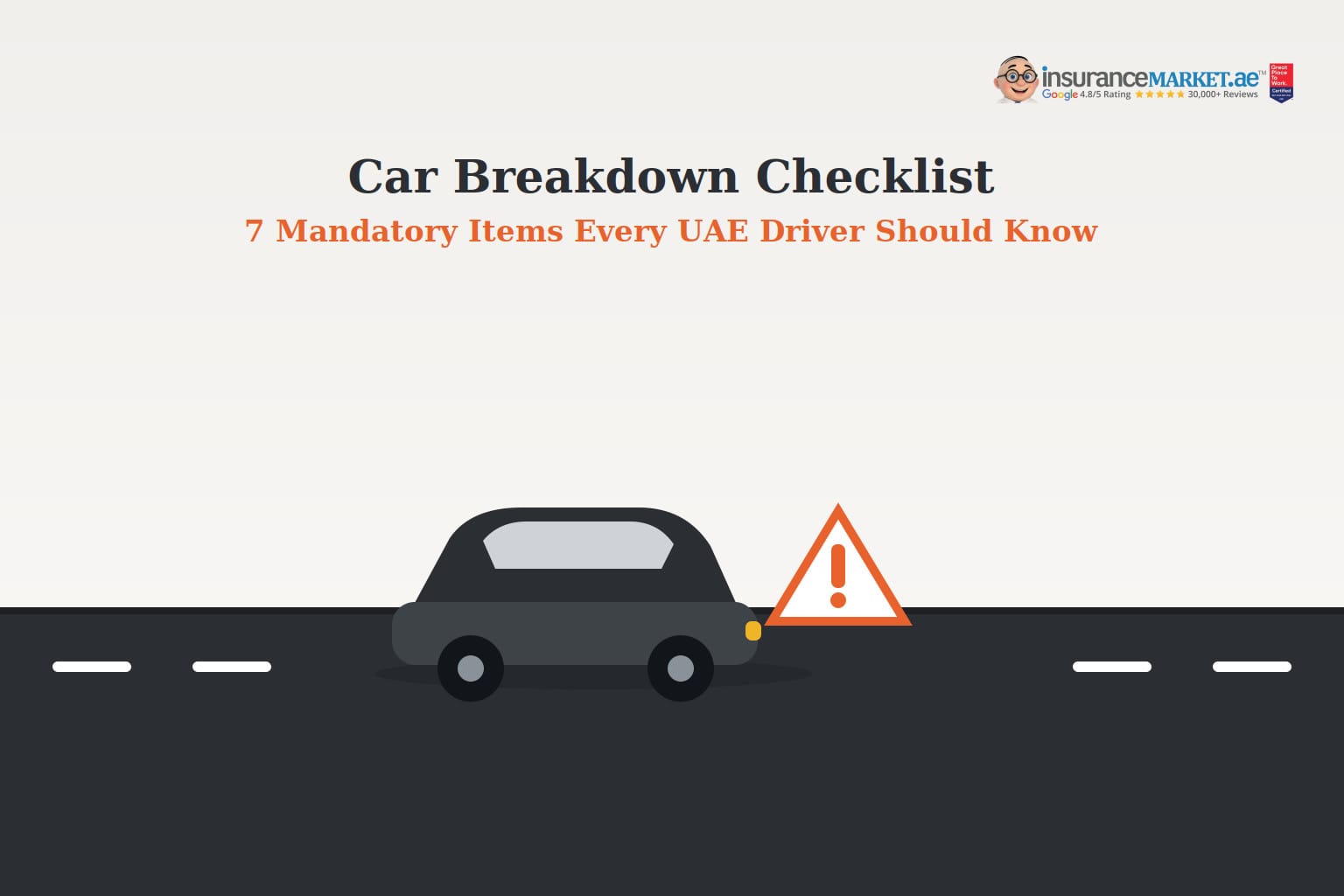
A breakdown in the UAE can escalate quickly: high speeds, high temperatures, and limited shade mean you must think about safety gear and procedure, not just repair. Having the right items in your car and knowing how to use them also supports smooth car insurance claims if something goes wrong.
This checklist covers the 7 must‑have breakdown items for UAE drivers, basic highway protocol, and how they link back to car insurance UAE compliance and protection.
The 7 Mandatory UAE Breakdown Items
“Mandatory” here means practically essential for safety, legal compliance, or claims some are required by law or strongly advised by authorities and insurers.
1. Warning Triangle
The purpose of this is to provide an advance warning to oncoming traffic of a stopped vehicle ahead. It is suggested to keep at least one, ideally two and has to be used on highways such as Sheikh Zayed Road, E311, etc. or any situation where visibility is reduced.
2. Reflective Safety Vest
This helps in increasing your visibility when you exit the car, especially at night. It is suggested to keep it in the door pocket or glovebox, not the boot.
3. Basic First Aid Kit
Very important for minor cuts or bruises while waiting for help. Not strictly an insurance requirement, but good practice in UAE conditions.
4. Fire Extinguisher (Vehicle-Suitable)
Many fleets and commercial vehicles are required to carry one; strongly recommended for private cars. It can control small fires before they become total‑loss events.
5. Torch / Emergency Light
This is essential for night‑time breakdowns, checking tyres or under‑bonnet areas safely, and prefer battery/USB‑rechargeable versions.
6. Phone Charger / Power Bank
You must be able to call roadside assistance, share your precise location and contact police if there’s an accident
7. Key Documents (Physical or Digital)
- Emirates ID
- Driving license
- Registration card (Mulkiya)
- Copy of your car insurance policy or e‑card
- Chassis number (VIN) reference useful for:
- Accident reporting
- Verifying vehicle identity in car insurance claims
- If needed, you can always use official portals later to how to check chassis number accuracy against Mulkiya and policy.
Tip: Store digital copies securely on your phone and in cloud storage.
Step-by-Step Breakdown of Highway Protocol in the UAE
If your car breaks down on a fast road:
1. Move to Safety (If Possible)
Indicate and carefully steer to the hard shoulder or a safe bay. Avoid slamming brakes or cutting across traffic.
2. Switch on Hazard Lights
Turn them on as soon as you recognize trouble; leave them on.
3. Wear Reflective Vest and Exit Safely
Exit on the side away from traffic. Escort passengers to a safe area behind a barrier if available.
4. Place the Warning Triangle
Walk carefully behind the vehicle to place it. Never stand in a live lane longer than absolutely necessary.
5. Call for Help
Roadside assistance insurer’s RSA number or RTA/emergency services, in this case you can even reach out to InsuranceMarket.ae by calling 800 Instant Alfred for prompt response. If there is an accident or hazard to others, call 999.
6. Stay Off the Carriageway
Wait behind a barrier or at a safe distance from your car and passing traffic. Do not attempt risky DIY repairs on the driver’s side next to fast‑moving traffic.
Following this protocol keeps you safe and shows you acted responsibly something insurers take into account when reviewing car insurance claims.
Compliance & Claim Protections
Here is what is important from compliance and claims protection point of view:
Legal compliance
It is important to have valid registration and car insurance UAE at all times. In an accident, a police report is required for most claims; your documents and chassis number should match your policy.
Breakdown vs Accident Claims
Pure breakdown e.g. dead battery, mechanical failure is usually handled via roadside assistance, not an accident claim. Accident damage such as impact, collision, etc. requires police report, correct vehicle identity (VIN) and timely notification to your insurer or your broker in InsuranceMarket.ae
Chassis number accuracy
If the VIN on your car, Mulkiya and policy doesn’t match, claims can be delayed or questioned. If you’re unsure, you can use official portals to check chassis number alignment and correct errors before you ever have to claim.
Being prepared and compliant at a breakdown or accident scene reduces the risk of disputes and speeds up your claim.
FAQs
Q: Is a fire extinguisher legally required inside every car in the UAE?
Q: How far behind my car should I place the warning triangle?
Always prioritise your own safety when placing it: never linger in a live lane.
Q: Will my insurance cover towing if my car breaks down due to a dead battery?
Q: What should I do if my car breaks down in the middle lane of a busy Dubai highway?
a. Activate hazard lights immediately.
b. Try to coast or carefully manoeuvre to the shoulder if the car still moves.
2. If the car is completely immobile:
a. Keep hazard lights on.
b. Do not attempt to push the car yourself in fast traffic.
c. Call 999 and clearly explain you are stopped in a live lane on a specific road and direction.
d, Follow police/road authority instructions; they can send patrols and recovery to secure the area.
3. Only exit if it’s safe
a. If there’s a barrier or verge and a break in traffic, exit to a safer spot; otherwise, authorities may tell you to remain inside with a seatbelt fastened until help arrives.
Once safe and off the road, you can coordinate with your insurer or your expert advisor from InsuranceMarket.ae for roadside assistance or towing. Your correct handling of the situation helps protect you and supports any subsequent car insurance claims for associated damage.
Conclusion
A breakdown kit isn’t just a box of tools, it’s a combination of equipment, knowledge and paperwork that keeps you safe and protects you legally and financially.
To be ready:
- Keep the 7 key breakdown items in your car.
- Know the basic highway protocol in the UAE.
- Make sure your car insurance UAE policy is active, your chassis number is correctly recorded, and you know your roadside assistance options.
That way, if your car stops unexpectedly, your safety plan and your insurance can start working immediately.