Driving in Dubai places unique demands on your vehicle, and your tyres are often the first components to feel the impact. Extreme summer temperatures, high-speed motorway driving, long commutes, and occasional desert trips can all accelerate tyre wear and increase the risk of tyre-related incidents.
While many drivers focus on engine servicing and insurance renewals, tyre maintenance is sometimes overlooked until a problem occurs. Yet tyres play a critical role in vehicle safety, affecting braking performance, handling, fuel efficiency, and overall driving stability.
Proper tyre care is not just about avoiding breakdowns or extending tyre life. In some situations, poor tyre maintenance can contribute to accidents, lead to costly repairs, and even complicate the claims process if a vehicle is found to be in an unsafe condition.
In this guide, we’ll share practical tyre care tips every Dubai driver should know and explain why maintaining your tyres is an important part of responsible vehicle ownership and how it can support a safer driving experience alongside your car insurance in Dubai.
Why Tyre Care Is So Important for Dubai Drivers
Your tyres are the only part of the car that actually touches the road. In UAE conditions, poor tyre care can lead to:
- Longer braking distances
- Higher risk of skids and loss of control
- Tyre blowouts at highway speeds
- Failed RTA inspections and registration delays
Many serious accidents start with worn or under‑inflated tyres exactly the kind of avoidable risk insurers and regulators want to reduce.
Common Tyre Problems Drivers Face in Dubai
Dubai’s driving environment can be particularly tough on tyres. High road temperatures, long highway journeys, frequent stop-and-go traffic, and occasional encounters with road debris can all contribute to faster tyre wear and unexpected issues.
Some of the most common tyre problems Dubai drivers face include:
Under-Inflation
Driving with insufficient tyre pressure is one of the most common and potentially dangerous tyre-related issues. Under-inflated tyres generate more heat, increase rolling resistance, and place additional stress on the tyre’s structure. This can lead to overheating, sidewall damage and higher fuel consumption.
Over‑inflation
While less common, over-inflated tyres can also affect vehicle safety and performance. Excess pressure reduces the tyre’s contact with the road surface, which may impact grip and ride comfort. Potential consequences can reduce grip and cause uneven wear in the centre of the tread.
Uneven Tyre Wear
If your tyres are wearing down unevenly, it could indicate an underlying issue with the vehicle rather than the tyres themselves. Common causes include misalignment, suspension issues or poor rotation habits.
Aging / dry‑rot
Even if tyres appear to have sufficient tread, age can affect their performance. Prolonged exposure to Dubai’s heat and sunlight can cause the rubber compound to harden, dry out, and develop small cracks over time.
Punctures and Sidewall Damage
Road debris, construction zones, sharp objects, and accidental curb impacts can all damage tyres unexpectedly.
Why Early Detection Matters?
Many tyre problems develop gradually and may go unnoticed until they affect vehicle performance or safety. Regular tyre inspections can help identify issues before they become serious, reducing the risk of breakdowns, costly repairs, or tyre-related accidents. A few minutes spent checking tyre condition and pressure each month can go a long way towards keeping you safe on Dubai’s roads.
Essential Tyre Care Tips Every Driver Should Follow
Basic tyre maintenance habits in Dubai that make a big difference
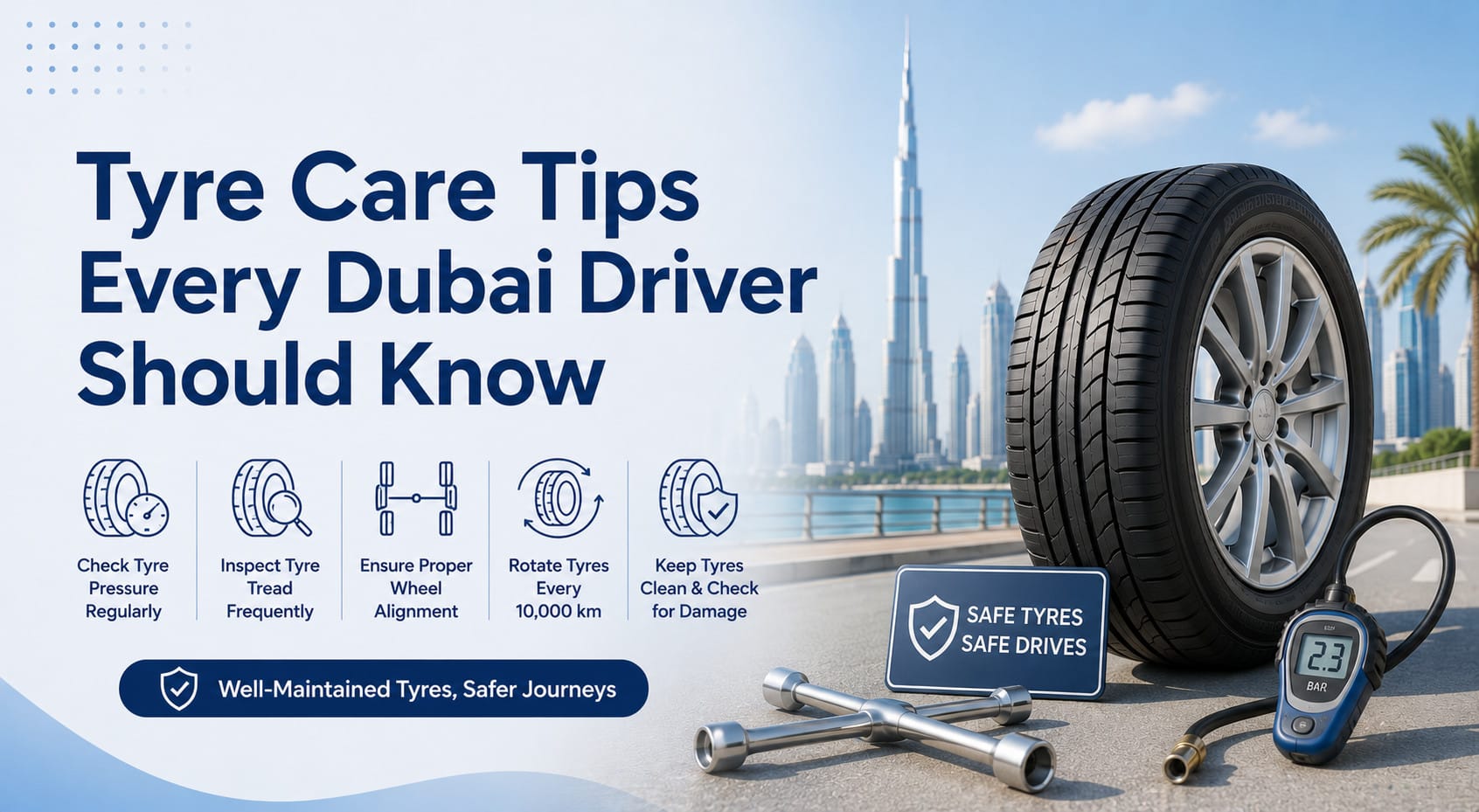
- Check pressure at least once a month – Use the manufacturer’s recommended PSI on the door jamb or manual. Always check when tires are “cold” before a long drive.
- Inspect tread depth – Look for wear indicators; if tread is close to or below them, it is time to replace. Uneven wear inside or outside shoulders suggests alignment or suspension issues.
- Rotate tyres regularly – Follow your service schedule (often every 8,000–10,000 km). Rotation evens out wear and can extend tyre life.
- Avoid hard impacts – Slow down for speed bumps; avoid hitting kerbs or deep potholes.
- Do not overload the car – Exceeding load limits increases heat build‑up and tyre stress.
How Dubai’s Summer Heat Affects Tyres
Here is how Dubai’s summer heat can affect your tyre:
- Raises road surface temperatures well beyond air temperature.
- Increases tyre air pressure as the air inside expands.
- Accelerates rubber aging, especially on parked vehicles left in direct sun.
Tips for summer car tyre maintenance:
- Check pressures more frequently; adjust if they climb above recommended levels.
- Try to park in shade or covered areas to reduce heat and UV exposure.
- Be extra careful on long, high‑speed journeys when tyres are under maximum strain.
The Link Between Tyre Care and Car Insurance
Motor insurance in the UAE is based on indemnity and utmost good faith. You must take reasonable care of your vehicle including tyres. Insurers expect you not to ignore obvious safety issues .If an accident is clearly linked to negligent tyre condition, for example, driving on dangerously worn tyres this can:
- Lead to tougher questions during claim assessment.
- Increase the chance of disputes about liability or contributory negligence.
Even when claims are paid, a poor claims history (including avoidable accidents) can increase future motor insurance Dubai premiums.
Does Dubai Car Insurance Cover Tyre Damage?
In most cases third‑party car insurance policies do not cover damage to your own tires (or vehicle). Comprehensive car insurance policies may cover tyre damage only when linked to a covered accident, not general wear and tear or slow punctures.
Tyres are usually treated as consumable parts. Insurance is there to cover sudden, unforeseen events, not normal maintenance. Always check your own policy wording or ask your insurer/broker how tyre damage is handled in claims.
What to Do If You Experience a Tyre Blowout
If a tyre blows out while driving:
- Stay calm and hold the steering wheel firmly
- Do not slam the brakes, gradually ease off the accelerator instead.
- Signal and move to a safe spot on the hard shoulder.
- Turn on hazard lights and set up a warning triangle if safe.
- Call roadside assistance from your insurer or a trusted provider if you cannot safely change the tyre yourself.
Once safe, inspect other tyres; a blowout may indicate poor condition or incorrect pressure across the set.
Roadside Assistance: An Often‑Overlooked Car Insurance Benefit
Many comprehensive Dubai car insurance policies include roadside assistance or offer it as an add‑on. This can cover:
- Tyre change assistance
- Towing to an approved garage if the tyre cannot be made roadworthy
- Help at any time of day or night
For highway drivers and families, roadside assistance is one of the most useful and economical benefits to keep in your policy.
FAQs
How often should I check my tires in Dubai?
Can Dubai’s summer heat damage tyres?
What causes tyre blowouts?
Does car insurance cover tyre damage in Dubai?
Does roadside assistance help with flat tyres?
When should tyres be replaced in the UAE?
Conclusion
Tyre care is one of the simplest ways to protect yourself, your passengers and your wallet in Dubai. By keeping tyres in good condition, you:
- Reduce the risk of serious accidents
- Avoid inspection and registration problems
- Support a smoother, safer experience if you ever need to rely on your car insurance Dubai policy
If you are updating your motor insurance Dubai cover, consider adding or confirming roadside assistance and other practical benefits that support you when tyre issues strike and let expert advisors at InsuranceMarket.ae help you compare policies so you get strong protection at an economical price.