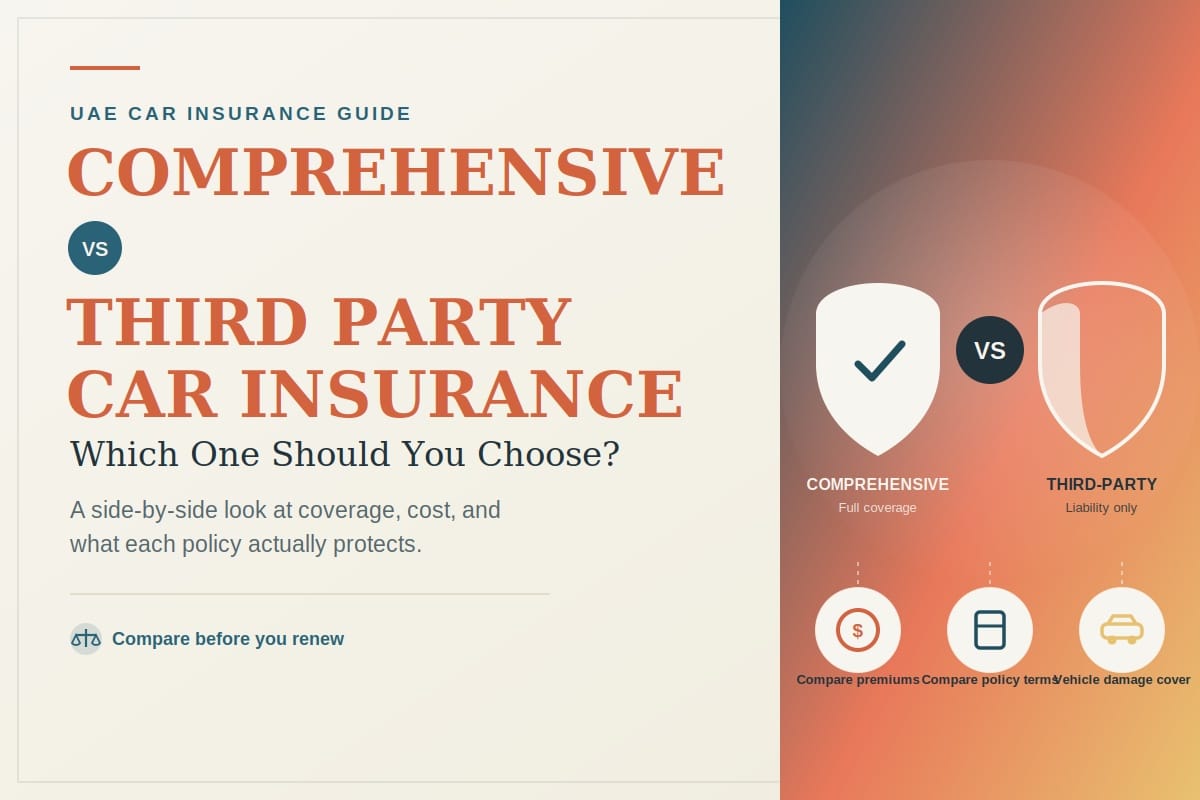
The choice depends on what you could afford if your car needed repair or replacement. Third-party cover addresses liability to others; comprehensive cover also protects your own car against insured losses. Check your finance agreement, vehicle value and repair budget before deciding.
Compare third-party car insurance and comprehensive options using the same driver and vehicle details.
What Is Third-Party Car Insurance?
Third-party car insurance (Third-Party Liability or TPL) is the minimum level of cover required by UAE law to drive your vehicle. It covers your legal liability to others, such as damage to their vehicle or property and injury caused by your driving. It does not cover damage to your own car, or theft or fire affecting it.
Review third-party cover exclusions before accepting the risk to your own vehicle.
Third-party cover can suit you if you are on a budget, your car is of relatively low value and cheap to repair, and you can easily cover repair costs yourself.
What Is Comprehensive Car Insurance?
Comprehensive car insurance covers your liability to others, as third-party cover does, and also insured damage to your own car, including accidental damage, fire and theft. Optional benefits such as a hire car or roadside assistance can be added.
Read the comprehensive insurance meaning guide for a fuller definition.
Comprehensive car insurance cover is a good option if you have a car you cannot afford to repair if something happens, your vehicle is essential to your life, so you’d need a replacement or hire car if it is off the road, the vehicle you have is of relatively high value, have an auto‑loan or finance with an outstanding balance, includes a decent No Claims Discount that can help offset the base premium and if you are an experienced driver who wants to protect NCD which is sometimes not possible with just third party policies
Third Party vs Comprehensive Car Insurance: Key Differences Coverage
| Aspect | Third Party Car Insurance | Comprehensive Car Insurance |
| Coverage | Protects only third parties (their cars, property, and injuries) when you are at fault. | Protects third parties and your own car against insured events such as accident damage, fire, theft, and more (depending on the policy). |
| Financial Risk | You pay all costs to repair or replace your own car. | The insurer pays according to the policy terms and limits, leaving you mainly responsible for the excess. |
| Price | Generally more economical upfront. | Costs more, but provides significantly broader protection and greater peace of mind. |
| Who It Suits | Lower-value cars, tighter budgets, or drivers who are comfortable self-funding damage to their own vehicle. | Higher-value or financed cars, people who rely heavily on their vehicle, or anyone who cannot easily absorb a major repair bill. |
Three questions before you choose
Does your lender require comprehensive cover? Could you afford to replace the car from savings? Would being without a vehicle affect your work or family commitments? Use these answers to judge the difference in premium.
Which One Should You Choose? Depends on These Factors
When deciding between third party vs comprehensive car insurance, here are a few things you should think about:
1. Car Value and Age
- New / high‑value / financed – comprehensive is usually the sensible choice (and often required by banks).
- Older / low‑value – third party can be acceptable if you’re happy to pay your own repair or replacement costs.
2. Your Budget vs Risk Appetite
- If you blew most of your budget on buying the car and couldn’t afford a big repair bill, comprehensively helps protect you.
- If you can easily replace or fix your car yourself, you might accept the risk of third party.
3. How Essential Your Car Is
- If your car is essential to your work and family life, think about getting comprehensive, including add‑ons like hire car benefit and roadside assistance so you are not stuck if your car is off the road.
4. Your Experience and No Claims Discount
A new licence does not, by itself, make third-party cover the better option. Ask for available quotes for both types and consider whether you could pay for damage to your own car. Discount eligibility depends on the insurer and recognised claims history.
See these questions to ask before choosing cover if you need another worked-through explanation.
Common Misconceptions About Comprehensive and Third-Party Cover
Misconception 1 – “The third party cover is always the smartest because it’s cheaper.”
Reality – Not if one accident could wipe out your savings or leave you without a car you rely on daily.
Misconception 2 – “Comprehensive is only for luxury cars.”
Reality – Comprehensive is “more affordable than many realise” and is mainly about whether you can afford to fix or replace your car, not just whether it is a luxury badge.
Misconception 3- “If I drive carefully, a third party is enough.”
Reality – Even careful drivers can be hit by others, or suffer fire, theft or parking damage. A third party car insurance cover does not help with any of that for your own car.
Misconception 4 – “I can’t change; I’m stuck with what I bought.”
Reality – In many cases you can upgrade to comprehensive at renewal, and depending on the insurer, sometimes mid‑policy (subject to underwriting and pro‑rated premiums).
Frequently Asked Questions
1. Can I switch from third-party to comprehensive mid-policy?
Others may only allow changes at renewal. Connect with expert advisors at InsuranceMarket.ae to explore your options.
2. Does comprehensive insurance cover theft in the UAE?
3. Is comprehensive insurance mandatory for new cars in the UAE?
4. What happens if I only have a third-party cover and cause an accident to my own car?
Conclusion – Choose the Right Insurance Cover That Fits Your Needs
In the UAE, the choice is simple on paper to choose is either third party car insurance or comprehensive car insurance but the right answer depends on:
- How much your car is worth
- How easily you could pay for repairs or replacement yourself
- How essential the car is to your daily life and work
- Whether you have finance, and what your bank requires
- Your budget and your comfort with risk
If in doubt, lean towards comprehensiveness for newer or higher‑value cars, and only consider a third party when your vehicle is low‑value and you are genuinely comfortable taking on the risk.
Car insurance expert advisors at InsuranceMarket.ae help you compare car insurance UAE‑wide so you can see third party vs comprehensive options side‑by‑side and choose the cover that truly fits your life, not just your premium today.