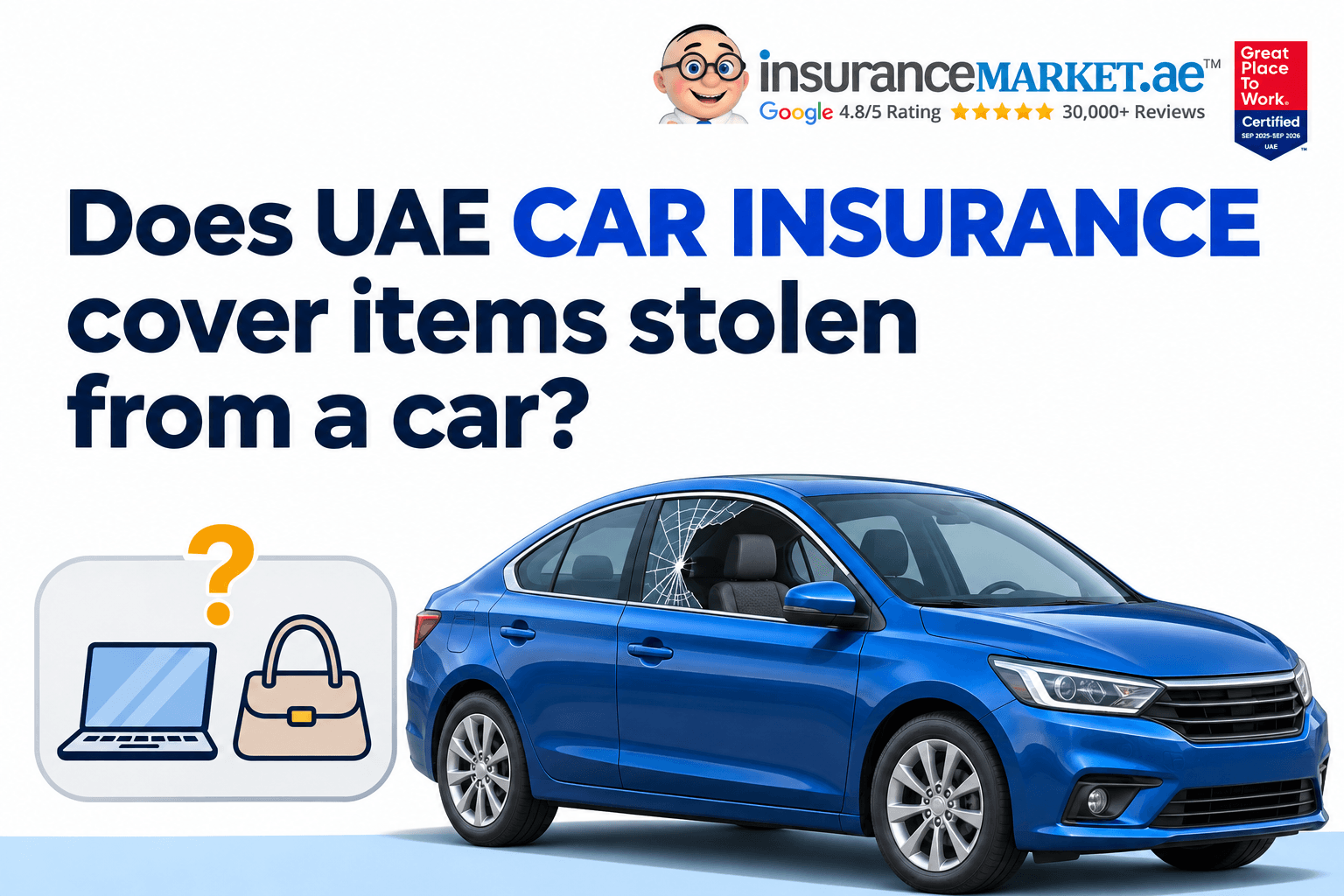
Does car insurance cover personal items stolen from your vehicle
Finding your car broken into is upsetting, especially when your bag, phone or laptop is missing. Comprehensive car insurance may cover repairs to the vehicle, but it doesn't automatically cover everything stolen from inside it.
Cover for your belongings depends on the benefits, limits and exclusions in your policy. This guide explains what to check in your motor and home insurance, which policy might respond, and what you need to support a claim.
Are car theft and theft from a car different claims
Yes. Insurers assess the vehicle and its contents as different types of loss.
Car theft
The vehicle itself is stolen. Comprehensive motor insurance can cover this loss if theft is included and the policy conditions are met.
Theft from a car
Items are stolen from inside the vehicle, sometimes with damage to a window or lock. Repairs to the car are assessed under motor cover. Stolen belongings are assessed separately under any applicable personal-effects or personal-belongings benefit.
What might comprehensive car insurance cover
Comprehensive motor insurance generally includes:
· Accidental damage to the insured vehicle.
· Fire and theft of the vehicle, subject to policy terms.
· Third-party liability.
· Additional benefits, such as roadside assistance or a replacement car, where included or selected.
Some policies also include a personal-effects benefit for belongings carried in the car. This has its own limit and exclusions. Don't assume it will cover the full value of electronics or jewelry, even if the vehicle repairs are covered. For example:
After a break-in, check these parts of your policy:
- Vehicle damage: repairs to broken windows, locks or bodywork may be covered, subject to the applicable excess and policy conditions.
- Personal belongings: a personal-effects benefit may pay for eligible items up to its stated limit.
- Excluded items: electronics, valuables or items left unattended may have specific restrictions.
What counts as personal possessions
Personal possessions are portable items you carry with you. Depending on the policy definition, these may include:
· Clothing, bags and wallets.
· Watches and sunglasses.
· Phones, tablets, cameras and laptops.
· Portable accessories and documents, where included.
Being a personal possession doesn't mean an item is insured. Policies can exclude cash, documents or certain valuables. They may also apply a single-item limit, which caps the amount payable for one item unless higher cover has been agreed. Check both the item category and the theft conditions.
What is a personal-effects benefit
A personal-effects benefit provides cover for eligible belongings in the circumstances set out in the policy. Motor cover may apply to items carried in the insured car. Home or travel insurance may include separate benefits for belongings away from home, with different limits and conditions. The benefit may have an overall limit and a separate limit per item. For theft from a vehicle, the insurer may require:
- Evidence of forcible entry to a securely locked vehicle.
- A police report identifying the stolen items.
- Proof of ownership and value, such as receipts or purchase records.
Some wordings also require items to be out of sight in a locked boot or concealed compartment. Check the exact conditions before relying on either motor or home insurance for belongings left in a car.
When might a theft claim be declined
A claim may be reduced or declined if an applicable policy condition is not met. Examples include:
- The vehicle was unlocked or there is no evidence of forced entry where the policy requires it.
- Items were left visible on a seat rather than stored as required by the policy.
- The theft happened in a location or during circumstances excluded by the relevant vehicle-theft wording.
- A required police report or supporting evidence is missing.
- The stolen property falls into an excluded category, such as cash, undeclared valuables or business equipment that has not been specifically covered.
Don't apply a home policy's general communal-area exclusion to a car claim without checking the relevant section. The insurer should assess the actual loss against the applicable wording. Damage to the vehicle and loss of belongings can have different claim outcomes.
Which insurance policy should you claim under
Start with the benefits you already hold. Your motor policy may cover the break-in damage and some personal effects. A home policy may cover eligible belongings away from home if that section includes theft from vehicles. Basic home contents cover alone doesn't guarantee this protection.
Motor and home insurance compared
| Feature | Comprehensive motor insurance | Home or personal-belongings cover |
| Break-in damage to the car | May cover repairs, subject to terms and excess | Does not normally cover vehicle repairs |
| Theft of the vehicle | Covered if theft is included and conditions are met | Does not normally cover the vehicle |
| Belongings stolen from the car | May include a limited personal-effects benefit | May apply if the selected section covers theft from vehicles |
| Laptop or phone | Check electronics and unattended-item exclusions, plus limits | Check item limits, valuables exclusions and vehicle storage conditions |
| Claim conditions | Motor wording and any personal-effects extension apply | Relevant cover-away-from-home wording applies |
| Excess | Check the excess for the benefit claimed | Check the excess for the benefit claimed |
When reporting the loss Contact your motor insurer about damage to the vehicle and any personal-effects benefit. If your home or personal-belongings policy may also apply, notify that insurer and disclose the other policy. Ask how the claim should be handled; you can't recover the same loss twice.
How to check your cover before leaving items in a car
A few checks can help you understand the limits of your cover.
1. Read your motor policy
Look for a personal-effects or personal-belongings section. Check the overall limit, excluded items, excess and security requirements.
2. Review your home insurance
Check any cover for contents temporarily removed or personal belongings away from home. Confirm that theft from a vehicle is included and read the storage and forced-entry conditions.
3. Check high-value items
If a laptop, camera or item of jewelry exceeds the single-item limit, ask whether it can be listed separately. Listing an item does not automatically remove vehicle-theft exclusions.
4. Store belongings securely
Avoid leaving valuables in the car, particularly overnight. If you must leave items briefly, follow the policy requirements for a locked boot or concealed compartment. Lock the vehicle and choose a secure, well-lit parking area.
After a theft, report it to the police and notify the insurer promptly. Photograph any damage and keep purchase records for the missing items. These help the insurer assess what happened and the value of the loss.
FAQs
1. Does comprehensive car insurance cover a laptop stolen from a car
2. Will insurance pay for a window broken during a theft
3. Does car insurance cover a stolen mobile phone
4. Can I claim through home insurance for items stolen from my vehicle
5. Do I need a police report
How InsuranceMarket.ae can help
If you are unsure which policy covers belongings in your car, InsuranceMarket.ae can help you:
· Understand the vehicle-damage and personal-effects sections of your motor policy.
· Check whether home contents or personal-belongings cover includes theft from vehicles.
· Compare benefit limits, exclusions and excesses across available policies.
· Identify the documents needed for a claim and the insurer to contact.
Ask our team to check the items you want to insure and how you usually carry them. We can help you compare the available cover before you rely on a policy for belongings left in your vehicle.