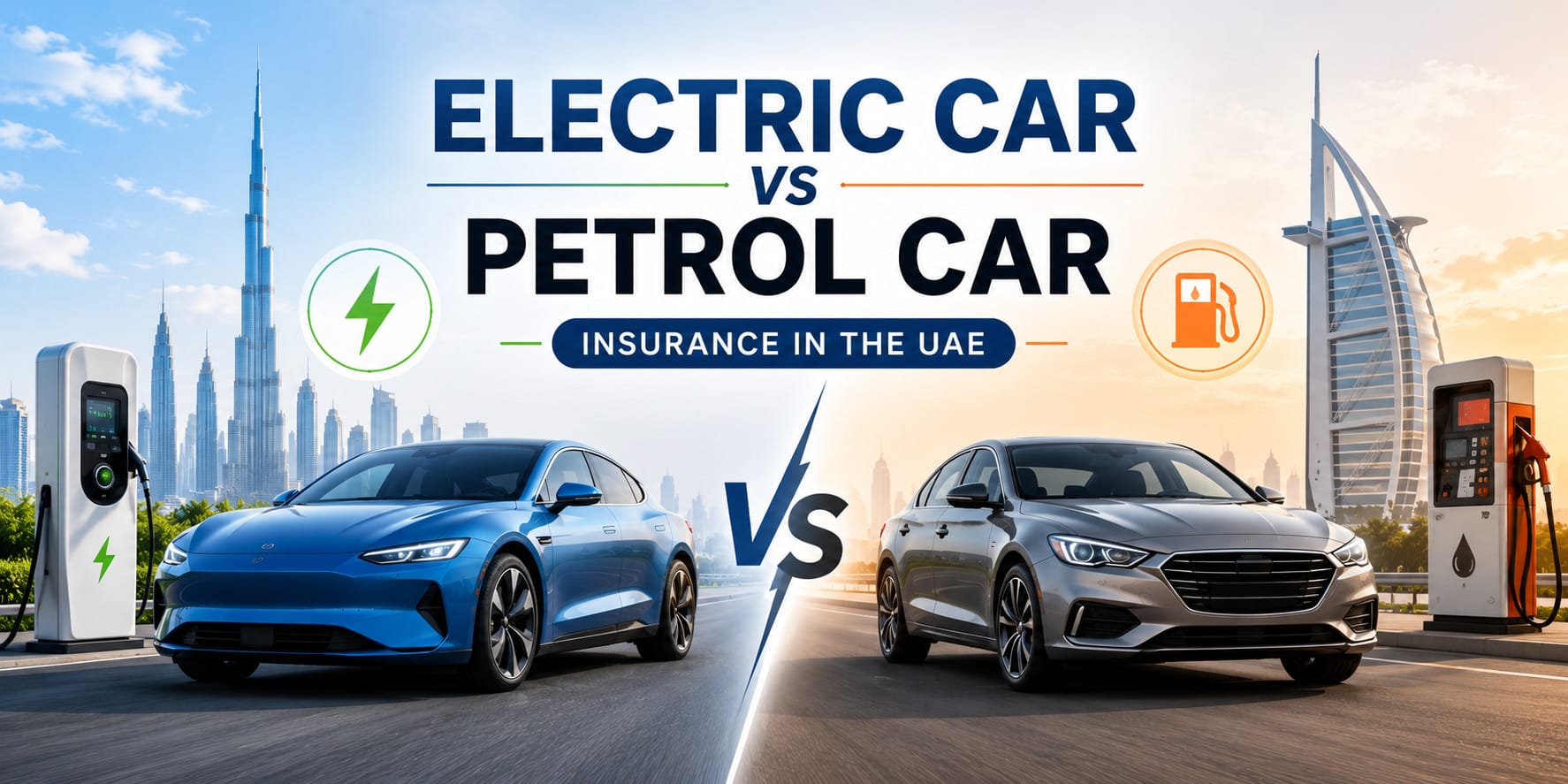
Electric vehicles (EVs) are becoming more visible on UAE roads, especially in Dubai and Abu Dhabi. But when it comes to insurance, many drivers are unsure whether electric cars are treated differently from traditional petrol cars.
This guide explains how car insurance works in the UAE, the main differences between electric car insurance UAE and petrol car insurance, and what you should compare before you buy.
How Car Insurance Works in the UAE
Third-Party Liability (TPL)
Third-Party car insurance is the minimum level of cover required by law in the UAE. It covers injury, death, and property damage caused to other people in an accident where you are at fault.
Comprehensive Insurance
Comprehensive car insurance provides broader protection by covering damage to your own vehicle, in addition to third-party liability. It may also include protection against risks such as fire, theft, and other covered events, depending on the policy terms.
Key Insurance Principles
Motor insurance is built on a few core principles that apply to both EVs and petrol vehicles:
Insurable Interest – You must have a genuine financial interest in the vehicle being insured. In simple terms, you need to own the car, finance it, lease it, or otherwise stand to suffer a financial loss if it is damaged or lost.
Indemnity – The purpose of insurance is to restore you to your financial position before a covered loss occurred. It is designed to compensate for the loss, not allow you to profit from it.
Whether your vehicle runs on electricity or petrol, these principles form the foundation of how motor insurance works in the UAE.
Are Electric Cars Insured Differently from Petrol Cars?
From a policy inclusion perspective, EV insurance and petrol car insurance are largely the same. You still have to choose between Third-Party Liability (TPL) and Comprehensive Insurance, and based on that you can enhance your cover with optional benefits such as:
- Roadside assistance
- Hire car cover
- Personal Accident Benefit (PAB)
- GCC extension
- Windscreen cover
- Other insurer-specific add-ons
The key differences usually arise behind the scenes, particularly in how insurers assess and manage risk. These differences may include:
- Repair costs and parts availability – EVs often require specialised parts, equipment, and repair expertise.
- Battery and high-voltage component coverage – Insurers may have specific terms relating to battery systems and other electric vehicle components.
- Roadside assistance requirements – EV-related breakdowns can differ from traditional vehicles, such as issues related to battery charge or specialised recovery needs rather than fuel-related problems.
In other words, EV insurance is not a separate category of motor insurance under UAE law. However, insurers may apply different underwriting criteria and pricing models to reflect the unique characteristics and repair requirements of electric vehicles.
Electric Car vs Petrol Car Insurance: Key Differences
| Feature / Aspect | Electric Car Insurance UAE | Petrol Car Insurance UAE |
| Basic policy types | TPL & Comprehensive (same structure) | TPL & Comprehensive (same structure) |
| Main insured asset | Car + EV battery & electronics | Car + engine & conventional components |
| Repair networks | Often limited to specific EV‑capable workshops | Wider choice of authorised and non‑agency garages |
| Parts and labour costs | Can be higher for some models, specialist work | Typically more standardised and widely available |
| Roadside issues | Flat battery, charging faults | Running out of fuel, overheating, misfuelling |
| Roadside assistance focus | Towing to EV‑capable facilities, safe handling | Towing, basic on‑site fixes (tyres, battery, fuel) |
| Optional covers | Similar: roadside, hire car, PAB, GCC, etc. | Similar: roadside, hire car, PAB, GCC, etc. |
Here the differences are mainly practical decisions you make and more cost‑related.
What Does Electric Car Insurance Typically Cover?
A comprehensive electric vehicle (EV) insurance policy in the UAE generally provides many of the same protections as a comprehensive policy for a petrol-powered car, while also addressing the unique features of electric vehicles.
Typical coverage includes:
- Damage to your vehicle resulting from collisions, accidents, fire, theft, or vandalism.
- Protection for the vehicle’s body, interior, and other insured components.
- Third-Party Liability cover for injury, death, or property damage caused to others.
- Coverage for the battery pack and high-voltage electrical components when they are damaged as a result of an insured event, such as an accident or fire, subject to policy terms and limits.
Many insurers also offer optional benefits such as:
- Roadside assistance, including towing to suitably equipped EV repair facilities where available.
- Hire car or hire car cash benefits while your vehicle is being repaired.
- Personal accident cover, emergency medical expenses, and ambulance benefits.
- GCC extension cover for drivers who travel outside the UAE.
It is important to note that EV batteries are generally covered only when they are damaged by an insured event. Normal wear and tear, gradual deterioration, or a reduction in battery capacity over time are typically considered maintenance-related issues and are not covered by motor insurance policies.
What Does Petrol Car Insurance Typically Cover?
A comprehensive petrol car insurance UAE policy normally includes third‑party liability (legal minimum, plus Blood Money cover) Damage to your own car from accidents, fire, theft and other insured risks and sometimes also include natural perils such as flood, sand/saline damage, depending on the insurer
Optional add-on benefits include:
- Roadside assistance (towing, flat tyre help, battery jump‑start, fuel delivery)
- Off‑road cover for 4×4 use (with exclusions like racing or dune bashing)
- Hire car / hire car cash benefit
- Personal accident and medical benefits
The main difference vs EV is that the engine and fuel system are the key mechanical risks rather than a battery pack.
Factors That Can Affect Insurance Premiums (EV and Petrol)
When calculating car insurance premiums, UAE insurers generally assess the same core risk factors for both electric and petrol vehicles. These typically include:
- Vehicle value, age, and expected repair costs
- Make and model, including safety features, performance characteristics, and theft risk
- Driver profile, such as age, UAE driving experience, and claims history (including any No-Claims Discount)
- Type of coverage selected, whether Third-Party Liability (TPL) or Comprehensive Insurance
- Repair network preference, such as agency repairs versus approved non-agency garages
- Optional benefits and add-ons, including roadside assistance, hire car cover, GCC extension, off-road cover, and personal accident benefits
While the rating factors are broadly the same, electric vehicles may sometimes attract higher premiums due to factors such as:
- More expensive replacement parts
- Specialist repair requirements
- Higher labour costs
- A more limited network of qualified repair facilities
That said, not all EVs are automatically more expensive to insure. Some models may be priced similarly to comparable petrol vehicles, particularly where repair costs, parts availability, and servicing networks are well established. Ultimately, the premium will depend on the specific vehicle, driver profile, and insurer’s underwriting approach.
Battery Considerations for Electric Vehicles
For EVs, the battery is a major component of the insured value. Here are the key points to keep in mind:
- Damage to the battery from a covered event (accident, fire, etc.) can be insured under comprehensive cover, subject to limits and conditions.
- Gradual degradation, normal ageing, or manufacturer defects are usually not covered by motor insurance; they are typically handled under the vehicle or battery warranty, if applicable.
- Water, flood or saline exposure can be particularly relevant to battery safety; you should confirm whether natural perils are included or must be added as a rider.
When you request EV insurance UAE quotes, it is always better to specifically ask how the battery is treated in terms of coverage and repair network.
Roadside Assistance: EV vs Petrol Vehicle Needs
Whether you drive an electric vehicle (EV) or a petrol-powered car, roadside assistance can provide valuable support when unexpected issues arise. Typical services may include:
- Towing assistance
- Flat tyre replacement or support
- Battery jump-start services for applicable 12V battery systems
- Lockout assistance if your keys are locked inside the vehicle
- Fuel delivery for petrol or diesel vehicles that run out of fuel
For electric vehicles, roadside assistance may also address EV-specific situations, such as:
- Towing when the main traction battery is fully depleted
- Recovery assistance following charging system or charging-related faults
- Safe handling and transportation procedures for vehicles equipped with high-voltage battery systems
Regardless of the type of vehicle you drive, it is important to review your roadside assistance benefits carefully. Check that your policy includes adequate towing distances, suitable recovery services, and access to providers equipped to handle your specific vehicle type, especially if you own an electric vehicle.
Are Electric Cars More Expensive to Insure?
There is no single answer; it depends on the specific EV and the specific petrol car you are comparing. Typically, insurers may:
- Price some EVs higher due to higher parts costs, fewer repair centres and longer repair times
- Price others similarly to equivalent petrol cars if the brand has strong local support and repair networks and claim experience is favourable
The only reliable way to know is to compare personalized quotes for your exact model with expert advisories, looking at both premium and cover.
What Should UAE Drivers Compare Before Buying Insurance?
Whether you drive an electric vehicle or a petrol-powered car, taking the time to compare policies carefully can help you find the right balance between cost and protection. Key factors to consider include:
- Coverage type – Decide whether Third-Party Liability (TPL) or Comprehensive car insurance best suits your needs and vehicle value.
- Sum insured – Ensure the insured value accurately reflects your vehicle’s current market value to avoid being underinsured or overpaying for cover.
- Battery coverage (for EVs) – Review how the battery and high-voltage components are treated, including what is covered and any exclusions that may apply.
- Repair network – Check whether the policy offers agency repairs, approved non-agency garages, and access to workshops equipped to handle EV repairs if relevant.
- Roadside assistance – Compare benefits such as towing limits, recovery services, and the provider’s ability to support electric vehicles where applicable.
- Optional add-ons – Consider benefits such as hire car cover, personal accident protection, GCC extension, off-road cover, and other extras that match your driving habits.
- Policy excess (deductible) – Understand how much you will need to contribute towards a claim before the insurer pays the remaining covered costs.
- Insurer reputation and service quality – Look beyond price and consider the insurer’s claims process, customer support, repair network, and overall service experience.
A thorough comparison can help ensure you choose a policy that not only fits your budget but also provides the level of protection and support you are likely to need on the road.
FAQs
Is electric car insurance different from petrol car insurance in the UAE?
Are electric cars more expensive to insure?
Does car insurance cover EV batteries?
Can I get comprehensive insurance for an electric car?
Does roadside assistance work differently for EVs?
Should insurance costs influence my EV buying decision?
Conclusion
For UAE drivers, the difference between electric car insurance and petrol car insurance is less about the policy structure and more about the practical considerations behind the cover. Factors such as battery value, repair costs, specialist workshops, roadside assistance requirements, and insurer risk assessments can all influence how an EV is insured and priced.
Whether you’re making the switch to an electric vehicle or continuing to drive a petrol-powered car, it’s worth taking the time to choose a policy that reflects how you actually use your vehicle.
Before buying cover, make sure you:
- Choose a comprehensive policy that aligns with your vehicle’s value and driving habits.
- Understand how key components such as EV batteries or petrol vehicle engines are treated under the policy.
- Select roadside assistance and hire car benefits that match your lifestyle and travel needs.
- Compare coverage, benefits, and service quality, not just premiums.
At InsuranceMarket.ae, we help you compare car insurance options across leading UAE insurers, making it easier to find an economical policy that offers the right level of protection, whether you drive an EV or a petrol car.