Nobody plans to be involved in an incident while driving, and for most people, their time on the road is safe and uneventful. However, there may be occasions when getting caught up in an incident is unavoidable, especially when someone else is responsible. In such cases, and depending on personal circumstances, you may need to make a claim.
But what should you look out for when making a car insurance claim? All too often, claims are rejected or only partially accepted by insurers due to the making of some basic errors. This blog explores some top tips to help you take the pain out of making a claim!
What to do when making a claim
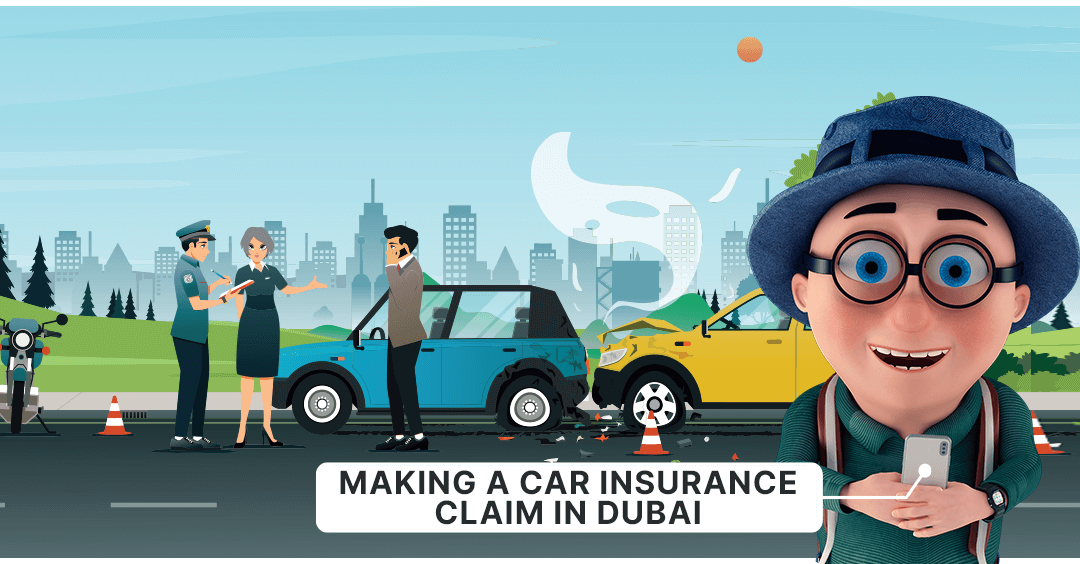
The actions you take will be broadly governed by the sort of situation you are claiming. If you’re involved in a collision on the road, you’ll need to notify both the police and your insurance company, whether you caused it or not. If the claim involves theft or damage to your vehicle by unknown persons, you’ll need to involve the police and your insurer. If the claim is for your own accidental damage, like you hitting the wall surrounding your property, for example, and no one else was involved, then this can be reported just to your insurer.
I’ve been involved in a collision. What should I do?
You can report the accident to the police by calling 999 or by using the Dubai Police app (if you’re in Dubai, of course!). The app’s functionality supports completing a basic accident report form and allows for the upload of pictures of the scene. It’s an easy and convenient method that takes just a few minutes, saving you the wait for the police to attend the scene. Unfortunately, this only works in Dubai, so you’ll need to call the police if in one of the other emirates.
How to make your claim
Don’t delay – make your claim on the day! Any claims process takes time, so it is advisable to start the process early. As soon as you have an accident report and any supporting evidence (such as photos of the scene), you can start your claim. Contact your insurance broker or insurance company directly, depending on how you took out the policy, and follow all the steps that their representative advises.
If your vehicle is damaged and in need of repair, you should be able to use the roadside assistance available under your car insurance policy to get you out of the roadside and take the vehicle to a garage or to your home. Most insurers offer this free, 24/7 coverage as part of their comprehensive car insurance policies, so it’s worthwhile checking yours to ensure you have this invaluable extension.
How are claims decided?
When it comes to claims, it’s all a question of liability. Put, who is judged to be “at fault.” Your insurer must judge who caused the incident and therefore who is responsible (known as liable) for paying the damage repair costs, and any compensation for injuries sustained. Several factors are taken into account, including whether any laws were broken at the time of the incident (e.g., speeding, contravention of a traffic signal), and whether there is evidence to demonstrate how the incident occurred, such as CCTV footage or eyewitness statements. The police attending the post-accident scene will also prepare a report, the contents of which may be relevant depending on what they observe.
Once all available evidence has been gathered, a decision will be made regarding liability or fault. Suppose you’re able to gather evidence yourself at the scene of the accident as soon as it happens. In that case, it can really help. Therefore, any visual evidence you can collate, such as a photo or video of the accident scene, or dashcam footage if you have one fitted, can prove essential.
What is a non-fault claim?
If you’re involved in an incident but not responsible for causing it, this is known as a non-fault claim. In such cases, your insurer can attempt to recover the total cost of a claim from the person responsible (the third party). If they’re proven to be at fault, then there is no liability on you, and as such, the claim won’t go against you. However, there are times when you could be involved in an incident that wasn’t your fault, but the claim still gets classed as if it were. An example of this is where the incident was caused by an unidentified third party, such as a driver who left the scene of the accident, or an animal was involved. With no third party to claim against, you become liable for the claim, and it will go on your claims record.
Does the type of car insurance I have affect my claim?
If it’s decided you weren’t to blame for the incident, your claim will be met by the other driver’s policy, so long as they have the minimum legal requirement of third-party insurance, you’ll be fine. If, however, you were at fault, you need to have Comprehensive car insurance to claim for your own vehicle’s damage.
If it wasn’t my fault, do I need to claim on my own car insurance?
If the accident was someone else’s fault, and you have their details, you should be able to claim directly from their car insurance policy, meaning you don’t need to claim on your own policy. You should notify your insurers of the incident anyway, in case you need their assistance.
I’ve damaged my car, should I claim?
This is a personal choice and depends on the level of damage sustained. If it’s minor, it might be worth repairing the damage at your own cost and not making a claim, since any claim on your own insurance policy will result in a loss of any no claims discount you receive, and ultimately increase your premium at the next renewal.
Regardless of your decision, you must still notify your insurance provider of the incident, whether you file a claim or not, as this is a policy term and condition.
Do I need to declare a non-fault claim?
Definitely, most insurers have a clause in the policy that states you need to tell them about any incident you’ve been involved in, whether you were at fault or not. Failure to comply with these terms and conditions may invalidate your policy coverage, so it’s essential to report everything accurately.
Does declaring a non-fault claim affect my insurance?
Unfortunately, all incidents reported to your insurer will be considered by them when considering the renewal of your cover. This may result in higher future premiums, depending on the circumstances. However, the good news is that a non-fault claim shouldn’t affect your no-claims discount, so you can continue to have this applied to your policy to offset the premium cost.