Introduction
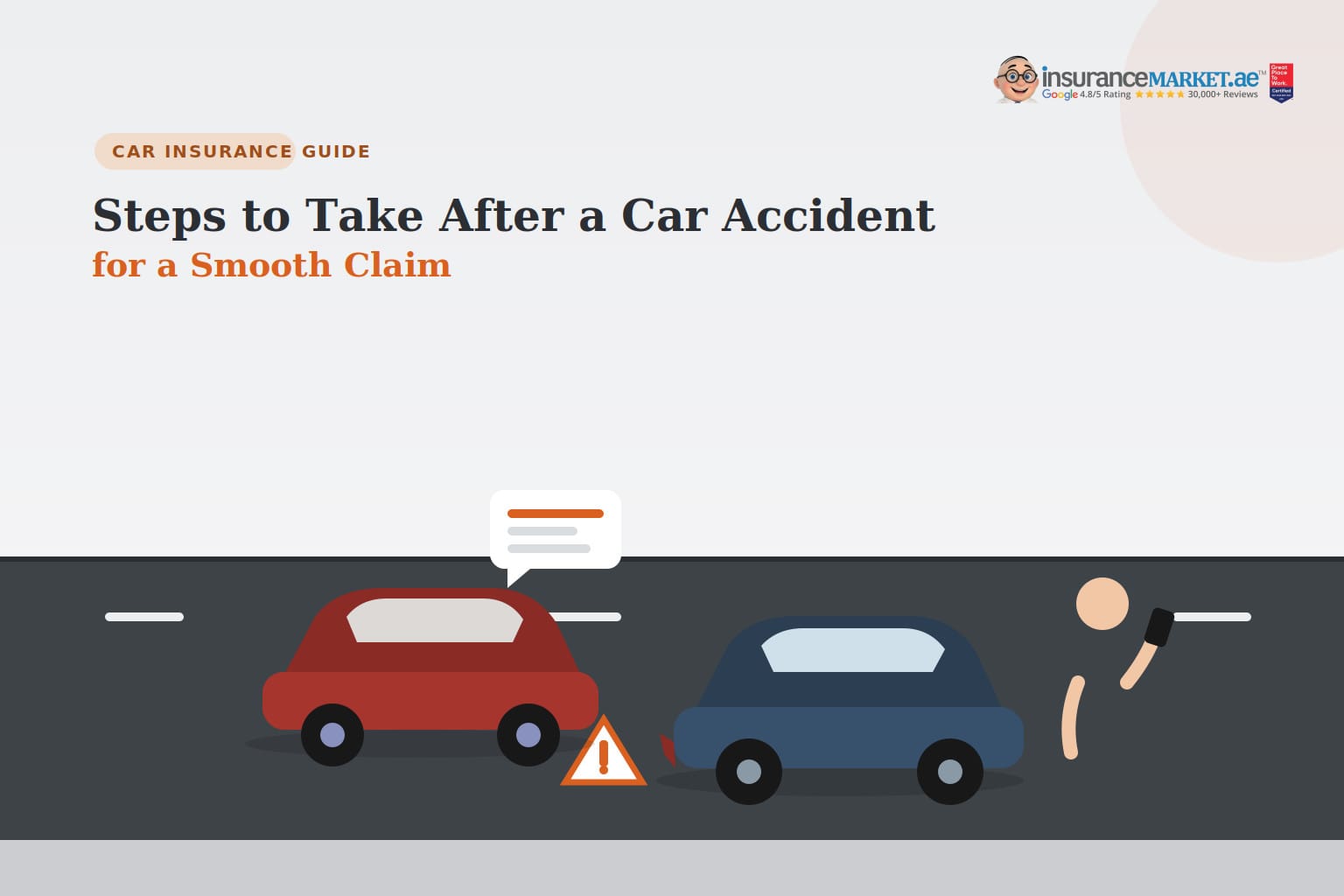
Even a minor crash can leave you shaken and unsure what to do next. In the UAE, following the right steps after an accident is not just about safety, it’s essential for a smooth car accident claim and avoiding delays or rejections. Traffic laws require accidents to be reported to the police, and insurers will not process a claim without a proper report and basic documents.
This guide walks you through the key steps to take, what can delay a car insurance claim, and answers common questions for drivers in the UAE and anyone with car insurance UAE specifically.
7 Steps to Take After a Car Accident
1. Check for Injuries and Ensure Safety
Your priority is to safely check yourself and others for injuries. Call 998 for an ambulance in emergencies; for non‑emergency accident situations you can contact 901.
If it is safe, move the vehicle out of live traffic, and turn on hazard lights to alert other drivers. If injuries are minor, wait for medical help before moving anyone; if there are no injuries, proceed to assess vehicle damage.
2. Collect Evidence at the Scene
While waiting for the police or before filing a report make sure you take photos of the accident scene including all visible damage and licence plates. Exchange and record contact details of the parties involved. Note vehicle registration, drivers license and car insurance details.
These details support your car accident claim and help your insurer process it faster.
3. Apply for a Police Accident Report
A police report is mandatory for all car insurance providers in the UAE without it, your claim will not be processed. You can obtain it by calling the relevant non‑emergency number or using smart apps, depending on the emirate such as:
- Dubai – For Dubai Police App got to Services then Traffic Services and look for Simple Accident Report
- Sharjah – Call 800‑RAFID (800 723 43) or use the Rafid app
- Abu Dhabi & other northern emirates – Call 800‑SAAED (800‑722‑33) or use the SAAED Smart app
Once the report is issued here are the two possible things that can happen if you are not at fault, you receive a green report and if you are at fault, you receive a red report. Keep a copy either digital or physical because there is a chance your insurer will ask for it.
4. Notify Your Insurer Promptly
After getting the police report or at least the report number, inform your insurer or broker as soon as possible. Most insurers accept claims via official website or mobile app and even customer service phone lines. You can also contact 800 Instant Alfred for a smooth claim process.
Be ready to provide a police report, emirates ID and driving licence, and vehicle registration card (Mulkiya). If you bought your car insurance online, check your email for policy documents and claim instructions. Many providers, including InsuranceMarket.ae, enable digital claim submission.
5. Submit All Required Documents
Most insurers in the UAE require the following documents:
- Emirates ID
- Valid driving licence
- Vehicle Registration Certificate / Mulkiya
- Official police accident report
Your insurer may ask for additional documents e.g., photos, repair estimates, etc supply them promptly to avoid delays.
6. Arrange Vehicle Repair per Your Policy
Depending on your cover and car’s age, repair will usually follow one of these paths as mentioned below:
a. Agency Garages (Agency Repair) – If this is included in your policy, take the car to the dealership’s body shop with your documents. The agency obtains a repair estimate and sends it to your insurer for approval.
b. Approved Network Garages (Non‑Agency) – Suitable for cars over 2–3 years old with non-agency repair coverage. When you make a claim, your insurer will arrange for your car to be repaired at an approved workshop.
c. Cash Loss / Reimbursement – Some insurers allow you to pay repairs yourself and claim reimbursement later, if agreed in advance.
d. Total Loss -If the vehicle is beyond economic repair, the insurer may pay its fair market value in exchange for the damaged vehicle
7. Follow Up on Claim Settlement
After repairs or total‑loss settlement is agreed, ask your insurer or expert advisors at InsuranceMarket.ae about expected timeframe for claim payout or repair completion, any excess you must pay and how specifically to whom and when
Staying proactive but cooperative with your dedicated claims handler helps keep things moving.
What Can Delay a Car Insurance Claim?
Common issues that slow down or even block a claim include:
- Not applying for a police report – No report means no claim approval in the UAE.
- Providing incorrect or incomplete information – Inconsistent details or omissions may lead to extended investigation or rejection.
- Delaying the claim notification – Here the insurers usually require claims to be filed within 24 hours of the accident; longer delays can result in rejection.
- Ignoring minor damages – Small issues left unreported can worsen; when finally reported, they may raise questions about when and how they occurred.
It is always better to work with a broker or platform that offers dedicated claims support like InsuranceMarket.ae has a dedicated claims manager, as this can help you avoid these pitfalls and keep your car accident claim on track.
FAQs
1. Do I need to call the police for a minor accident in the UAE?
2. What happens if I don’t report an accident to my insurer immediately?
3. Can I still claim it if the other driver refuses to share their details?
4. Should I admit fault at the scene of an accident?
Conclusion
A car accident claim in the UAE becomes much smoother when you:
- Prioritise safety and medical help.
- Collect evidence and obtain a police report promptly.
- Notify your car insurance provider quickly and submit all required documents.
- Use agency or approved garages as per your policy.
- Avoid common mistakes like late reporting or incomplete information.
Whether you hold car insurance Dubai or in any other emirate, these steps and timelines are broadly the same. Acting calmly and systematically after an accident not only keeps you on the right side of the law it also helps you get back on the road with minimal stress and delay.