Today’s world is more connected than ever. Many people live in one country, work in another, travel frequently for business, or have family spread across different parts of the world. While this international lifestyle offers greater flexibility, it also means your healthcare needs may extend beyond the limits of a local health insurance plan.
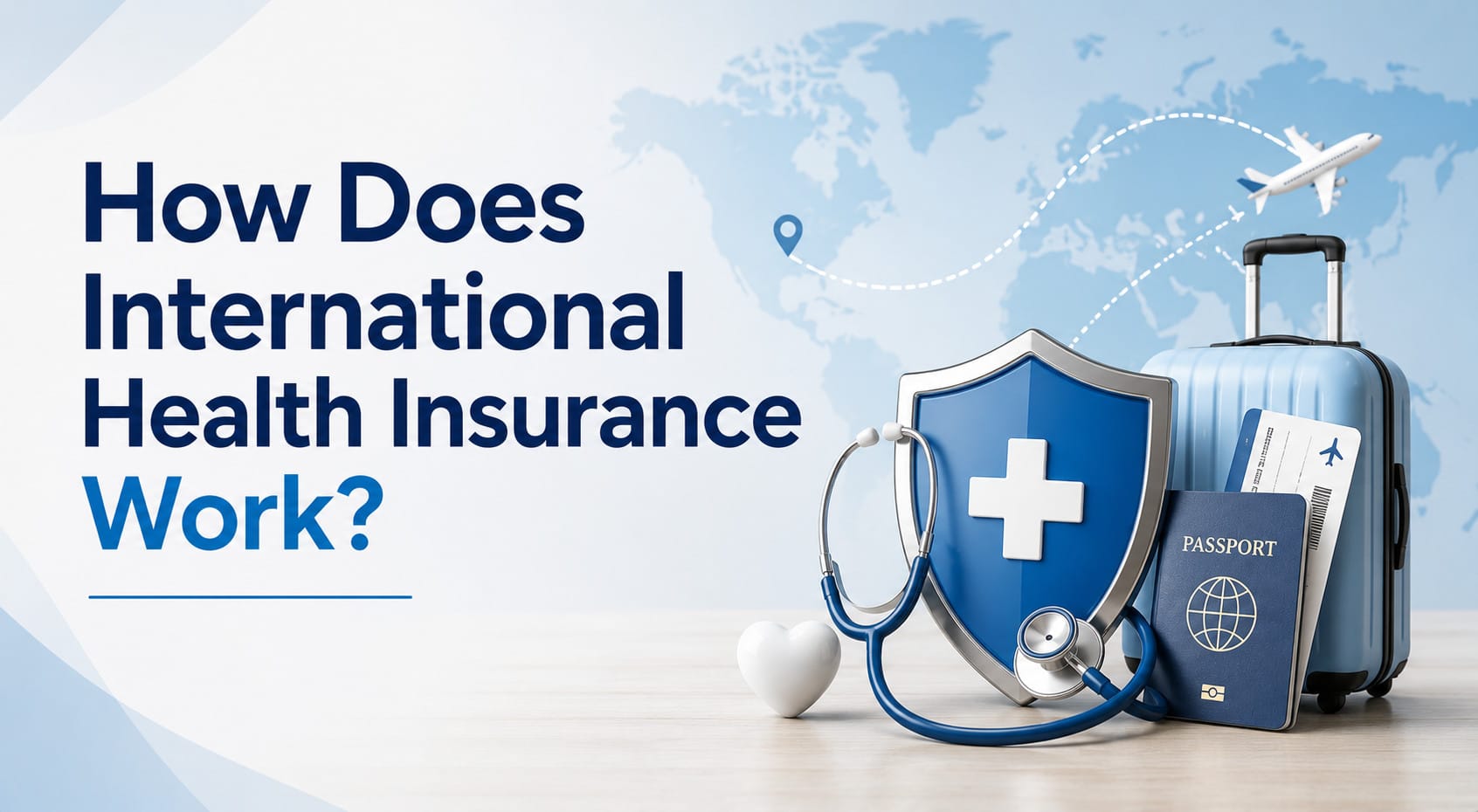
That’s where international health insurance can make a difference. Designed for expatriates, globally mobile professionals, and frequent travellers, these plans provide access to healthcare across multiple countries, helping ensure you’re protected wherever life takes you.
In this guide, we’ll explain how international health insurance works, who it is designed for, what it typically covers, and the key factors to consider when choosing a plan that fits your lifestyle.
What Is International Health Insurance?
International health insurance is a comprehensive medical insurance policy designed to cover you across multiple countries, usually for a year at a time, renewable. Unlike simple travel insurance, it is built for people who live abroad long‑term expats, move between countries regularly, or want continuity of cover if they relocate.
You typically choose:
- A region of cover e.g., “Worldwide”, “Worldwide excluding USA and
- The country where you are normally resident (for example, the UAE).
How Does International Health Insurance Work?
An international health insurance plan works like a robust private health policy, but with a wider geographical scope:
- Select a plan – Choose area of cover, level of benefits in basic, medium, premium and optional extras such as dental, maternity, etc.
- Pay an annual or monthly premium – Pricing depends on age, region of cover, benefits and medical history.
- Access care – In many countries, the insurer has direct‑billing networks; elsewhere you may pay first and claim back.
- Claim process – For in‑network treatment: provider often bills insurer directly and for out‑of‑network: you submit invoices and medical reports for reimbursement.
- Renew each year – If you move to a new country or region, you can often update your “country of residence” while keeping the same core policy.
The big advantage is continuity where one contract follows you across borders instead of restarting new local plans each time you move.
Who Needs International Health Insurance?
International Health Insurance is particularly useful for:
- Expats living outside their home country e.g., Europeans or Asians based in the UAE.
- Globally mobile professionals who relocate every few years.
- Frequent business travellers who spend long periods in multiple countries.
- Families with children studying abroad, who want one consistent level of cover.
If you only take short holidays once or twice a year, a standard travel policy is usually enough instead of full international cover.
What Does International Health Insurance Cover?
Benefits vary by insurer and plan level, but many international medical plans offer:
- Inpatient & day‑care treatment – Hospitalisation, surgery, ICU, oncology, advanced diagnostics.
- Outpatient treatment – GP and specialist visits, tests, imaging, prescribed medicines.
- Emergency care worldwide – Accident and sudden illness, often including evacuation if needed.
- Chronic condition management – Long‑term conditions like diabetes, hypertension, asthma up to plan limits.
- Optional extras such as maternity dental and optical wellness check‑ups or alternative therapies, depends on the tier
The higher the tier, the higher the annual limit and the broader the list of covered services and countries.
What Is Not Covered by International Health Insurance?
Like local health insurance plans, international health insurance policies also include exclusions. Understanding these before you purchase a plan can help you avoid unexpected claim issues later.
Common exclusions may include:
- Cosmetic or elective procedures
- Infertility treatments and many assisted fertility services
- Experimental or unapproved medical treatments
- Non-prescribed medications, vitamins, and supplements
- Certain high-risk sports and adventure activities, unless additional cover is purchased
Pre-Existing Medical Conditions
Coverage for pre-existing medical conditions can vary significantly between insurers and plans. Depending on the policy, an insurer may:
- Exclude pre-existing conditions entirely
- Offer cover with specific terms, waiting periods, or additional premiums
- Provide full cover following medical underwriting and acceptance
Because these terms differ from one insurer to another, it’s important to review the policy wording carefully and disclose any existing medical conditions when applying. Understanding the exclusions and how pre-existing conditions are handled can help you choose a plan that provides the right level of protection for your healthcare needs.
International Health Insurance vs Travel Insurance: Key Differences
| Feature | International Health Insurance | Travel Insurance |
| Purpose | Long‑term, everyday healthcare abroad | Short‑term trips from home |
| Duration | Annual, renewable | Per trip or annual multi‑trip which is time‑limited |
| Scope | Inpatient + outpatient + chronic care | Mostly emergencies + trip‑related events |
| Geography | Region(s) of cover you choose | Outside your country of residence |
| Use case | Expats, mobile professionals, families abroad | Tourists, short‑term business travellers |
If you live in the UAE or any country full‑time, you generally need a local compliant plan, and may add international cover if you want broader access.
How to Make a Claim on Your International Health Insurance
Here is how you can make a claim on your international health insurance:
- Emergency admission – Call the insurer’s emergency hotline shown on your card. They coordinate with the hospital for direct billing where possible.
- Planned treatment – Check your policy and network first. Obtain pre‑authorisation for inpatient treatment, expensive tests, or some outpatient therapies.
- Reimbursement claims -Pay the provider, submit claim form, invoices, receipts, and medical reports via portal/app/email within the stated time limit.
Keep all medical documents, especially when you are outside a formal network.
How to Choose the Right International Health Insurance Plan
In order to choose the right international health insurance plan always consider:
- Area of cover – Whether the coverage is worldwide including or excluding certain high‑cost regions e.g., USA.
- Annual limits – Check total annual limit and any sub‑limits maternity, mental health, oncology.
- Network strength – Does the insurer have good networks and direct‑billing arrangements where you actually live and travel?
- Pre‑existing condition rules – Are your existing conditions covered, excluded, or restricted?
- Excess/deductible – Higher deductibles reduce premium but increase what you pay out‑of‑pocket.
- Regulatory compliance – If you are an expat in the UAE, make sure the plan either is accepted as a local compliant policy, or it is combined with a separate local policy that satisfies Dubai/Abu Dhabi rules.
- Service & language – Make sure the provider you choose has a 24/7 helpline, multilingual support, easy app/portal.
A broker or adviser who understands both global and local UAE requirements can help you avoid gaps.
Frequently Asked Questions
How does international health insurance work for expats in the UAE?
Is international health insurance the same as travel insurance?
Does international health insurance cover pre-existing conditions?
Can I use international health insurance in the UAE?
Conclusion
International health insurance is essentially your portable private medical cover when life takes you across borders. It sits between local health insurance and basic travel insurance, giving expats and frequent travelers a consistent standard of care wherever they go.
If you are living in the UAE or planning a globally mobile career, the right mix of local and international cover will protect both your visa status and your health at home and abroad.
Call Instant Alfred to understand your options, experienced expert advisors at InsuranceMarket.ae help you compare international and local health insurance plans in minutes and find a combination that is economical, compliant and truly global for your lifestyle.