Introduction
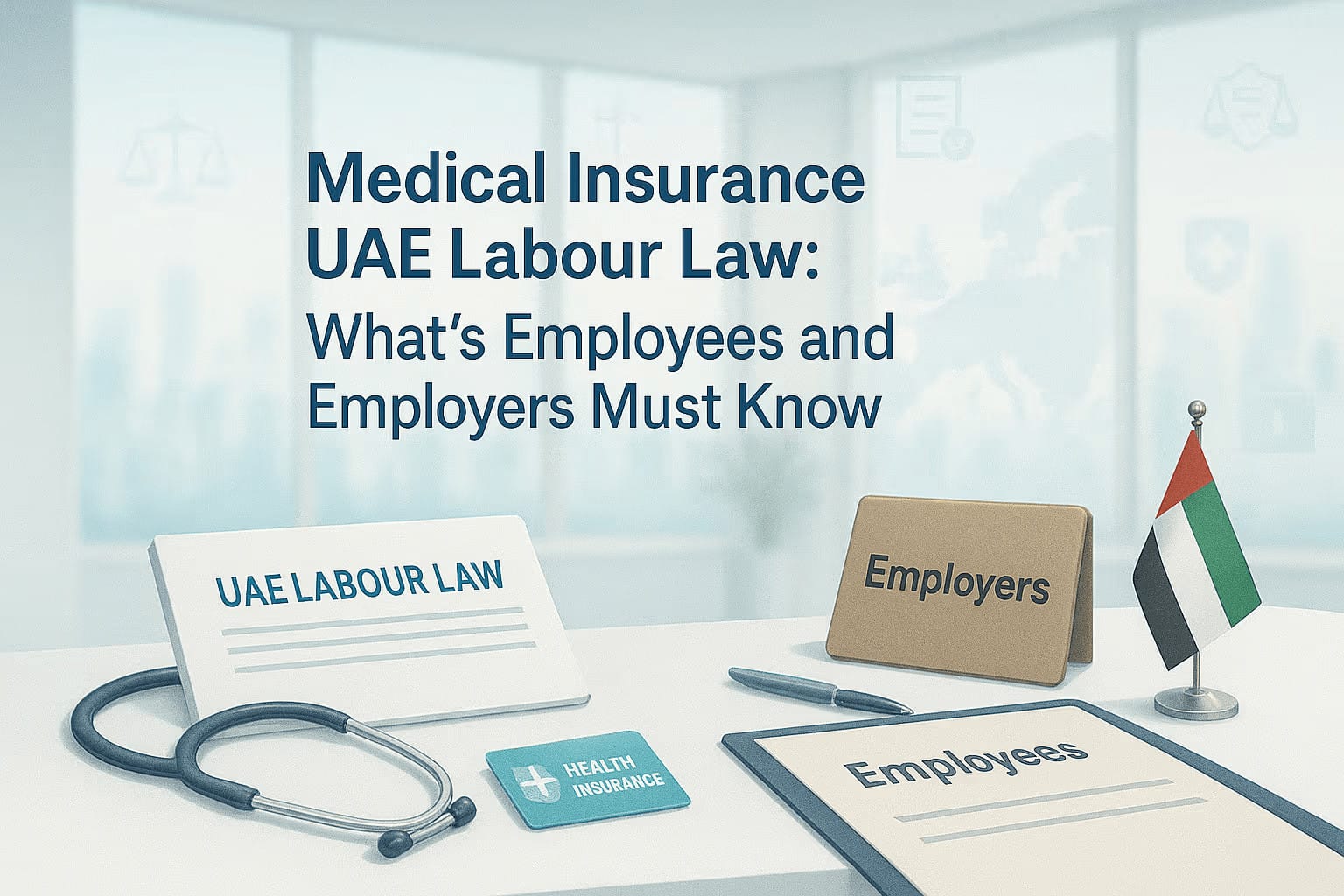
In the UAE, medical insurance is no longer just a “benefit” in key emirates; it is a legal requirement linked to residency and employment. Understanding how UAE labour law and medical insurance interact helps:
- Employers stay compliant and avoid fines, and
- Employees make sure they and their families are properly protected.
This guide explains the importance of health insurance and labour law in the UAE.
Overview of UAE Medical Insurance Law
Health insurance rules in the UAE are set at the Emirate level, and here is the information as follows:
- In Dubai (DHA) and (DoH), it is mandatory for residents to have health insurance.
- Employers and/or sponsors are responsible for arranging cover linked to the visa.
- There are minimum coverage standards that employer‑provided plans must meet.
This means you should not be working legally in these emirates without valid medical insurance. Insurers and employers must comply with local health authority regulations regarding benefits and networks.
Other emirates have also been strengthening their own frameworks, with the goal that all residents eventually have suitable cover.
Employer Obligations Under UAE Medical Insurance Labour Law
Exact obligations vary by Emirate, but here are the following points employers should consider:
- Provide at least a minimum‑standard medical insurance for their employees in the Emirates, where it is mandatory.
- Pay the premium for the employee’s cover in Dubai and Abu Dhabi; this is generally the employer’s responsibility.
- Ensure the policy is active from the date of visa issuance and remains in force while the person is employed and resident.
Some employers also choose to insure dependents such as spouses, children, and sometimes even parents, but this is a company policy decision, not always a legal requirement.
Failure to arrange mandatory health insurance can result in regulatory fines and issues during visa processing or renewal, especially in Dubai under the DHA law.
Employee Rights Under UAE Medical Insurance Law
If you are an employee in a mandatory‑insurance Emirate, you have the right to:
- Be covered by a valid medical insurance policy that meets the local minimum standard.
- Receive a policy summary or card that clearly shows insurer name, network, and Basic coverage details.
- Access treatment within the network according to the policy terms (co‑pays, limits, and exclusions still apply).
Important points to note are:
- The law normally requires that you are insured; it does not always guarantee premium‑free cover for dependents, which depends on your employment contract and company policy.
- If your employer withholds coverage or lets it lapse while you are employed and resident, you can raise the issue with HR and, if needed, with local authorities.
Medical Insurance During Notice Period and After Termination
Generally, your employer‑provided medical insurance should remain active through your notice period, as long as your employment and visa are active. Continue until the visa cancellation or final exit process is completed.
After that, the employer’s obligation to insure you usually ends. You become responsible for arranging your own cover (for example, if you move to a dependent visa or remain in the UAE while job‑hunting).
Some employers voluntarily extend coverage slightly beyond the last working day; others stop coverage on the day employment ends. It is important to always ask HR for the exact last day of cover, and any grace period or extension, which should be in writing.
Medical Insurance in UAE Labour Law: Special Situations
A few common scenarios employees must be aware of:
If you are part‑time or temporary staff, the rules may depend on your visa status and contract type; in many cases, the sponsor of your visa is responsible for insurance.
Free‑zone employees in Dubai/Abu Dhabi generally follow the same “employer must insure employee” principle, but check your specific free‑zone’s rules.
Family members on dependent visas – Sponsoring family members normally means you must arrange and pay for their health insurance, even if your employer covers you.
Because these are sensitive legal and immigration topics, you should always double‑check specifics with your PRO, HR or a qualified advisor.
FAQs
Is medical insurance mandatory for all employees in the UAE?
Can employers deduct health insurance from an employee’s salary in the UAE?
What happens if my employer doesn’t provide health insurance in the UAE?
Does UAE labour law require medical insurance for families?
How long must medical insurance be active after visa cancellation?
Is there a minimum standard for employer-provided insurance in UAE?
What is the fine for not providing medical insurance in Dubai?
Can I buy my own health insurance if my employer’s plan is insufficient?
You can keep using your employer plan for minimum compliance and major emergencies, and use your own policy for better hospitals or higher benefits. Alfred can help you compare these options.
Conclusion
UAE labour law and local health regulations make medical insurance a central part of living and working in the country. Employers must provide at least minimum‑standard cover for employees in mandatory insurance emirates, and employees should understand exactly what their plan includes and where they may need to arrange extra protection for family or better benefits.
Because rules differ slightly by Emirate and can change, if you are unsure whether your current cover meets both legal requirements and your family’s real needs, we can help you review it clearly.
Contact InsuranceMarket.ae to understand your options. Our expert advisors help you compare health insurance plans in minutes and find the most economical, compliant cover for your situation in the UAE.
Disclaimer: This article is written only for informational purposes as a general guide, not formal legal advice.