Introduction
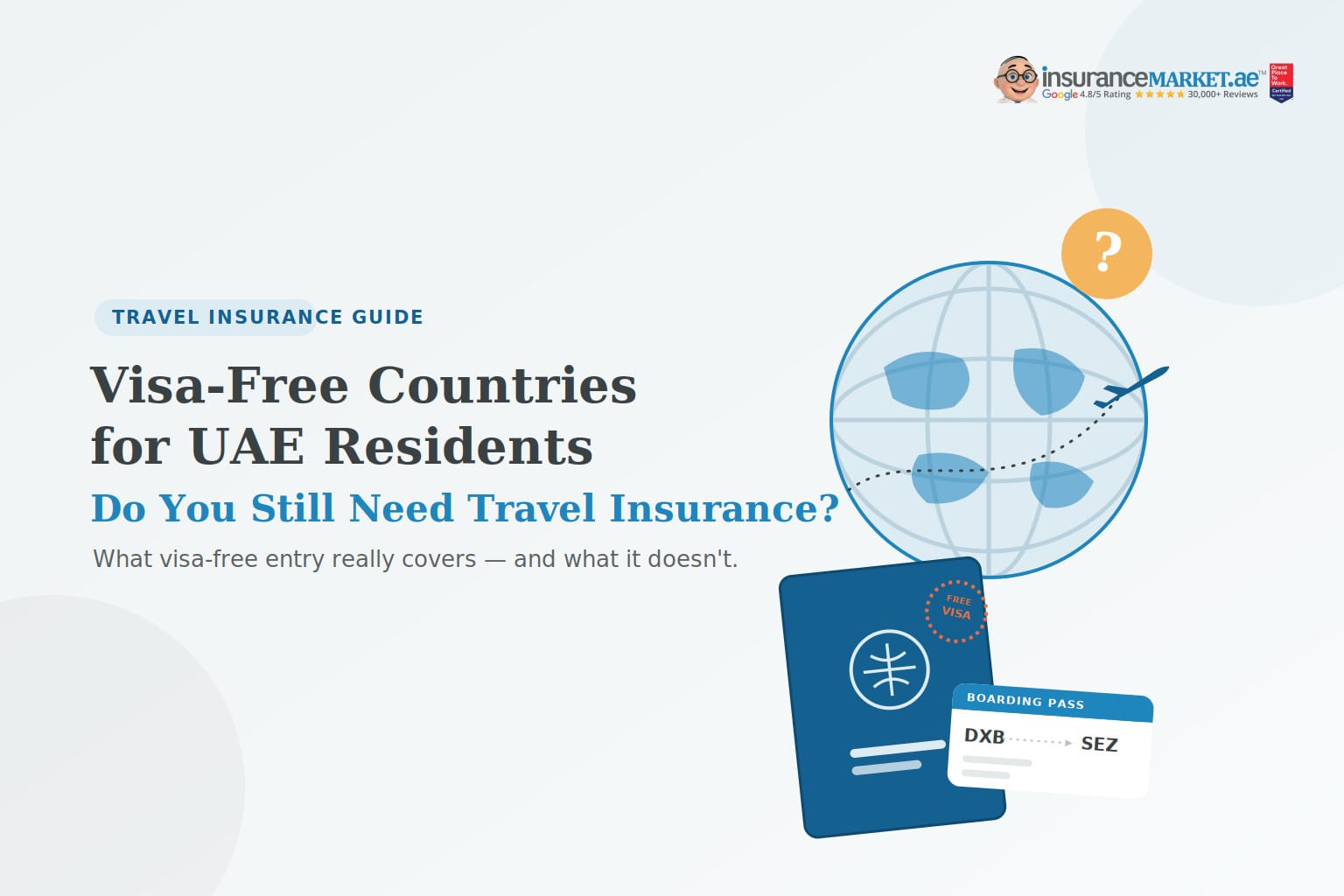
Living in the UAE makes international travel wonderfully easy. With a UAE residence visa and a well-connected hub like Dubai or Abu Dhabi, many destinations are only a short flight away and often visa-free.
But “visa-free” can be misleading. It simply means you don’t need a visa in advance to enter. It does not mean you’re protected if something goes wrong on your trip. That’s where travel insurance comes in.
If you’re wondering whether you really need travel insurance in the UAE when flying to visa free countries, this guide breaks it down step by step.
Which Countries Can UAE Residents Visit Visa-Free?
Visa rules are based on your passport nationality, not your UAE residence visa.
So two UAE residents on the same flight for example, an Indian passport holder and a UK passport holder may have completely different visa requirements. Your UAE residence visa can sometimes make getting a visa easier for example, online visas or visas on arrival, but it doesn’t automatically guarantee visa-free access.
However many UAE residents enjoy visa-free or visa-on-arrival access to nearby GCC and regional countries depending on their passport. Visa-free / e-visa access to popular holiday destinations in Asia, Europe, and island getaways again, depending on passport include:
- Georgia – Easy and accessible free visa for many UAE residents, however this is for certain passport holder, always check before traveling
- Azerbaijan – Offer quick online visa before your departure from the UAE
- Maldives – Provides a 30 day tourist visa.
- Armenia – Hassle-free entry or visa on arrival for UAE residents
Because these rules change regularly, it is important to always check your destination’s official immigration or embassy website and airline or reputable travel advisory tools
Remember, Visa-free entry is a great convenience but it only covers immigration permission, not your health, belongings, or trip costs.\
Visa-Free Doesn’t Mean Insurance-Free
Many travelers assume, “If the country doesn’t even need a visa from me, they definitely won’t care about travel insurance.”
This is a common and a risky misunderstanding. Visa-free just means you can enter for tourism or business for a limited period and you don’t need prior visa approval at an embassy
It does not guarantee free medical treatment if you fall sick, compensation if your bags are lost, support if your flight is cancelled or delayed, help if you cause accidental damage or injury to someone
That’s what travel insurance is designed for. Whether you’re on a visit visa, visa-on-arrival, or completely visa-free, the financial risks of travelling are still the same.
Countries That Require Proof of Travel Insurance Even Without a Visa
Some destinations will let certain nationalities in without a visa, but still expect proof of travel medical insurance at the border or as part of entry conditions. This can be a formal legal requirement, written into immigration rules and a strong recommendation, where airlines or border officers may still ask for proof
Examples of situations where proof of insurance is often required or strongly recommended
1. Schengen Europe
Nationals from some countries can visit the Schengen Area visa-free for short stays. Even then, proof of adequate travel medical insurance is usually required or strongly recommended.
2. Countries with high medical costs
Some destinations with expensive private healthcare systems expect visitors to have minimum medical coverage to avoid unpaid hospital bills.
3. Countries with specific health or Covid-related rules
Some places have temporarily required insurance that covers Covid-19 or quarantine expenses for unvaccinated travellers or during health emergencies.
Because rules change, always check the official entry requirements of your destination. Confirm what type of insurance they expect such as medical only, Covid cover, minimum amount, etc.
Even if immigration doesn’t check, your wallet will feel it if something goes wrong and you don’t have cover.
What Should Travel Insurance Actually Cover for These Trips?
When you buy travel insurance from the UAE for a visa-free trip, focus on the quality of coverage, not just the cheapest price. Key things to look for:
1. Emergency Medical Expenses
This covers for illness and accidents abroad, hospitalization, doctor visits, medication, and dental emergency cover only if available. Looking for a high limit medical care in many countries is extremely expensive.
2. Emergency Medical Evacuation & Repatriation
This is one of the most critical parts of any travel insurance UAE policy. It covers air ambulance or medical evacuation to another city or home country and repatriation of remains in the worst-case scenarios as these costs can easily reach tens of thousands of dollars without insurance.
3. Trip Cancellation & Trip Interruption
Even if you don’t need a visa, you can still lose money if you must cancel or cut short your trip. Good travel insurance typically covers prepaid, non-refundable flights and hotels. Cancellation due to covered reasons serious illness, family emergency, etc.
4. Baggage & Personal Belongings
This is useful for lost, stolen, or damaged luggage, lost passport or travel documents often with assistance services. Always check total baggage limit, single-item limits for gadgets and jewellery
5. Personal Liability
If you accidentally cause injury to someone or damage property, personal liability cover can help protect you from huge bills or legal claims.
What Happens If You Travel Without Insurance and Something Goes Wrong?
You may have:
- A stamp in your passport from visa-free entry
- A valid boarding pass
- A confirmed hotel booking
But if you don’t have travel insurance and something serious happens, you’re on your own financially. Potential scenarios:
- You fall sick or get injured abroad – You must pay hospital bills yourself often immediately and in full. Some hospitals may refuse non-emergency treatment without proof of ability to pay.
- Your flight is delayed or cancelled – Extra hotel nights, meals, and alternative flights may come from your own pocket.
- Your luggage is lost – Airlines usually offer limited compensation; it may not cover your actual loss or immediate needs.
- You cause accidental damage – You could face legal issues and large compensation demands without personal liability cover.
- Your trip is cancelled last minute – If you fall ill or a close family member has an emergency, without cancellation cover, all your prepaid costs may be lost.
Visa-free entry gives you permission to be in the country. Travel insurance gives you a safety net while you’re there.
Frequently Asked Questions
1. Can UAE residents travel to Europe without a visa?
2. Is travel insurance mandatory for Schengen countries?
3. Can UAE residents travel to Europe without a visa?
Hospital or medical bills if you fall ill or have an accident
1. Emergency evacuation or repatriation
2. Lost or stolen baggage
3. Trip cancellation or interruption
4. Personal liability if you accidentally injure someone or damage property
Travel insurance is what covers these financial risks, not your visa status.
4. Can I buy travel insurance after booking a visa-free trip?
Buying early maximizes your protection for example, if you need cancellation cover from the moment you’ve paid deposits. Some insurers even allow purchase after departure with waiting periods and restrictions, but this is less ideal and may reduce your coverage options. For best protection, Visit InsuranceMarket.ae to compare and buy travel insurance in the UAE as soon as your visa-free trip is confirmed.
Conclusion
Visa-free access from the UAE makes spontaneous travel exciting and easy but it can also create a false sense of security.
Remember Visa-free does not mean risk-free. Your passport might get you in without a visa, but it won’t protect you from medical bills, lost luggage, or cancelled flights. Some visa-free destinations still require or strongly recommend proof of travel insurance.
The right travel insurance from the UAE should cover medical emergencies, evacuation, cancellation, baggage, and personal liability. Before your next trip to any visa free country, treat travel insurance as essential, not optional. It’s a small extra step that can save you from very big and very expensive problems once you’re abroad. Visit InsuranceMarket.ae to compare travel insurance quotes online to get the right coverage for your trip.