Imagine this: You have booked a long-awaited vacation from the UAE to Europe. But at the last minute, your flight gets cancelled, and your luggage is lost. Who covers your losses? The debate over travel insurance VS credit card insurance is common, with many travellers assuming their credit card travel insurance is enough. But is that really the case? Let’s break it down in simple terms and help you make an informed choice.
What is travel insurance?
A standalone travel insurance policy provides extensive protection against unexpected travel-related expenses. It is purchased separately and offers far more coverage than what is typically provided by a credit card.
A comprehensive travel insurance policy generally includes the following:
- Trip cancellation: Refunds prepaid travel expenses if your trip is cancelled due to illness, emergencies, or unexpected events.
- Travel medical: Covers hospital bills, medical treatment, and emergency healthcare while travelling.
- Lost baggage protection: Reimburses the cost of lost, stolen, or damaged luggage.
- Emergency medical evacuation: Covers emergency transport to the nearest medical facility if required.
- Adventure sports coverage: Provides protection for high-risk activities such as skiing, scuba diving, and trekking.
- Terrorism and war coverage: Protects against disruptions due to political unrest or security threats.
For UAE residents travelling abroad, a standalone travel insurance policy provides comprehensive coverage in the event of an emergency.
What is credit card travel insurance?
Some premium credit cards include credit card travel insurance as an added benefit. However, this insurance typically has limitations and only applies if you book your trip using the specific card.
Credit card travel insurance often includes:
- Trip delay coverage: Provides a small reimbursement for hotel and food costs if your flight is delayed.
- Rental car insurance: Covers damage to the rental car but usually does not cover liability.
- Lost Baggage Protection: Compensates for lost or delayed luggage, typically with a low claim limit.
- Basic travel medical coverage: Offers medical reimbursement, but usually with a low cap.
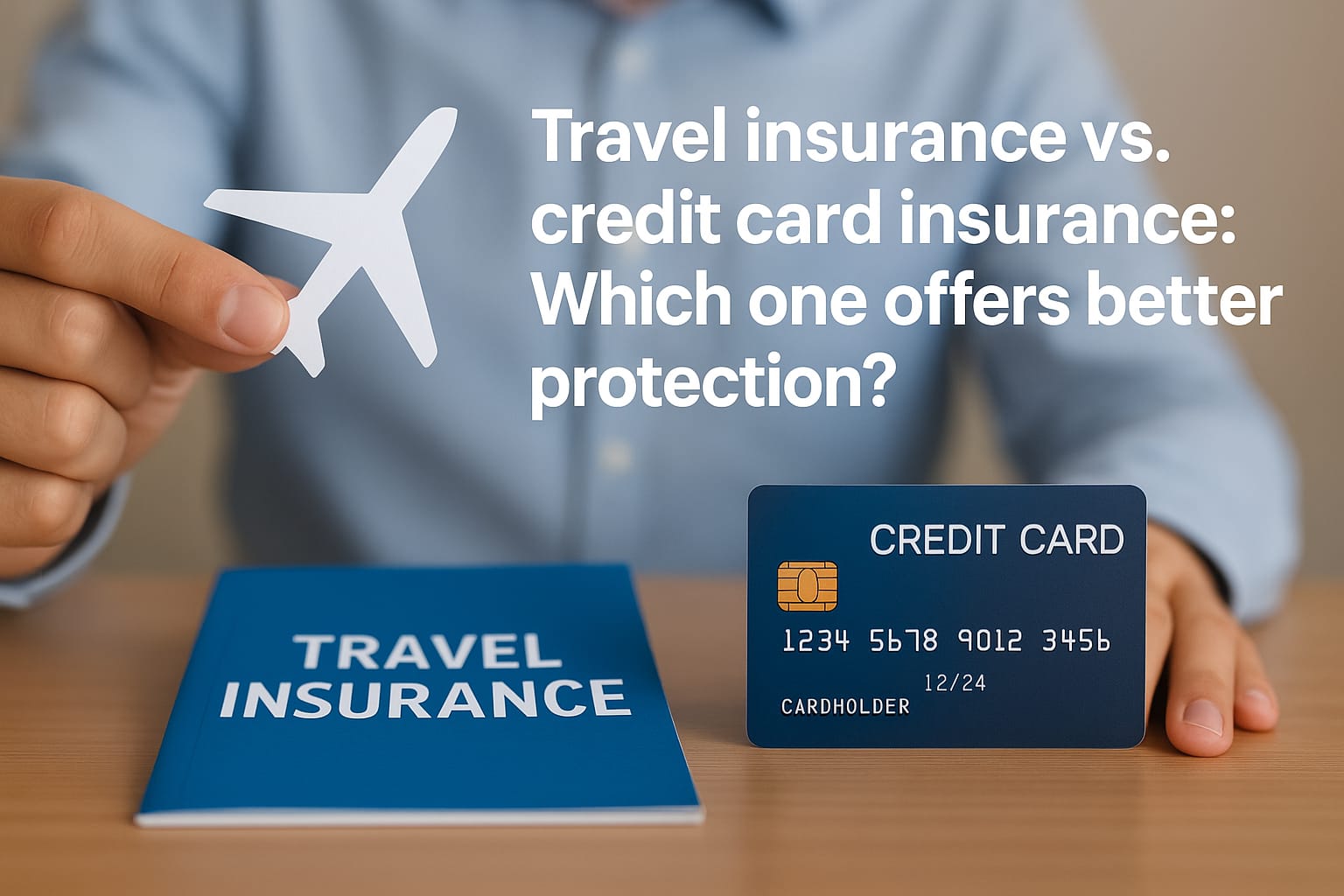
Travel insurance vs. credit card insurance: A detailed comparison
| Feature | Travel insurance | Credit card travel insurance |
| Trip cancellation | Covers full trip costs in case of medical or personal emergencies | Limited or not included |
| Travel medical insurance | Comprehensive coverage for medical emergencies abroad | Limited coverage, lower reimbursement |
| Lost baggage protection | Covers lost, stolen, and delayed baggage | Lower coverage limits |
| Emergency medical evacuation | Covers transport to a medical facility | Not typically included |
| Adventure sports coverage | Optional add-on for adventure activities | Not typically covered |
| Pre-existing medical condition coverage | Available in some policies | Not typically covered |
| Terrorism and war coverage | Optional add-on for war hotspots | Not typically covered |
Major limitations of credit card travel insurance
- Typically excludes pre-existing medical conditions
- Often does not include emergency medical evacuation
- Adventure sports coverage is usually excluded
- Reimbursement amounts are often lower than those of standalone policies
- The claims process can take longer due to bank and insurer requirements
Credit card insurance is useful for minor inconveniences, but for serious emergencies, it may not be sufficient.
Example: Medical emergency abroad
Imagine a UAE traveller visiting the United States who suddenly falls ill and requires hospitalisation. Their credit card travel insurance provides only $10,000 in medical coverage, but the hospital bill exceeds $50,000. With standalone travel insurance, they would have had higher medical limits and emergency evacuation coverage, confirming they receive the care they need without any financial stress.
In such situations, relying solely on credit card insurance can expose travellers to high medical costs.
Travel insurance vs. credit card insurance: What to keep in mind while comparing
- Coverage varies by card: Some credit cards only cover baggage delays and rental cars, while others may include trip cancellation and medical expenses.
- Only expenses charged to the card are covered: If you use different payment methods for flights and hotels, some parts of your trip may not be protected.
- Credit card insurance comes with high fees: Many cards offering travel protection have expensive annual fees, making the coverage not actually free.
- Policies often have more restrictions, such as credit card insurance, which limits claims, excludes certain activities, and may have lengthy processing times. In contrast, standalone travel insurance offers broader protection.
When should you choose travel insurance?
A standalone travel insurance policy is highly recommended if you:
- Are travelling internationally, where medical costs are high.
- Want comprehensive coverage, including trip cancellations and medical emergencies.
- Have a pre-existing medical condition and need added coverage for it.
- Plan to participate in adventure sports, which most credit cards do not cover.
- Need emergency medical evacuation in case of a life-threatening condition.
Standalone travel insurance offers reliable and extensive coverage, making it a safer choice for frequent and international travellers.
Travel Insurance vs. Credit Card Insurance: Final Verdict
Both credit card travel insurance and standalone travel insurance offer valuable protection, but their coverage levels and limitations differ significantly.
For short trips with minimal risks, credit card travel insurance may provide basic protection against flight delays, lost baggage, or minor inconveniences. However, coverage is often limited to expenses charged to the card. Key benefits, such as emergency medical evacuation, adventure sports coverage, and coverage for pre-existing medical conditions, are usually excluded.
On the other hand, standalone travel insurance is the better option for international travel, medical emergencies, and comprehensive trip protection. It provides higher coverage limits, flexibility, and peace of mind, ensuring that unexpected events do not result in significant financial losses.
Suppose you are travelling outside the UAE, engaging in adventure activities, or want a policy that covers all aspects of your trip. In that case, a standalone travel insurance plan is the safer and more reliable choice.
Before your next trip, compare travel insurance policies and select one that best suits your needs. Explore comprehensive travel insurance options at online platforms like InsuranceMarket.ae to find a plan tailored to your travel requirements.