If you’re buying a new car or looking for car insurance, it’s essential to understand the common types of car insurance coverage available in a car insurance policy in Dubai. There are various types of motor insurance designed to protect your car, passengers, and yourself if you’re involved in a car accident.
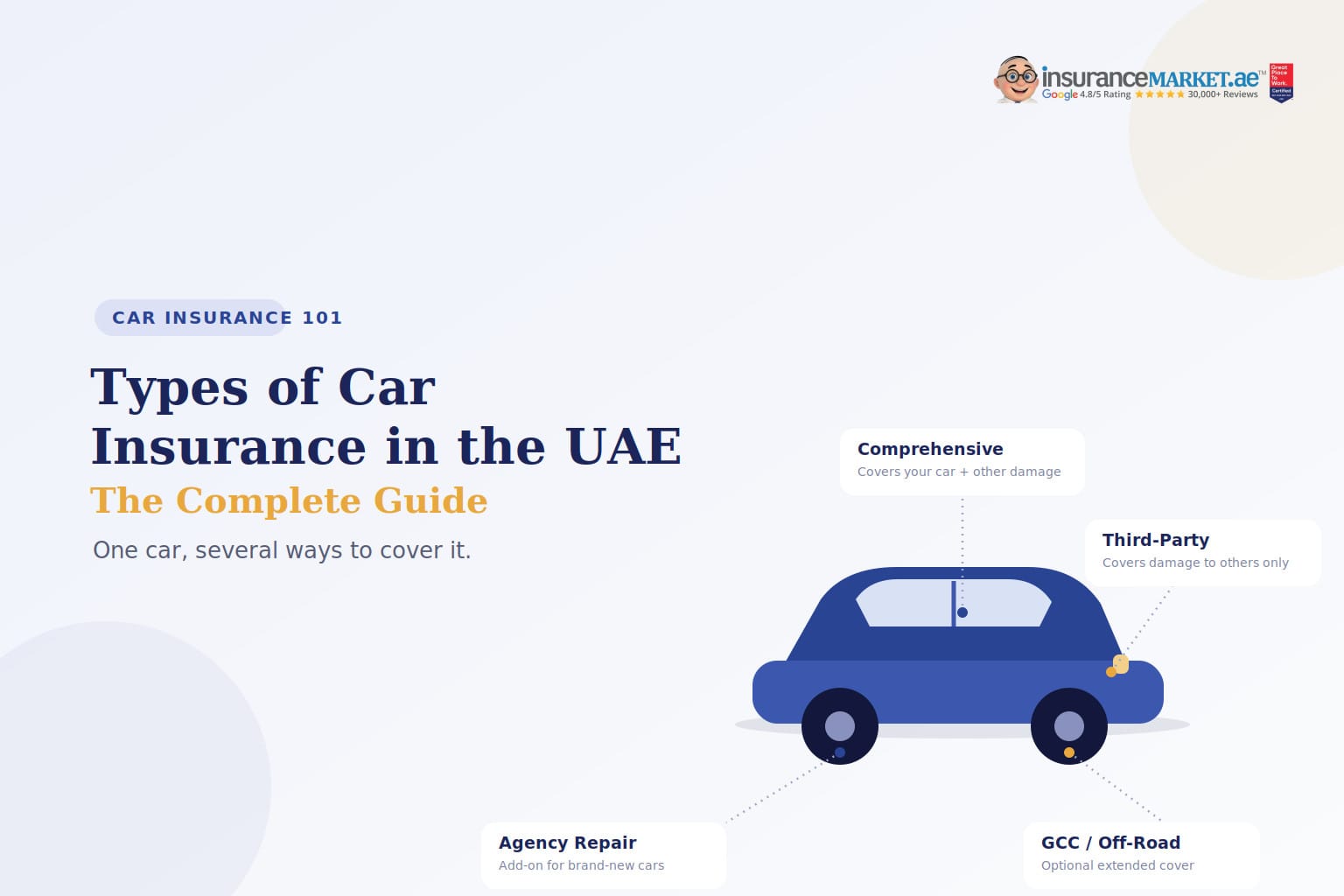
If you are buying car insurance in Dubai, you should know that there are mainly two core options, but the type of car insurance in the UAE you choose can vary based on coverage depth and add-ons. Before exploring different types of car insurance, it’s helpful to understand what motor insurance is essentially, it’s a contract between you and an insurance provider that offers financial protection against vehicle-related losses.
This guide explains the main types of car insurance UAE drivers can buy, how they differ, and which might be right for you.
Comprehensive Car Insurance
Comprehensive car insurance offers broader coverage available to private drivers in the UAE.
Typically, it includes:
- Third‑Party Liability (TPL) – Injury/death you cause to others and damage to third‑party vehicles and property
- Own‑Damage Cover – Accident damage to your own car (collision, overturning, impact)
- Fire & Theft – Loss or damage if your car is stolen or damaged by fire/explosion
Depending on the insurer and product, comprehensive policies may also include some standard extras such as:
- Windscreen cover (often with a defined limit)
- Riot/strike/malicious damage (subject to wording)
- Basic roadside assistance
Comprehensive is usually required for financed cars and strongly recommended for new or higher‑value vehicles.
Third-Party Liability Insurance
Third‑party car insurance (TPL) is the legal minimum type of motor insurance in the UAE. It covers bodily injury or death of third parties and damage to third‑party vehicles or property
It does not cover:
- Damage to your own car
- Theft or fire affecting your own car (unless you specifically buy a product that adds these on top of TPL, which some insurers offer as limited “TPL + Fire & Theft” variants)
TPL is usually cheaper than comprehensive and is mainly suitable for:
- Older, low‑value vehicles
- Drivers who can afford to repair or replace their own car, and only want to meet the legal requirement and protect others from their liability
Comprehensive Car Insurance Policy with Add-Ons
Many insurers sell comprehensive as a base policy, then let you customize it with add‑ons, creating what many people think of as “full coverage”. Common add‑ons include:
Roadside Assistance & Recovery
Towing after a breakdown or minor accidents and Battery jump‑start, flat‑tyre help, emergency fuel delivery
Hire Car / Rental Car Benefit
A replacement car or cash benefit while your vehicle is in the workshop after a covered claim
Off‑Road Cover (for 4×4)
Limited cover when driving on certain off‑road terrains with exclusions for high‑risk activities like dune bashing or racing
GCC Extension
Extends parts of your cover outside the UAE e.g., Oman, Saudi, subject to terms
Natural Perils
Flood, storm, sometimes sand/saline damage where not already standard
Personal Accident (PA) Cover
Lump‑sum benefits for death or permanent disability of the driver and sometimes passengers
By adding the right extras, you can tailor a comprehensive policy to match how you actually use your car.
Third Party Car Insurance Policy with Add-Ons
Even with basic TPL, some insurers allow limited add‑ons, such as roadside assistance, personal accident cover and restricted geographical extensions
However, remember no TPL add‑on will turn third‑party into a true comprehensive. The core limitation remains that your own car’s damage, theft or fire is not covered.
TPL with add‑ons can still make sense if:
- Your car is low value
- You are on a tight budget
- You mainly want legal compliance and a bit more convenience e.g., breakdown help
Factors That Affect Car Insurance Premiums
Regardless of type, several factors influence your premium:
- Vehicle Value and Type
- Higher value means higher cost
- SUVs, sports and luxury cars generally cost more to insure
- GCC‑spec vs non‑GCC can also matter
- Driver Profile
- Age and years on UAE licence
- Claims history and traffic violations
- No‑Claims Discount (NCD) accumulated
- Coverage Choices
- Comprehensive vs third party car insurance
- Agency vs non‑agency repair
- Level of excess deductible
- Add‑ons selected roadside, hire car, off‑road, GCC cover, PA, etc.
- Usage
- Private vs commercial use
- Annual mileage and typical routes (city vs long‑distance, off‑road)
Understanding these helps you choose and price the types of car insurance that fit your circumstances.
Frequently Asked Questions
What are the main types of car insurance in UAE?
1. Third‑Party car insurance (TPL) – Minimum legal requirement; covers only third‑party injuries and property damage.
2. Comprehensive car insurance– Includes TPL plus damage to your own car from insured events, and allows useful add‑ons.
Some insurers also offer hybrid products like TPL with Fire & Theft, or comprehensive tiers with built‑in extras.
What is the difference between comprehensive auto insurance and third-party insurance?
Comprehensive auto insurance covers third‑party liability plus your own car’s damage from insured events, and typically fire and theft. It can be extended with add‑ons like roadside assistance, hire car, off‑road cover and more.
What does full coverage car insurance include in UAE?
A comprehensive car insurance policy with key add‑ons such as:
1. Roadside assistance
2. Hire car / rental benefit
3. Off‑road cover (for 4×4)
4. GCC extension (if you travel by car to other GCC countries)
5. Natural perils and Personal Accident cover
To find out you car insurance coverages please visit InsuranceMarket.ae for expert guidance
What types of car insurance are mandatory in UAE?
Conclusion
The main types of car insurance in the UAE are simple to remember:
- Third party car insurance – minimum legal cover, protects others, not your own car.
- Comprehensive car insurance – protects others and your own car, with the option to add valuable extras.
The right choice depends on your car’s value, whether it’s financed, how much risk you’re willing to carry, and how essential the car is to your life.
If you’re unsure, compare both types side‑by‑side for your specific vehicle and profile and let a trusted platform or advisor such as InsuranceMarket.ae‘s insurance expert team walk you through the cover differences so you can buy with confidence, not guesswork.