Introduction
Buying health insurance gives you peace of mind, but what happens when you discover that a treatment isn’t covered yet? This can be confusing, especially when it comes to maternity benefits and pre-existing medical conditions.
In the UAE, some health insurance benefits come with a waiting period, meaning you may need to wait a certain amount of time before you can claim them.
Let’s understand how health insurance waiting periods work, which benefits they may affect, and what to check before choosing a policy.
What Is a Health Insurance Waiting Period?
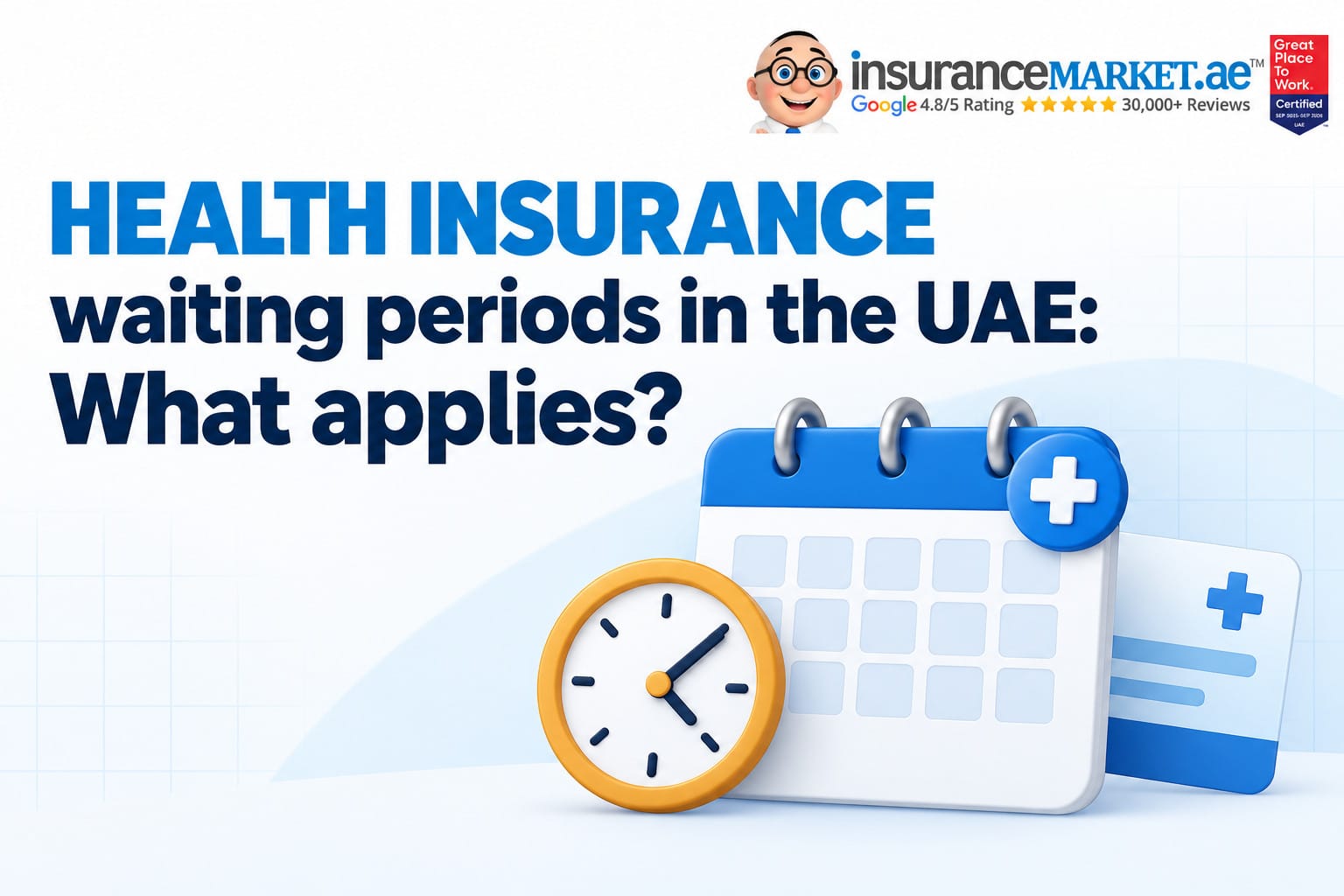
A health insurance waiting period is a specified period during which certain benefits are not available for claims, even though your policy is active.
For example, if your policy starts on 1st January and includes a 12-month waiting period for maternity benefits, you may not be able to claim maternity-related expenses until the waiting period ends. Emergency coverage may differ depending on your policy terms.
Waiting periods are usually measured in days or months and generally begin from your policy’s effective date or the date you join an employer’s group insurance plan.
Why Do Health Insurance Plans Have Waiting Periods?
Health insurance providers may apply waiting periods for several reasons:
1. To prevent misuse of coverage
Waiting periods help prevent people from purchasing insurance only when they anticipate expensive medical treatment and claiming immediately. This helps insurers manage costs and maintain sustainable premiums.
2. To manage high-cost benefits
Certain medical benefits, such as maternity care and major surgeries, can involve significant expenses. Waiting periods help insurers manage these costs while pricing their plans.
3. To encourage continuous coverage
Waiting periods may encourage policyholders to maintain uninterrupted health insurance coverage rather than purchasing a policy only when medical treatment is needed.
Which Health Insurance Benefits May Have Waiting Periods in the UAE?
Not every health insurance benefit comes with a waiting period. However, depending on the insurer and policy, waiting periods may apply to the following:
1. Maternity benefits
Some health insurance plans may have a waiting period of 6 to 12 months for maternity coverage. Certain plans may cover antenatal consultations earlier, while delivery-related benefits become available only after the waiting period.
2. Pre-existing and chronic conditions
Some individual or basic health insurance plans may apply a waiting period, such as six months, before covering non-emergency treatment for pre-existing or chronic medical conditions. Coverage depends on the policy terms and applicable requirements.
3. Specific surgeries and medical procedures
Certain planned or non-emergency procedures, including some orthopaedic and bariatric surgeries, may have waiting periods depending on the insurance plan.
4. Dental, optical, and wellness benefits
If your health insurance includes optional dental, optical, or wellness benefits, you may need to complete a waiting period before claiming certain services.
5. Newborn and infant coverage
Some policies may apply waiting periods to additional benefits for newborns once they are enrolled. Coverage for immediate post-birth care may be handled separately under the maternity benefits, subject to policy limits and conditions.
Since waiting periods vary between insurers and plans, always review your policy documents to understand when each benefit becomes available.
How Is a Waiting Period in Health Insurance Calculated?
A health insurance waiting period usually begins on your policy’s effective date or the date you join an employer’s group insurance plan.
For example, if your policy starts on 1 January 2026 and has a six-month waiting period for a particular benefit, coverage for that benefit would generally begin on 1 July 2026, provided your policy remains active.
Here are two important things to remember:
- Date of treatment: Claims are generally assessed based on when you receive medical treatment, rather than when you book the appointment.
- Policy renewal: If you renew your policy without interruption, completed waiting periods may not restart. However, this depends on the insurer and whether your coverage or plan changes.
How to Check a Waiting Period Before Buying Health Insurance
Before purchasing health insurance in the UAE, take these three steps to understand any applicable waiting periods:
1. Review your policy documents
Check the schedule of benefits and policy wording for sections titled “Waiting Periods” or “Special Conditions”.
2. Ask about specific benefits
Confirm whether waiting periods apply to maternity, pre-existing conditions, dental, optical, or other benefits you may need.
3. Get written confirmation
Ask your insurer, insurance broker, or HR department to confirm important waiting periods in writing, either through your quotation or by email.
This is especially important if you’re planning a pregnancy or have an existing medical condition that requires ongoing treatment.
Frequently Asked Questions
1. Is there a standard waiting period for all UAE health insurance plans?
2. Do pre-existing conditions always have a waiting period?
3. Can I buy maternity insurance after becoming pregnant?
4. Does changing jobs restart my health insurance waiting period?
5. Will my waiting period restart if my policy lapses?
Conclusion
Understanding health insurance waiting periods can help you avoid unexpected expenses and make more informed decisions about your coverage.
Before buying a policy, check whether waiting periods apply to maternity, pre-existing conditions, or any additional benefits you may need. Maintaining continuous coverage and clarifying policy conditions in advance can also help you avoid surprises when making a claim.
Need help understanding the waiting periods in your health insurance plan? InsuranceMarket.ae can help you compare health insurance options, review policy benefits, and choose coverage that suits your needs.