Introduction
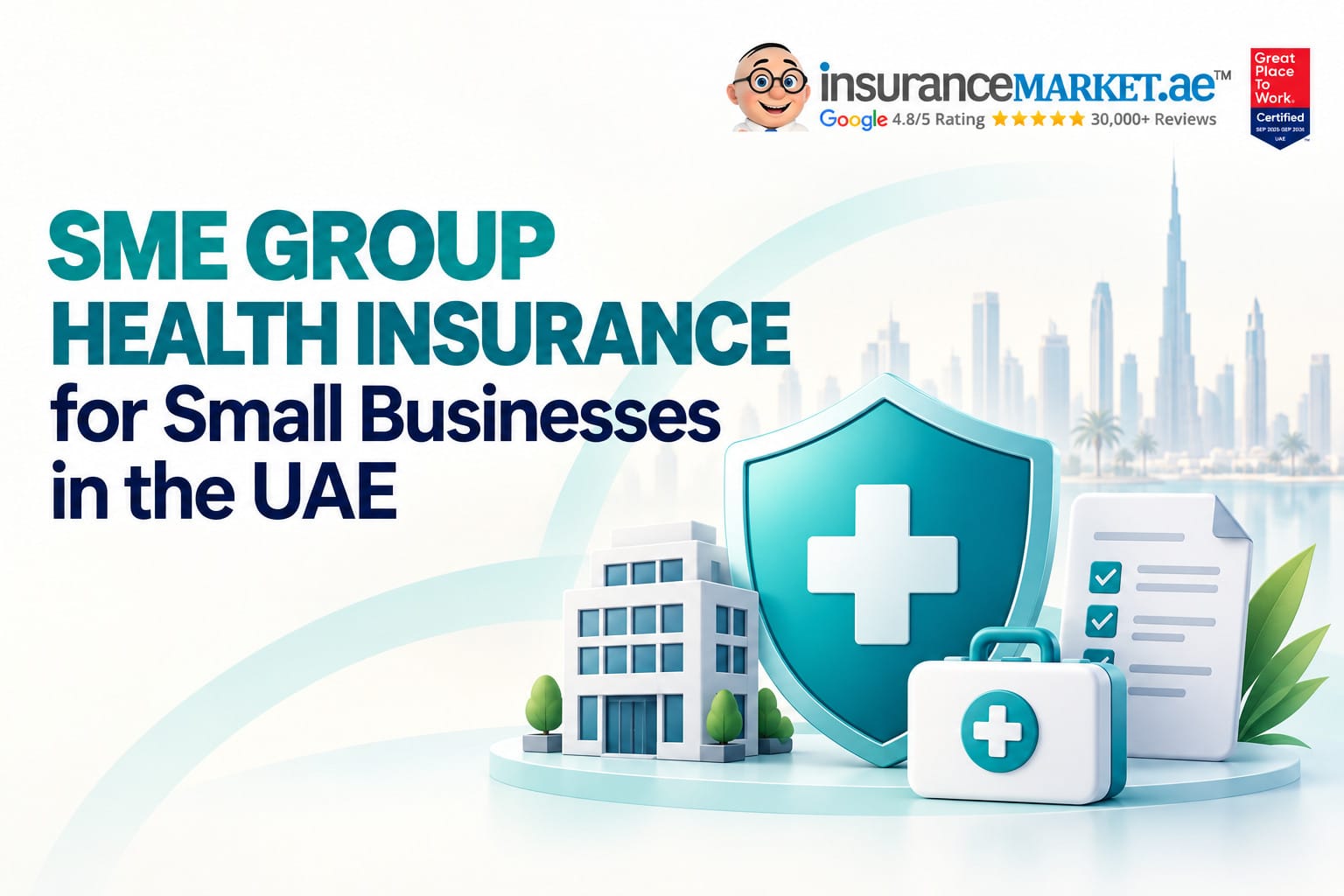
Even if you have only a handful of staff, group health insurance for small business in the UAE popularly known as SME group health insurance is now a regulatory requirement as well as a core part of any competitive employment package. Done properly, it protects your employees from high medical bills and helps you control healthcare costs and compliance risk at the same time.
This guide explains what small businesses need to know: is it mandatory, does size matter, who must be covered, what benefits are expected, and what to include in your internal checklist.
Is Health Insurance Mandatory for Small Businesses in the UAE?
The UAE government announced in 2024 that health insurance is unified across all emirates for private-sector employees and domestic workers, so providing compliant cover is now a legal requirement for employers country‑wide, not just in Dubai and Abu Dhabi.
That means if you employ staff on UAE residence visas, you are responsible for arranging health insurance that meets the minimum standards of the relevant health authority DHA, DoH, or local MOHAP‑aligned rules. Operating without cover can expose you to fines, blocked visa transactions and reputational issues.
Does the Requirement Depend on Business Size?
The obligation to have a group health insurance is linked to having employees, not to turnover or headcount:
- A large corporation with hundreds of staff needs group medical insurance.
- A micro‑business with only one employee is still expected to provide compliant medical cover for that employee’s visa.
From the insurer’s perspective, these are typically treated as SME group health insurance schemes, structured to balance minimum regulatory benefits with cost‑effective premiums.
Who Must Be Covered?
At a minimum, your group health policy should cover all eligible employees on your company visa, as defined in your scheme’s eligibility rules. Group medical insurance is, by definition, “a single health policy that covers a defined group of people, usually employees of a company.”
What about dependents and other categories?
- Dependants (spouse, children) – Coverage can be extended under the group if the employer chooses; policies often allow dependents to be added, but it is not always mandatory for companies to fund this.
- Parents – Usually not included by default; if covered, they may be placed on separate senior‑specific plans.
- Part‑time / non‑standard workers – Eligibility is defined by the employer and insurer. People who do not meet the scheme’s eligibility criteria may not be included, or may need separate arrangements.
As a small business owner, you should set clear eligibility rules e.g., all employees with visas sponsored by the company and working more than X hours/week and ensure 100% of that group is enrolled.
What Minimum Health Insurance Benefits Must the Policy Provide?
While each emirate’s regulator specifies its own technical standards, minimum‑level small business group health insurance is expected to provide at least:
- Inpatient & day‑care cover – Hospital stays, surgery, ICU and medically necessary procedures.
- Outpatient care – GP and specialist consultations, lab tests, imaging, and pharmacy expenses up to plan limits.
- Emergency treatment & ambulance – Immediate treatment for life‑threatening conditions.
- Pre‑existing & chronic conditions – Supported from day one under many group schemes, though exact terms (waiting periods, sub‑limits) are insurer‑specific.
Beyond the legal minimum, strong group plans may also include maternity, newborn care, wellness screenings, mental health, physiotherapy, dental and optical benefits, depending on your budget.
Small-Business Health Insurance Checklist
Here is a quick checklist when setting up or reviewing your group medical policy for small businesses:
Regulatory & Eligibility
- All employees with company‑sponsored visas are enrolled.
- The plan is clearly labelled as compliant with the relevant authority DHA/DoH, etc..
- Eligibility rules such as full‑time vs part‑time, probation, etc. are documented.
Benefits & Networks
- Inpatient, outpatient and emergency cover meet minimum standards.
- Network hospitals and clinics are convenient for where staff live and work.
- Pre‑existing and chronic conditions are handled in a way that suits your workforce profile.
Financial & Administration
- Premium fits your budget and is paid by the company, as group schemes are priced and invoiced to the employer.
- Co‑pays and annual limits are clearly communicated to employees.
- You have a process for adding new joiners and removing leavers on time.
Strategic Support
- You work with a licensed corporate broker such as InsuranceMarket.ae that benchmarks your benefits against SME best practice, runs tenders with multiple insurers, and supports HR with onboarding, claims issues and renewals.
FAQ
1. Is health insurance mandatory for every UAE company?
2. Does a business with one employee need health insurance?
3. Does the employer have to pay the insurance premium?
4. Are part-time employees entitled to health insurance?
5. Must an employer cover employees’ families?
Conclusion
For small businesses, group health insurance for small businesses is now a regulatory necessity and a powerful tool for attracting and retaining talent. The keys to doing it right are:
- Understanding that mandatory rules apply regardless of company size,
- Ensuring every eligible employee has at least minimum‑standard cover, and
- Designing benefits and networks that match your team’s real needs and your budget.
Working with a specialist SME group‑medical broker like InsuranceMarket.ae means you don’t have to decode regulations or negotiate with insurers alone; they’ll do the heavy lifting on design, placement and servicing so you can focus on running your business.