
Your home is one of your biggest financial investments, so when something unexpected happens such as a fire, burst pipe, storm damage, or theft you want the claims process to be as smooth as possible. Knowing what to do before an incident occurs can help reduce stress, speed up your claim, and improve the chances of a successful outcome.
This guide explains how the home insurance claims process typically works in the UAE, what is commonly covered, and the practical steps you can take to avoid unnecessary delays or claim disputes.
What Does Home Insurance Cover in the UAE?
A standard home insurance plan in the UAE typically protects your property and belongings against a range of unexpected events.
1. Main Areas of Cover:
A home insurance policy may include one or more of the following:
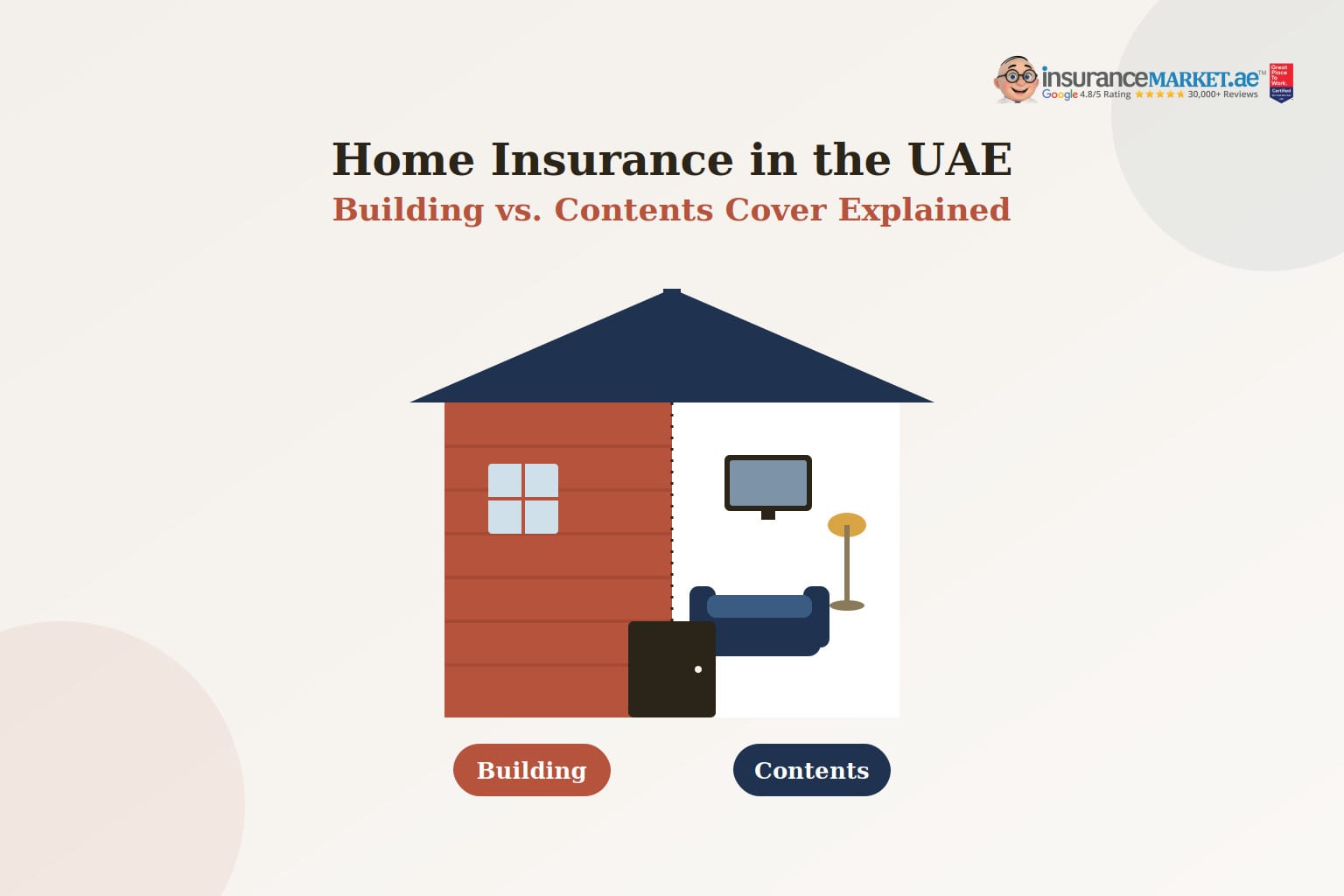
- Buildings cover: Protects the structure of your home, including garages, swimming pools, terraces, boundary walls, and fixed landlord-owned fixtures.
- Contents cover: Covers household belongings such as furniture, appliances, electronics, rugs, kitchen items, and, where applicable, a domestic helper’s personal belongings kept inside the home.
- Personal belongings cover: Protects items you regularly wear or carry, such as clothing, watches, handbags, luggage, and similar personal possessions. Depending on the policy, this cover may extend worldwide.
2. Commonly Covered Events
Most home insurance policies provide cover for losses or damage resulting from insured events such as:
- Fire, explosion, lightning, earthquake, and smoke
- Storms and flooding
- Riot, strike, and malicious damage
- Impact damage caused by vehicles, aircraft, falling trees, or lamp posts
- Sudden and accidental escape of water or leakage from pipes, water tanks, or fixed plumbing systems
- Theft or attempted theft involving visible signs of forced or violent entry or exit, or theft through deception where covered by the policy
When you submit a claim, the insurer will assess it against your policy wording, including the insured event, the applicable sum insured, any Single Article Limits (SALs), and the terms, conditions, and exclusions of your policy.
The Home Insurance Claim Process: Step‑by‑Step
Filing a home insurance claim doesn’t have to be complicated. Knowing what to do and in what order can help speed up the process and improve the chances of a successful claim.
Step 1: Your first priority is safety. If possible, take reasonable steps to prevent further damage.
- Evacuate if needed in case of fire or major leak.
- Turn off water or electricity if it is safe to do so.
- Secure doors and windows after a break‑in.
Policies expect you to take reasonable steps to minimise further damage.
Step 2: Notify Your Insurer Promptly
Contact your insurer or insurance advisor as soon as possible using the claims hotline, website, or mobile app listed in your policy documents.
Be ready to provide your policy number, contact detail, date and time of the incident, a brief description of what happened. Reporting the incident promptly allows the insurer to guide you through the next steps and may also be a requirement under your policy.
Step 3: Report the Incident to the Relevant Authorities
Some incidents require an official report before your claim can be processed, here are a few examples:
- Police report in case of theft, burglary, malicious damage or suspicious incidents.
- Civil Defence / Fire Brigade for any fire‑related event.
- Other local authorities if requested by your insurer.
These reports often form an important part of the claims assessment.
Step 4: Document the damage
- Take clear photos and videos from different angles.
- Do not discard damaged items until the loss adjuster confirms.
- For water leaks, capture the source (pipe, tank, AC unit) as well as the resulting damage.
Step 5: Complete the claim form
- Fill in all sections honestly and clearly (Utmost Good Faith).
- Describe the cause, place and time of loss, damaged areas and any emergency actions taken.
Step 6: Prepare an itemised list of losses – For contents and personal belongings:
- List each damaged or stolen item.
- Note approximate purchase date and current replacement value.
- Attach purchase invoices or valuation certificates, especially for high‑value items above the Single Article Limit.
Step 7: Submit documents and co‑operate with inspection
- Send your claim form and all supporting documents to the insurer.
- A loss adjuster or surveyor may visit your home to inspect the damage and ask questions.
- Provide full access and clarifications to avoid delays.
Step 8: Assessment and settlement
Once your claim has been reviewed, the insurer will assess whether:
- The event is an insured peril.
- Check sums insured, Single Article Limits, exclusions e.g. wear and tear, unoccupancy and your policy excess.
- Offer settlement via repair, replacement or cash, depending on terms.
- Once you accept, payment or repair arrangements are processed.
Documents Required for a Home Insurance Claim
Here are the documents required to claim Home Insurance Policy:
- Completed claim form
- Policy schedule / certificate
- Emirates ID or passport copy
- Police report for theft, burglary, malicious damage and many fire claims
- Fire report from Civil Defence for fire incidents
- Photos and videos of all damage
- Itemised list of damaged or stolen items with values
- Purchase invoices, valuation certificates or receipts for high‑value items
- Maintenance or contractor report for leaks, AC issues, pipe bursts, etc.
- Tenancy contract or title deed copy for building / tenant’s liability claims
Preparing these documents as early as possible can help speed up the claims process and make it easier for your insurer to assess your claim efficiently.
Common Reasons Home Insurance Claims Are Rejected
Here are few reasons why home insurance claims can be declined or reduced when:
- Events are not covered, for example, gradual damage, wear and tear, damp, mold, insects or simple mechanical breakdown.
- Unoccupancy breach where home is left empty for more than 60 consecutive days when the policy restricts cover.
- No evidence of theft or forcible entry or loss is a mysterious disappearance.
- Non‑disclosure or misrepresentation are the important facts (previous losses, occupancy, high‑value items) were not declared.
- Underinsurance or Single Article Limit issues such as expensive items above the SAL were not specified, so payout is capped.
- Insufficient documentation such as missing police report, invoices or proof of ownership.
Understanding these in advance helps you avoid painful surprises.
Tips for a Successful Home Insurance Claim
- Know your policy: read your coverage, exclusions, unoccupancy and theft conditions before a loss happens.
- Keep records: store digital copies of invoices and valuations for jewellery, watches, art and high‑end electronics.
- Declare high‑value items: list anything above the Single Article Limit when buying or renewing.
- Act fast and be accurate: notify the insurer promptly, provide complete information and answer follow‑up questions honestly.
- Do not repair major damage before inspection: except for emergency measures to prevent further loss, wait for the insurer’s guidance.
Expert advisors at InsuranceMarket.ae guide you through the process and help you prepare a strong, well‑documented claim.
Frequently Asked Questions
How do I start the home insurance claim process?
How long does a home insurance claim take to process?
What happens if my home insurance claim is rejected?
1. Review the reasoning against your policy wording.
2. Provide any additional evidence they request.
3. Ask your broker to help you understand or, where appropriate, appeal the decision.
Do I need a police report for a home insurance claim?
Will my premium increase if I make a home insurance claim?
Conclusion
A home insurance policy is only truly tested when you file a claim. By understanding what your cover includes, following the claim steps carefully, and preparing strong documentation, you greatly improve your chances of a smooth, successful outcome.
Call 800 Instant Alfred to understand your coverage to help you compare and choose a home insurance plan with clear, fair claims conditions that match your needs.