Raising a family in the UAE comes with significant financial responsibilities from school fees and housing costs to supporting loved ones both locally and abroad. While many families carefully plan for future milestones, one important question is often overlooked:
“What would happen to those plans if your income suddenly stopped?”
Life insurance plays a vital role in helping protect your family’s financial future. It provides a financial safety net that can help your loved ones continue meeting essential expenses and long-term goals if the unexpected happens.
Whether it’s maintaining your family’s lifestyle, covering ongoing household costs, paying off outstanding debts, or funding your children’s education, life insurance can help ensure that the plans you’ve worked hard to build remain on track even when you’re no longer there to provide for them.
For families in the UAE, life insurance is not just about protecting against risk; it’s about safeguarding the future you are working so hard to create.
Why Financial Protection Matters for Families
For most families in the UAE, one or two incomes are responsible for funding almost every aspect of daily life, including:
- Everyday household expenses
- Rent or mortgage payments
- Children’s school and future university fees
- Loans, financial commitments, and family obligations in the UAE or abroad
If a primary income earner were to pass away unexpectedly, these responsibilities would not simply disappear. Bills would still need to be paid, education plans would still need funding, and family members would still require financial support.
This is where life insurance becomes invaluable. A life insurance payout can provide your loved ones with the financial stability and breathing space they need during an incredibly difficult time. Rather than worrying about immediate financial pressures, your family can focus on adjusting to a new reality while maintaining the plans and goals you worked hard to build together.
At its core, life insurance is designed to replace lost financial support and help protect your family’s future when they need it most.
How Life Insurance Supports Long-Term Family Goals
Life insurance in the UAE provides a lump-sum payout, known as the sum assured, if the insured person passes away while the policy is in force. This benefit is paid directly to the nominated beneficiaries and can be used in whatever way the family needs most.
The payout can help your loved ones:
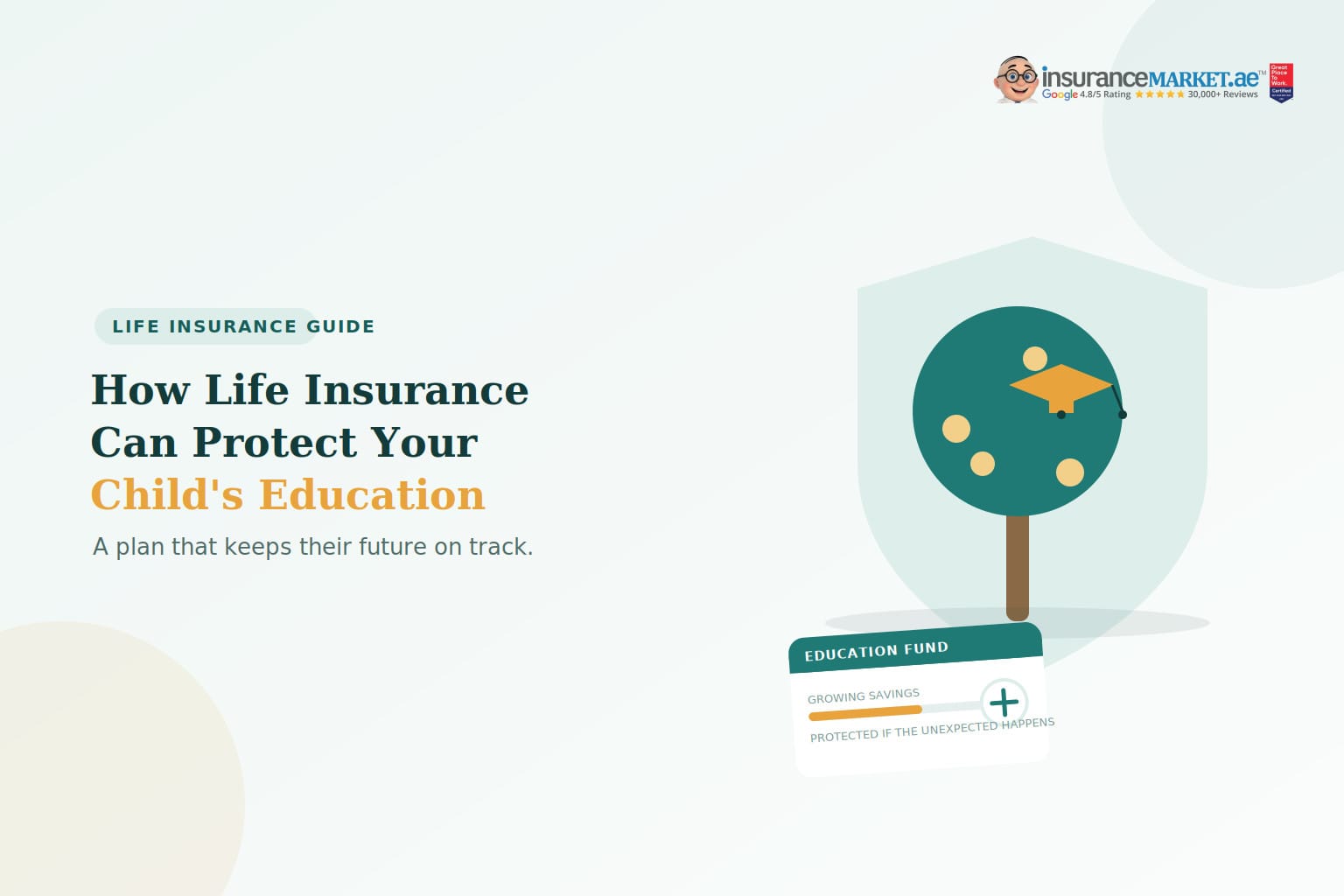
- Continue paying for your child’s school and university education
- Cover rent or mortgage payments, helping them remain in their home
- Repay outstanding loans and financial obligations
- Maintain day-to-day living expenses and household costs
- Create financial stability during a period of emotional and financial adjustment
For many families, life insurance is about more than replacing income. It helps protect the plans and goals you have worked hard to build, ensuring that important commitments such as education, housing, and long-term financial security can continue even if you are no longer there to provide for them.
In essence, the right life insurance policy converts your future earning potential into a guaranteed financial safety net, helping your family stay on track with their long-term goals when they need support the most.
Life Insurance vs Savings Plans: Understanding the Difference
| Feature | Life Insurance (Protection) | Savings & Education Plans (Accumulation) |
| Main Purpose | Protect your family’s finances if you pass away unexpectedly. | Build wealth over time for future financial goals. |
| Payout | Lump-sum benefit paid to your beneficiaries. | Maturity value or accumulated fund paid at the end of the plan term. |
| When It Pays | Upon the death of the insured person during the policy term (subject to policy terms). | At maturity or according to the plan structure. |
| Primary Goal | Financial protection and income replacement. | Long-term savings and wealth accumulation. |
| Typical Uses | Guarantees income continuity in the absence of the bread winner and ensures that the family’s living expenses and future financial goals are secured | Discipled savings for a future financial goal either through regular contributions or lumpsum |
| Savings Component | Term life insurance has no savings element. Some whole of life or permanent plans include savings or investment features. | Designed to plan for a future financial goal through disciplined savings into global mutual funds facilitating power of compounding |
| Investment Risk | Generally not applicable for pure protection plans. | Returns for investment-linked plans, depends on the investment performance. |
| Who Receives the Money? | In whole of life protection policies , the maturity value is paid to the insured upon survival after the term | Policyholder or designated beneficiary, depending on the plan. |
| Best For | Families seeking financial security and protection against unexpected events. | Parents and individuals planning for future goals such as education, property, or retirement. |
Why Many Families Consider Both
Life insurance and savings plans are not alternatives; they address different financial needs.
Life insurance protects your family if something happens to you.
Savings and education plans help you prepare financially for future milestones while you are alive.
Come together, they can create a more balanced financial strategy: one protects your family’s future against unexpected events, while the other helps you actively work towards long-term goals such as your child’s education.
Common Mistakes Families Make When Planning for the Future
Common mistakes families make when planning for the future include:
- Focusing only on savings, ignoring what happens if income stops.
- Underestimating education costs, especially for universities abroad.
- Relying only on employer benefits, which may end if you change jobs.
- Buying too little life cover, not linked to real family needs.
- Delaying life insurance, which usually makes it more expensive later.
Avoiding these mistakes can make your long‑term plans much more resilient.
Family Financial Planning Checklist
A strong family financial plan combines both protection and savings. Use this simple checklist to assess where you stand and identify any gaps.
1. List Your Key Financial Goals –
Start by identifying the milestones and responsibilities that matter most to your family, such as:
- Children’s school and university education
- Buying or paying off a home
- Retirement planning
- Supporting parents or other dependents
- Building an emergency fund
2. Put Numbers and Timelines Against Each Goal
Estimate how much each goal is likely to cost and when the money will be needed. Having realistic figures helps you understand the scale of your future financial commitments.
3. Estimate Your Life Insurance Needs
A common starting point is 10–15 times your annual income, but your ideal cover amount should also take into account outstanding loans and mortgages, children’s education costs, household living expenses, future family obligations, etc.
4. Review Your Existing Savings
Take stock of what you have already accumulated through:
- Savings accounts
- Education plans
- Investments
- Employer benefits and other assets
5. Fill the Gaps with Protection and Savings
A balanced plan often uses both:
- Life insurance to protect your family’s goals if you are no longer there to provide financially
- Savings or education plans to build the funds needed to achieve those goals while you are alive
Together, they help create a more resilient financial strategy.
6. Review Your Plan Regularly
Your financial needs will change over time. Revisit your plan after major life events such as:
- The birth of a child
- Marriage
- A new job or promotion
- Taking on a mortgage
- Relocating to another country
Regular reviews help ensure your protection and savings remain aligned with your family’s evolving needs.
Let life insurance experienced advisors at InsuranceMarket.ae help you compare life insurance in the UAE in minutes and align it with your family goals.
FAQs
1. How can life insurance help protect my family?
2. Can life insurance support my child’s education goals?
3. What is the difference between life insurance and a savings plan?
4. Do parents need life insurance in the UAE?
5. When should I buy life insurance?
6. How much life insurance coverage should a family consider?
Conclusion
For families in the UAE, life insurance is not just about replacing income, it is about protecting your long-term life plans, especially your child’s education and overall financial stability. Savings on its own is often not enough to fully secure these goals.
A more balanced approach combines Life insurance protection, which helps ensure your family’s financial commitments can continue even if you are no longer there to provide income. Disciplined savings or education planning, which helps you actively build funds toward future milestones like school and university fees
Together, protection and savings create a stronger financial safety net and improve your family’s ability to stay on track with important goals, regardless of unexpected life events.
InsuranceMarket.ae helps you compare life insurance options for family protection in the UAE within minutes, making it easier to choose a plan that supports your child’s future with greater clarity and confidence.